

Your mind feels like a browser with fifty tabs open. You sit down to relax, but instead, you replay that awkward conversation from Tuesday or worry about an email due Thursday. This is why most people quit meditation within the first two weeks. They think there is only one way to do it: sitting cross-legged in silence, staring at a wall, and trying to stop thinking. That approach doesn’t work for everyone, and frankly, it’s not even the goal.
Meditation isn't about emptying your mind. It’s about training your attention. Think of it like going to the gym. You wouldn’t expect to lift heavy weights on day one without knowing proper form. Similarly, different minds respond better to different exercises. Some brains need structure and sound; others thrive on movement or emotional focus. Finding the right types of meditation is less about spiritual enlightenment and more about matching the tool to your specific mental state.
The Anchor Method: Mindfulness Meditation
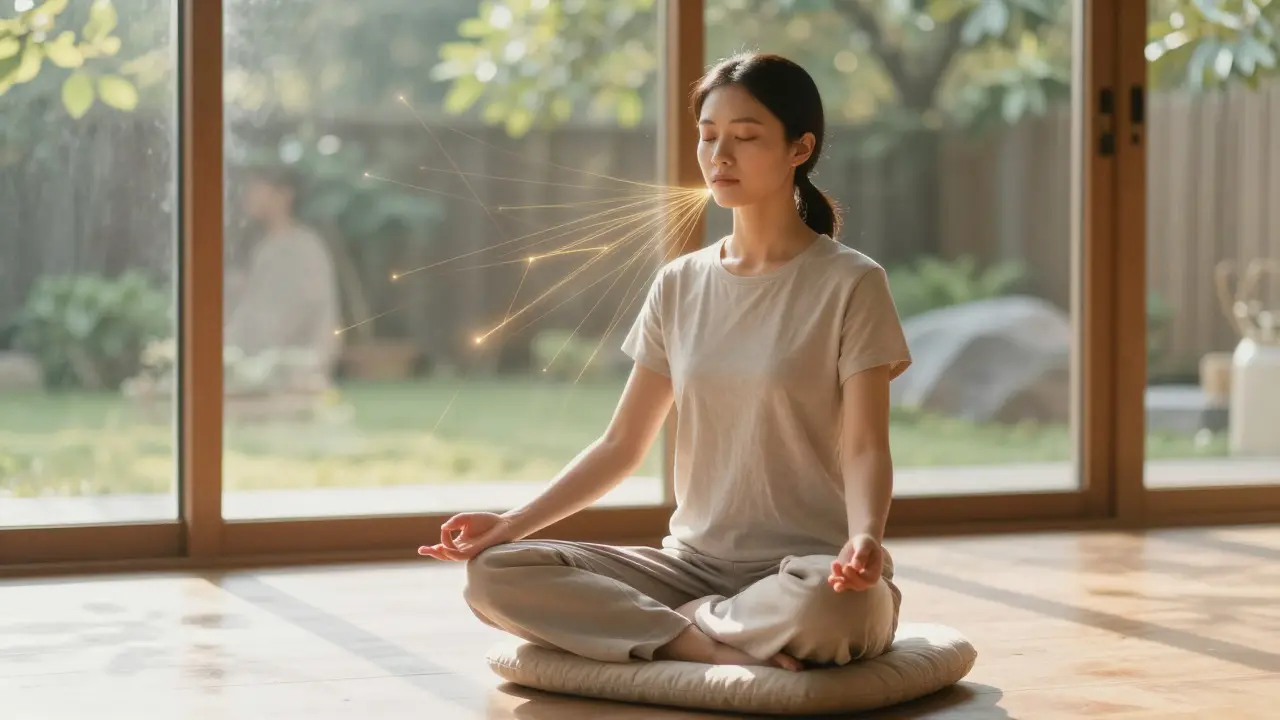
If you have heard of meditation before, this is likely what was described to you. Mindfulness meditation is a practice rooted in Buddhist traditions that focuses on observing thoughts and sensations without judgment. The core mechanic here is the "anchor." Usually, this anchor is your breath.
You sit comfortably. You notice when your mind wanders-and it will wander. When you realize you are thinking about dinner plans instead of breathing, you gently bring your attention back to the inhale. That moment of noticing? That is the rep. That is the bicep curl for your brain.
This style works best if you are dealing with anxiety or feeling overwhelmed by information overload. It builds the neural pathways associated with impulse control and emotional regulation. However, it can feel frustratingly difficult for beginners because the instruction "just watch your thoughts" often leads to more thinking, not less. If you find yourself getting angry at your own mind for wandering, mindfulness might not be your starting point.
The Sound Shield: Mantra and Transcendental Meditation
For many, silence is loud. If the idea of sitting in quiet stillness makes you itch, mantra-based practices offer a cognitive distraction that quiets the chatter. Transcendental Meditation (TM) is a technique involving the silent repetition of a specific sound or phrase to settle the mind into a state of restful alertness.
In traditional TM, a teacher assigns you a unique mantra based on your birth date and other factors. In secular versions, you might use a word like "peace," "calm," or a syllable like "Om." The goal isn’t to analyze the meaning of the word. It’s to let the sound act as a buffer against intrusive thoughts. As you repeat the mantra, your conscious mind occupies itself with the rhythm, allowing deeper layers of relaxation to emerge.
This approach is highly effective for people who identify as "high thinkers"-those whose internal monologue never shuts off. By giving the mind a simple, repetitive task, you reduce cognitive load. Studies suggest this method lowers cortisol levels significantly faster than unstructured relaxation because it provides a clear, actionable focal point rather than an abstract concept like "awareness."
The Emotional Workout: Loving-Kindness (Metta)
Sometimes, the problem isn’t too much noise; it’s too much negativity. If you struggle with self-criticism, resentment, or loneliness, focusing on your breath might feel hollow. Enter Loving-Kindness meditation, also known as Metta meditation, which is a practice designed to cultivate feelings of compassion and unconditional love toward oneself and others.
This practice involves silently repeating phrases of goodwill. You start with yourself: "May I be happy. May I be healthy. May I be safe." Once that feels stable, you extend these wishes to a loved one, then a neutral person (like a neighbor), and finally, someone you find difficult. It sounds cheesy until you try it. The resistance you feel when sending kindness to a difficult person is where the real work happens.
Neuroscience shows that Metta meditation increases activity in the insula, the part of the brain linked to empathy and compassion. It literally rewires your response to social friction. If your stress stems from interpersonal conflict or inner harshness, this type of meditation addresses the root cause directly, rather than just soothing the symptoms.
The Moving Practice: Yoga and Walking Meditation
Let’s be honest: sitting still for twenty minutes can hurt. Lower back pain, restless legs, and general fidgetiness are valid barriers. You don’t need to force your body into a lotus position to meditate. Moving meditation includes practices that combine physical movement with mindful awareness, such as yoga, Tai Chi, or walking meditation.
Walking meditation is surprisingly potent. Instead of rushing from point A to point B while checking your phone, you walk slowly. You focus on the sensation of your heel hitting the ground, the roll through your foot, and the lift of your toes. You synchronize this with your breath. It turns a mundane commute into a grounding ritual.
Yoga, when practiced mindfully, is also a form of meditation. It’s not about touching your toes; it’s about staying present with the stretch. If you have ADHD or high energy levels, static meditation might feel like torture. Movement allows you to discharge excess adrenaline while simultaneously training focus. It bridges the gap between physical exercise and mental clarity.
The Guided Experience: Visualization and Audio Meditations
Not everyone wants to figure this out alone. Guided meditation is a practice where a narrator leads you through a series of instructions, visualizations, or body scans. This is the most accessible entry point for modern beginners.
Apps and audio tracks provide a structured path. A body scan, for example, guides your attention systematically from your toes to your head, releasing tension in each area. Visualization techniques ask you to imagine a calming scene-a beach, a forest, a childhood home-and engage all five senses in that imagery.
This style works well because it removes the decision fatigue of "what should I focus on next?" It’s particularly useful for sleep issues. Listening to a gentle voice guide you through progressive muscle relaxation signals to your parasympathetic nervous system that it is time to shut down. It’s less about building long-term discipline and more about immediate relief and stress reduction.

Comparing the Approaches
| Type | Primary Focus | Best For | Difficulty Level |
|---|---|---|---|
| Mindfulness | Breath & Observation | Anxiety, General Stress | Medium |
| Mantra/TM | Sound Repetition | Racing Thoughts, Overthinking | Low |
| Loving-Kindness | Compassion Phrases | Anger, Self-Criticism | High (Emotionally) |
| Moving/Yoga | Physical Sensation | Restlessness, Physical Pain | Low |
| Guided | Narrator Instructions | Sleep, Beginners | Low |
How to Choose Your Starting Point
Don’t overthink this. The best meditation is the one you will actually do. Here is a quick diagnostic:
- If you can’t sit still: Start with walking meditation or gentle yoga flows. Get the movement habit first, then add mindfulness later.
- If your mind races uncontrollably: Try mantra meditation. Give your brain a loop to get stuck on so it stops generating new worries.
- If you are angry or resentful: Practice Loving-Kindness. It forces you to confront and soften hard emotions.
- If you want to sleep better: Use guided body scans. Let someone else do the directing while you drift off.
- If you want long-term resilience: Stick with basic mindfulness. It’s the foundation for all other advanced practices.
Experiment for two weeks. Treat it like testing shoes. If your feet hurt, change the pair. Consistency matters far more than duration. Five minutes daily beats one hour once a month. Your brain changes through repetition, not intensity.
Is meditation religious?
No. While many practices originate from Buddhist, Hindu, or Christian traditions, the techniques themselves are secular tools. You can practice mindfulness or mantra repetition without any belief in karma, gods, or spiritual afterlife. It is essentially cognitive training.
How long does it take to see results?
Most people report feeling calmer immediately after a session. However, structural changes in the brain, such as increased gray matter density in areas related to learning and memory, typically require consistent practice over eight weeks. Think of it like weight loss: the scale doesn’t move overnight, but the habit forms quickly.
Can I meditate if I have PTSD or trauma?
Yes, but caution is advised. Traditional mindfulness can sometimes trigger flashbacks if you are left alone with your thoughts. Grounding techniques, body scans, or working with a therapist trained in trauma-sensitive mindfulness is recommended. Avoid deep visualization initially if it causes dissociation.
Do I need special equipment?
Absolutely not. A chair, a cushion, or even standing up works fine. The only requirement is a relatively quiet space where you won’t be interrupted for five to ten minutes. Apps can help, but they are optional aids, not necessities.
What is the difference between mindfulness and meditation?
Meditation is the umbrella term for various practices aimed at training attention. Mindfulness is a specific type of meditation focused on non-judgmental awareness of the present moment. You can meditate using mantras, visualization, or movement without practicing strict mindfulness.