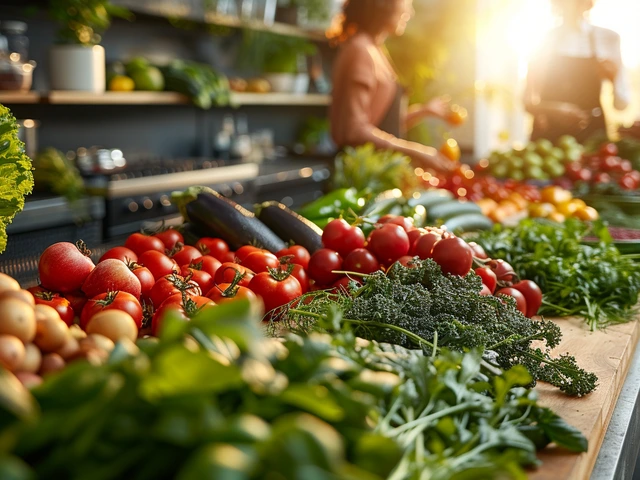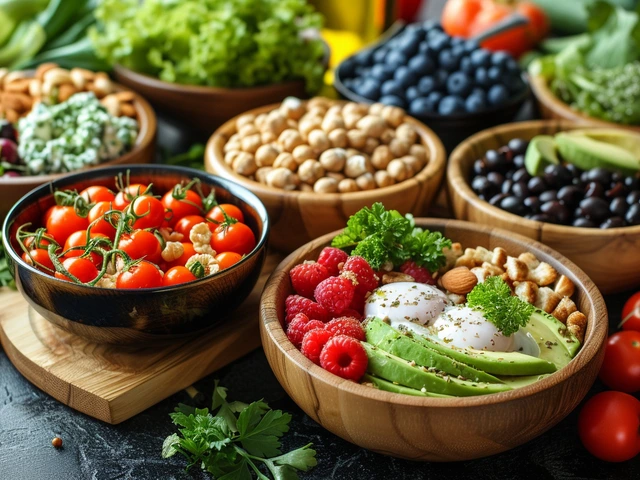

Most people reach for chips, candy, or cookies when hunger hits between meals. But over the last two years, something’s changed. Grocery shelves are filling up with snacks that actually fuel your body-not just satisfy a craving. Healthy snacks aren’t just a trend anymore. They’re becoming the default choice for millions of people who want to feel better, think clearer, and avoid the afternoon crash.
Why Snacking Got a Makeover
It wasn’t always this way. Ten years ago, snacking meant grabbing whatever was convenient. Energy bars with sugar listed as the first ingredient. Granola bars that tasted like candy. Pretzels that left you hungrier than before. The problem wasn’t snacking itself-it was what counted as a snack.
Now, people are realizing that what you eat between meals matters just as much as what you eat at dinner. A 2024 study from the American Journal of Clinical Nutrition found that adults who replaced processed snacks with whole-food options saw a 22% drop in afternoon fatigue and a 17% improvement in focus by mid-afternoon. That’s not magic. That’s nutrition.
The shift started with people tired of feeling sluggish after lunch. Then came the rise of blood sugar tracking apps. Suddenly, you could see how a handful of gummy bears spiked your glucose-and how a small serving of almonds kept it steady. That data changed behavior. Healthy snacking became less about dieting and more about feeling in control of your energy.
What Counts as a Healthy Snack Now?
Not everything labeled "healthy" actually is. A lot of packaged snacks still hide sugar, refined oils, and artificial flavors behind words like "natural" or "plant-based." Real healthy snacks share three things: they’re minimally processed, contain protein or fiber (or both), and don’t spike your blood sugar.
Here’s what’s actually working for people right now:
- Roasted chickpeas-crunchy, salty, and packed with 6 grams of protein and 5 grams of fiber per 1/4 cup. No oil sprays. No mystery ingredients.
- Hard-boiled eggs-easy to prep ahead, portable, and loaded with choline for brain function. One egg has 6 grams of protein and keeps you full for hours.
- Plain Greek yogurt with berries-choose unsweetened yogurt. Add fresh blueberries or sliced strawberries. The probiotics support gut health, and the fruit adds natural sweetness without added sugar.
- Apple slices with almond butter-the fiber from the apple slows sugar absorption, while the healthy fats in almond butter keep hunger at bay. Look for almond butter with just almonds and salt.
- Edamame-steamed and lightly salted, this soybean snack has 17 grams of protein per cup. It’s also one of the few plant-based complete proteins.
These aren’t fancy. They’re not expensive. And they don’t require a recipe. They’re just food that works the way food should: giving you energy without the crash.
The Real Benefit: More Than Just Energy
People don’t just snack healthier because they want to lose weight. They do it because they feel different. Better. More like themselves.
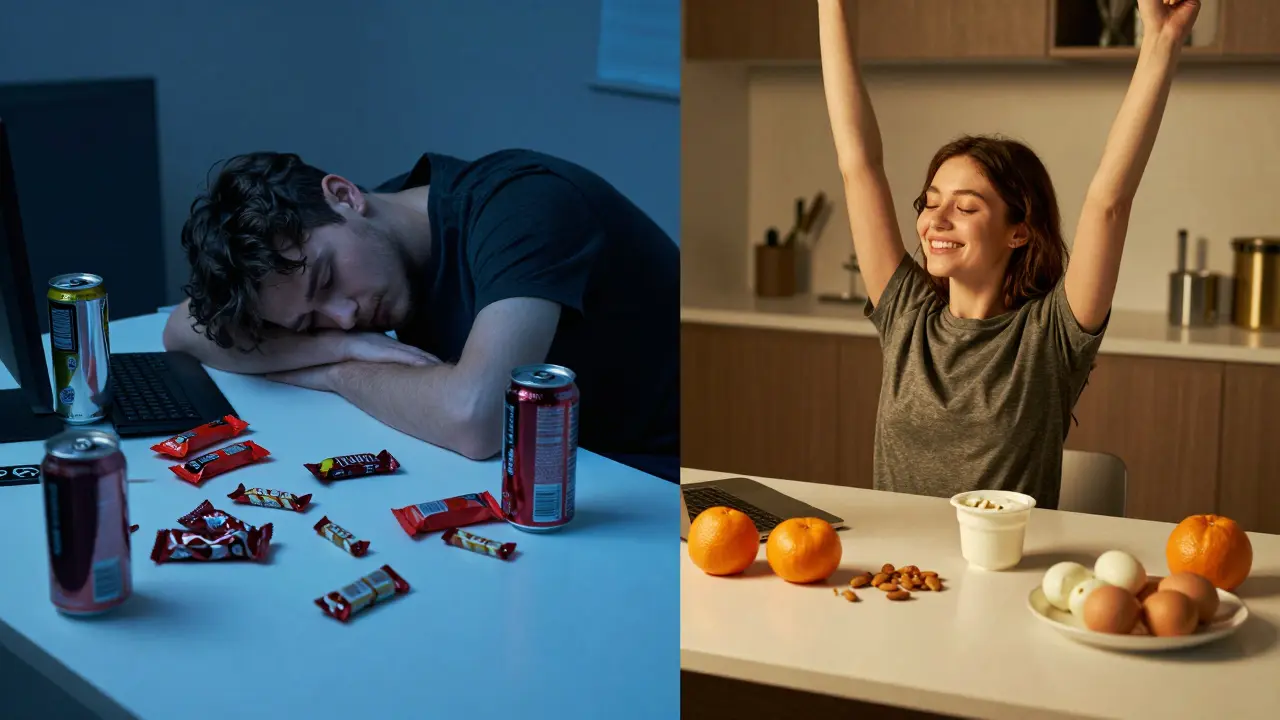
One mom in Orlando started swapping out her afternoon candy bar for a small handful of walnuts and an orange. Within two weeks, she noticed her headaches-something she’d lived with for years-stopped showing up after lunch. She didn’t change her sleep, her stress levels, or her caffeine intake. Just her snack.
That’s not coincidence. Processed snacks cause inflammation. They mess with your gut microbiome. They trigger cravings by spiking insulin and then crashing it. Healthy snacks do the opposite. They stabilize mood, reduce brain fog, and even improve sleep quality over time.
A 2025 survey by the Food and Health Institute found that 68% of people who switched to whole-food snacks reported better sleep within four weeks. Another 61% said they stopped mindlessly eating in front of the TV. It wasn’t willpower. It was satisfaction. Real food fills you up. Fake food just tricks you into thinking it does.
How to Make Healthy Snacking Stick
Changing habits is hard. But healthy snacking doesn’t need to be complicated. Here’s how to make it automatic:
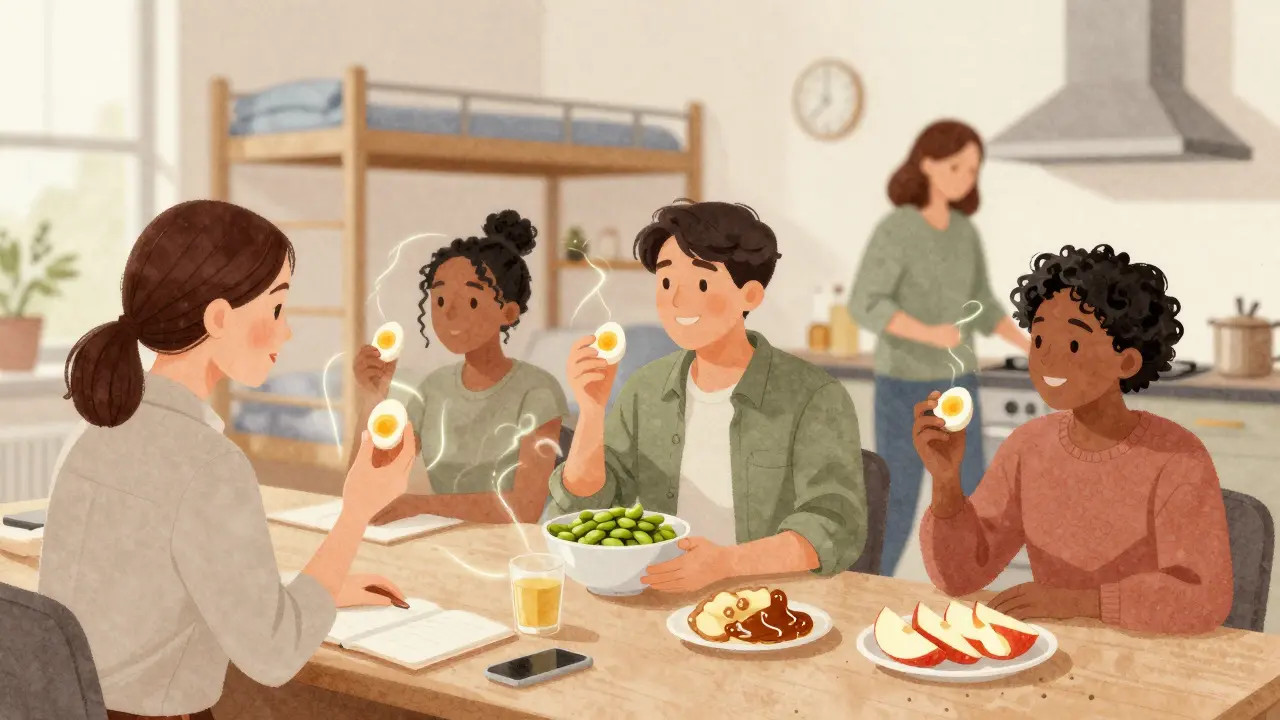
- Prep on Sundays. Boil a dozen eggs. Wash and chop apples. Portion out nuts into small containers. Put them in the front of your fridge. Out of sight = out of mind. Out of reach = out of temptation.
- Keep snacks visible. Put a bowl of raw almonds or clementines on your desk. Put a container of Greek yogurt next to your coffee maker. Make the healthy choice the easiest one.
- Drink water first. Thirst often masquerades as hunger. If you’re craving a snack, drink a glass of water and wait 10 minutes. You might be surprised how often the craving disappears.
- Don’t ban treats. If you’re trying to cut out all sweets, you’ll end up bingeing. Allow yourself one small treat a day-like a square of dark chocolate (70% cacao or higher). It takes the pressure off and makes the healthy stuff easier to stick with.
It’s not about perfection. It’s about progress. One healthy snack a day turns into three. Then five. Then it’s just what you do.
What’s Next? The Rise of Functional Snacks
The next wave of healthy snacking isn’t just about avoiding junk. It’s about adding benefits. Functional snacks are designed to do more than fill you up-they’re meant to support your health goals.
These include:
- Snacks with added probiotics for gut health
- Bars with adaptogens like ashwagandha to help manage stress
- Chia seed puddings fortified with omega-3s
- Protein bites with collagen for skin and joint support
Some of these are still pricey. Others are overhyped. But the trend is real: people want snacks that work for them, not just against them. The key is reading labels. Look for short ingredient lists. If you can’t pronounce half the items, skip it.
And remember-no snack replaces a balanced meal. Healthy snacking is a tool, not a replacement. It’s the bridge between meals, not the main event.
What to Avoid
Not all "healthy" snacks are created equal. Here’s what still trips people up:
- Trail mix with chocolate chips and candy-it’s just a sugar bomb with nuts hiding in it.
- Granola-most store-bought versions have more sugar than cereal. Make your own with oats, nuts, and a touch of maple syrup.
- Fruit snacks-even the "organic" ones are mostly sugar and gelatin. Eat real fruit instead.
- Low-fat yogurt with added fruit-the fat was removed, then sugar was added to make it taste good. Choose full-fat, unsweetened yogurt and add your own fruit.
- Protein bars with 20+ grams of sugar-they’re basically candy bars with protein powder mixed in. Look for bars under 5 grams of sugar.
The goal isn’t to eliminate snacks. It’s to choose ones that give you more than they take.
Real People, Real Results
A 34-year-old teacher in Atlanta started replacing her afternoon donut with a hard-boiled egg and a pear. Within three weeks, her blood sugar levels dropped from prediabetic range to normal. She didn’t change her job, her sleep, or her exercise. Just her snack.
A college student in Chicago swapped his energy drinks for a cup of unsweetened kombucha and a handful of pumpkin seeds. His afternoon panic attacks stopped. He didn’t realize how much sugar and caffeine were fueling his anxiety until he cut them out.
These aren’t outliers. They’re examples of what happens when you treat snacking as part of your health-not an afterthought.
Are healthy snacks expensive?
Not necessarily. A bag of raw almonds costs about $1.50 per serving, which is less than a candy bar with added sugar. Boiled eggs cost pennies. Frozen edamame is cheaper than pre-packaged snacks. The real cost is in convenience. Buying pre-cut fruit or single-serve packs will cost more. Do your own prep, and healthy snacks can be budget-friendly.
Can kids eat healthy snacks too?
Absolutely. Kids respond well to texture and color. Try apple slices with peanut butter, cheese cubes, carrot sticks with hummus, or yogurt with frozen berries. Avoid labeling foods as "good" or "bad." Instead, make healthy snacks the norm. When they’re always available, kids start choosing them naturally.
What if I don’t have time to prep snacks?
You don’t need to prep everything. Keep a few ready-to-eat options on hand: canned tuna in water, individual nut butter packets, whole fruit like bananas or oranges, and single-serve Greek yogurt. These take zero prep and still beat chips or cookies. The goal is progress, not perfection.
Do healthy snacks help with weight loss?
They can, but not because they’re low-calorie. They help because they reduce cravings and prevent overeating at meals. When your blood sugar stays steady, you’re less likely to binge. Snacks that include protein and fiber naturally reduce total daily calorie intake by keeping you satisfied longer.
How many healthy snacks should I eat a day?
There’s no magic number. Eat when you’re genuinely hungry-not because it’s 3 p.m. or you’re bored. For most people, one snack between lunch and dinner is enough. If you’re very active or have a physically demanding job, two might work. Listen to your body, not the clock.
Final Thought: Snacking Is a Reflection of Your Relationship With Food
Healthy snacking isn’t about rules. It’s about awareness. It’s asking: "Am I eating this because I’m hungry, or because I’m stressed, bored, or tired?" It’s noticing how different foods make you feel afterward. It’s choosing food that helps you show up as your best self-not just fills your stomach.
The trend isn’t going away. People are done pretending that snacks don’t matter. They’re learning that what you eat between meals shapes your energy, your mood, and your long-term health. And that’s not just a trend. That’s a real change in how we think about food.