Most people think of snacks as something to kill boredom or satisfy a sweet craving. But what if your next snack could actually boost your energy, stabilize your blood sugar, and keep you full for hours? The truth is, the right snacks aren’t just better than chips or candy-they’re powerful tools for better health.
Why Snacking Matters More Than You Think
Snacking isn’t the enemy. It’s how you snack that makes the difference. A 2024 study from the American Journal of Clinical Nutrition found that people who ate nutrient-dense snacks between meals had better overall diet quality and were less likely to overeat at dinner. That’s because smart snacks help balance hunger hormones like ghrelin and leptin. When you skip snacks or grab something sugary, your body crashes, and then you end up eating more later.
Think of snacks as mini-meals that fill nutritional gaps. If you’re not getting enough protein, fiber, or healthy fats at breakfast or lunch, a well-chosen snack can make up for it. It’s not about eating more-it’s about eating better.
Top 5 Nutritional Powerhouses You Should Be Eating
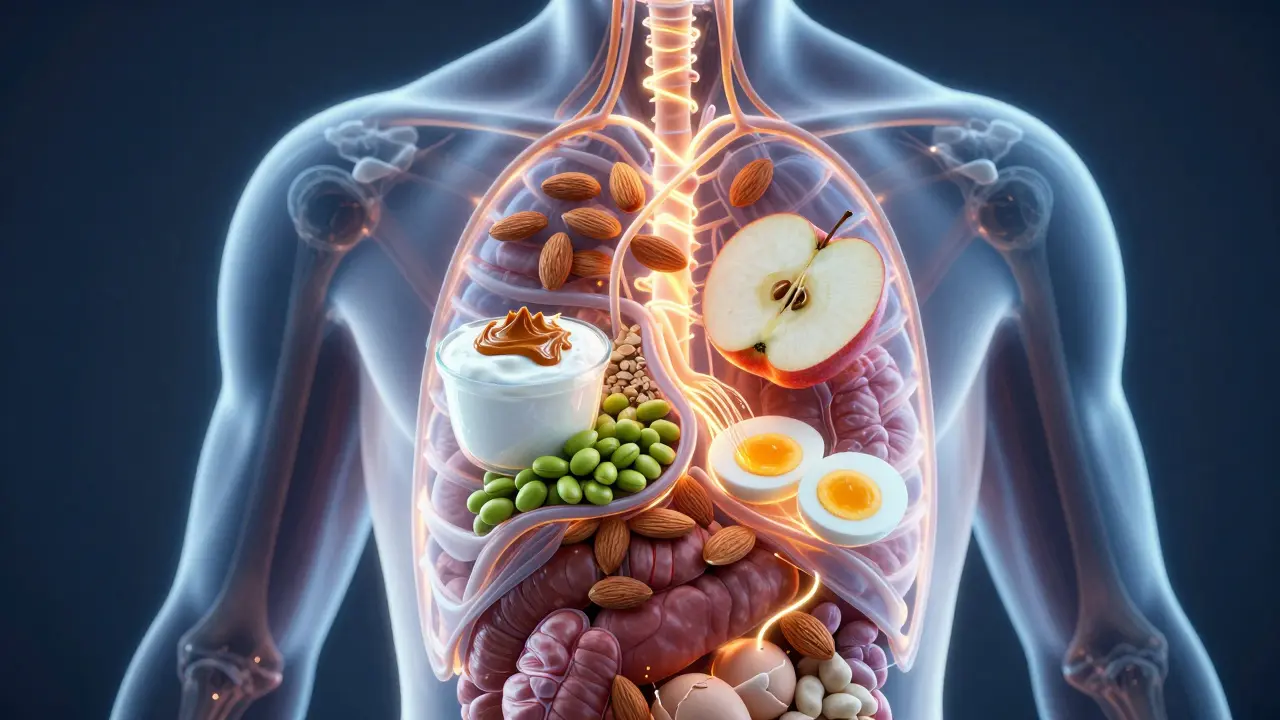
Not all healthy snacks are created equal. Here are five that actually deliver on nutrition, taste, and staying power.
1. Raw Almonds
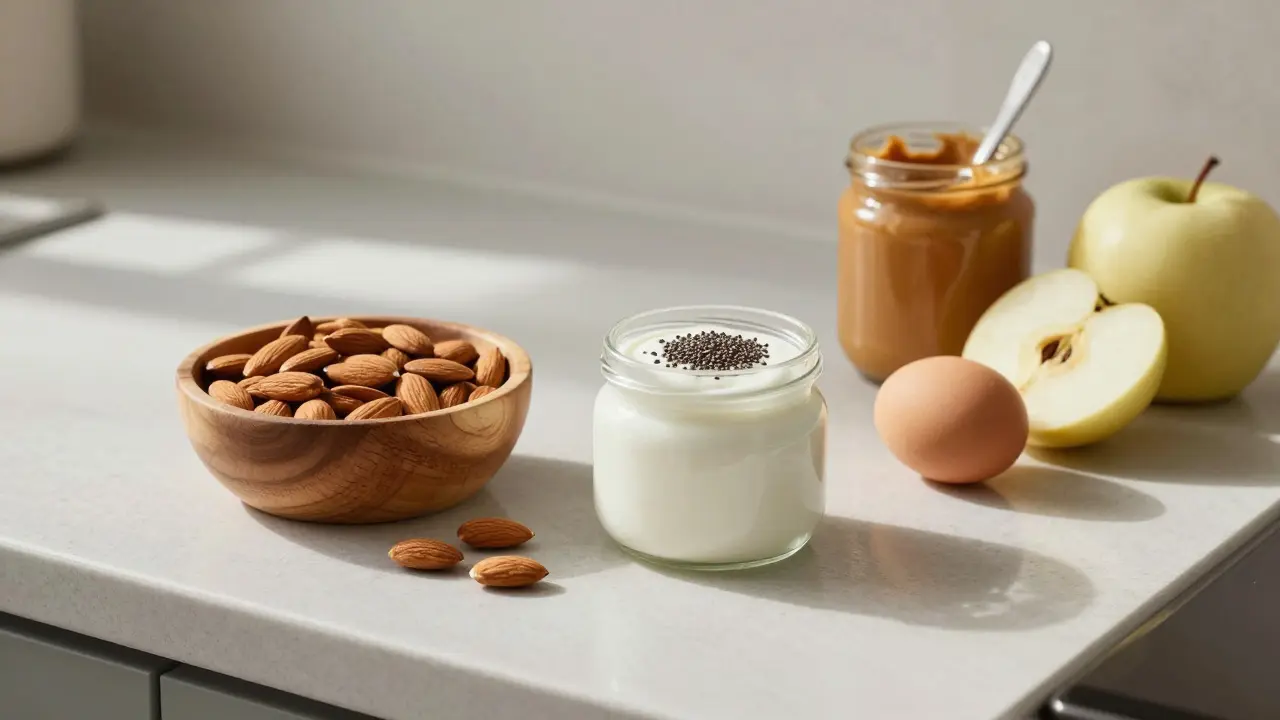
One ounce (about 23 almonds) gives you 6 grams of protein, 3.5 grams of fiber, and 14 grams of healthy fats. They’re also packed with vitamin E, magnesium, and manganese. Studies show that eating almonds regularly helps reduce LDL cholesterol and improves insulin sensitivity. Keep a small jar at your desk. You won’t crave cookies if you’ve got almonds ready.
2. Greek Yogurt with Chia Seeds
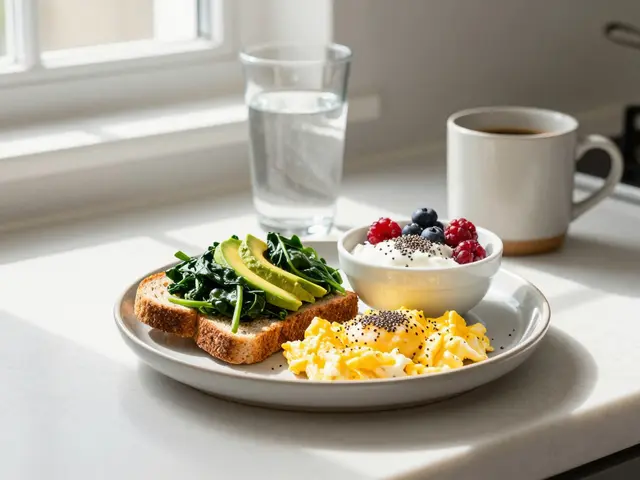
Choose plain, unsweetened Greek yogurt-it has twice the protein of regular yogurt. Add a tablespoon of chia seeds. That combo gives you 15 grams of protein, 5 grams of fiber, and omega-3s all in one bowl. Chia seeds swell up in your stomach, slowing digestion and keeping you full. Skip the flavored yogurts-they’re just sugar with a side of protein.
3. Hard-Boiled Eggs
One egg has 6 grams of high-quality protein and all nine essential amino acids. The yolk contains choline, which supports brain function, and lutein, good for your eyes. Boil a batch on Sunday, store them in the fridge, and grab one or two when you need a quick, satisfying bite. They’re portable, cheap, and won’t spike your blood sugar.
4. Apple Slices with Almond Butter
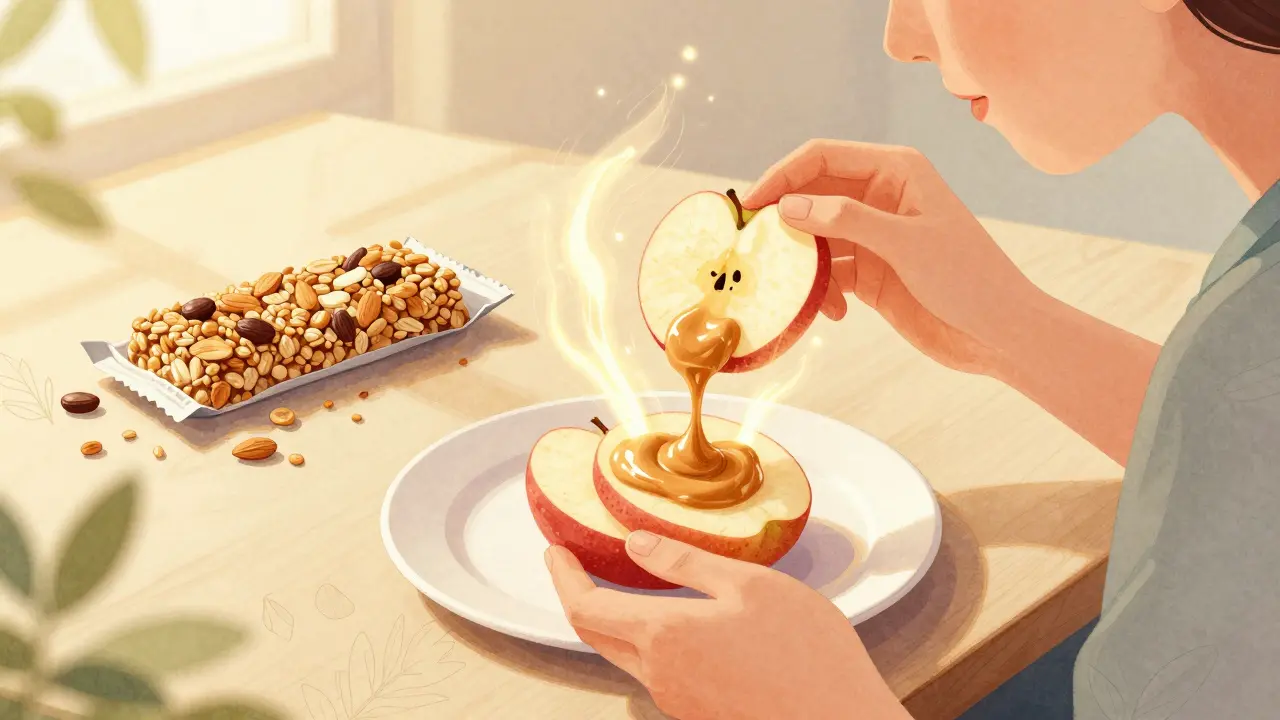
This classic combo works because it pairs fiber-rich fruit with healthy fats and protein. One medium apple gives you 4.5 grams of fiber. Two tablespoons of almond butter add 7 grams of protein and 18 grams of fat-mostly monounsaturated, the kind that helps reduce inflammation. Look for almond butter with just two ingredients: almonds and salt. Avoid anything with added sugar or palm oil.
5. Edamame
Steamed edamame in the pod is a snack that feels like a treat but delivers like a meal. One cup has 17 grams of plant-based protein, 8 grams of fiber, and all the essential amino acids your body can’t make on its own. It’s also rich in folate, iron, and vitamin K. Buy frozen, steam for 5 minutes, sprinkle with sea salt, and eat straight from the pod. The act of shelling slows you down, which helps your brain register fullness.
What to Avoid (Even If It’s Labeled “Healthy”)
Not every snack that sounds good is actually good for you. Watch out for these common traps.
- Trail mix with candy pieces - Many brands add M&Ms, dried cranberries soaked in sugar, or chocolate chips. Check the ingredient list: if sugar is listed before the nuts, it’s not a health food.
- Granola bars - Some have more sugar than a candy bar. Look for bars with under 5 grams of added sugar and at least 5 grams of protein.
- Vegetable chips - They’re often fried in oil and salted heavily. The “veggie” part is barely there. Stick to raw veggies with hummus instead.
- Flavored nut butters - “Cinnamon swirl” or “honey roasted” usually means added sugar and hydrogenated oils. Stick to natural versions.
How to Build a Snack Routine That Works
You don’t need to be perfect. You just need a system.
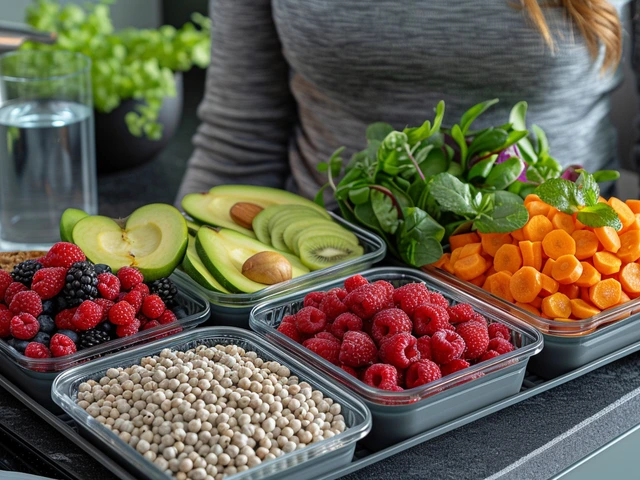
- Plan ahead. Put your snacks in clear containers at eye level in the fridge or pantry. Out of sight means out of mind.
- Portion control matters. Don’t eat straight from the bag. Use small bowls or snack-sized containers.
- Pair macros. Always combine at least two of these: protein, fiber, healthy fat. That’s what keeps you full.
- Hydrate first. Sometimes thirst feels like hunger. Drink a glass of water before reaching for a snack.
- Listen to your body. Eat when you’re hungry. Stop when you’re satisfied-not stuffed.
Try this: Keep a snack drawer with five pre-portioned options. Rotate them weekly. You’ll never be stuck with nothing good to eat.
Snacks for Different Times of Day
Your snack needs change depending on when you eat them.
- Morning (after breakfast): If you’re still hungry by 10 a.m., go for something protein-heavy like hard-boiled eggs or a small handful of nuts. Avoid fruit alone-it can spike blood sugar too fast.
- Afternoon (3-5 p.m.): This is when energy crashes hit hardest. Pair carbs with protein: apple with almond butter, or cottage cheese with berries. The combo stabilizes your blood sugar.
- Evening (after dinner): If you’re truly hungry, choose something light and calming. A cup of warm herbal tea with a few walnuts or a small piece of dark chocolate (70% or higher) satisfies without disrupting sleep.
Real People, Real Results
Sarah, a teacher in Chicago, used to snack on pretzels and soda between classes. She’d crash by 2 p.m. and eat way too much at dinner. After switching to almonds, hard-boiled eggs, and apple slices with nut butter, she lost 12 pounds over six months-not by dieting, but by eating better snacks. “I didn’t feel deprived,” she said. “I just stopped feeling tired all the time.”
Mark, a software developer, started keeping edamame and Greek yogurt in his office fridge. He stopped ordering takeout for lunch. His afternoon headaches disappeared. His blood pressure dropped. He didn’t change his workouts. He just changed his snacks.
Final Thought: Snacks Are Medicine
You wouldn’t take a pill without knowing what’s in it. So why eat snacks without checking the label? The best snacks aren’t trendy. They’re simple, whole, and packed with nutrients your body actually needs. They don’t promise quick fixes. They just work-day after day, bite after bite.
Start small. Pick one snack from this list. Try it for a week. Notice how you feel. Then add another. You don’t need to overhaul your whole diet. Just upgrade your next snack.
What are the healthiest snacks for weight loss?
The healthiest snacks for weight loss are high in protein and fiber because they keep you full longer. Examples include Greek yogurt with chia seeds, hard-boiled eggs, raw almonds, edamame, and apple slices with almond butter. These snacks stabilize blood sugar, reduce cravings, and prevent overeating at meals. Avoid snacks with added sugars or refined carbs, even if they’re labeled "low-fat" or "diet."
Can I eat fruit as a snack every day?
Yes, but pair it with protein or fat. Eating an apple alone can cause a quick sugar spike followed by a crash. Pair it with almond butter, cheese, or a handful of nuts. That slows digestion and keeps energy steady. Berries, apples, pears, and citrus fruits are all great choices-they’re low in sugar and high in fiber. Aim for one serving per snack, about the size of your fist.
Are protein bars a good snack option?
Some are, but most aren’t. Many protein bars are loaded with sugar alcohols, artificial sweeteners, and added oils. Look for bars with fewer than 5 grams of added sugar, at least 10 grams of protein, and recognizable ingredients like nuts, seeds, oats, or egg whites. If the ingredient list looks like a chemistry lab, put it back. Whole food snacks are almost always better.
How do I stop mindless snacking?
Mindless snacking usually happens because you’re bored, stressed, or not properly hydrated. Before reaching for food, ask yourself: Am I hungry, or just bored? Drink a glass of water. Wait five minutes. If you’re still hungry, choose a balanced snack. Keep snacks out of sight and out of reach. Store them in a cabinet, not on the counter. Create a ritual-like stepping away from your desk or walking around the block-before eating.
What snacks are good for energy without caffeine?
Snacks that combine complex carbs, protein, and healthy fats give steady energy without caffeine. Try oatmeal with a spoon of peanut butter, a small banana with a few walnuts, or hummus with carrot sticks. These foods release energy slowly, avoiding spikes and crashes. Magnesium-rich foods like pumpkin seeds and almonds also help combat fatigue by supporting muscle and nerve function.
Are there healthy snacks for kids?
Absolutely. Kids need snacks that are easy to eat and packed with nutrients. Try string cheese with whole-grain crackers, sliced turkey roll-ups with avocado, or frozen grapes (they taste like candy). Avoid juice boxes and fruit snacks-they’re mostly sugar. Involve kids in prepping snacks. They’re more likely to eat what they help make. Keep portions small and fun.
Next Steps: Start Today
Don’t wait for Monday. Don’t wait for a new diet. Pick one snack from this list and try it tomorrow. Keep it simple. Keep it real. Your body will thank you-not with dramatic changes, but with steady energy, fewer cravings, and better focus. That’s the real power of a good snack.