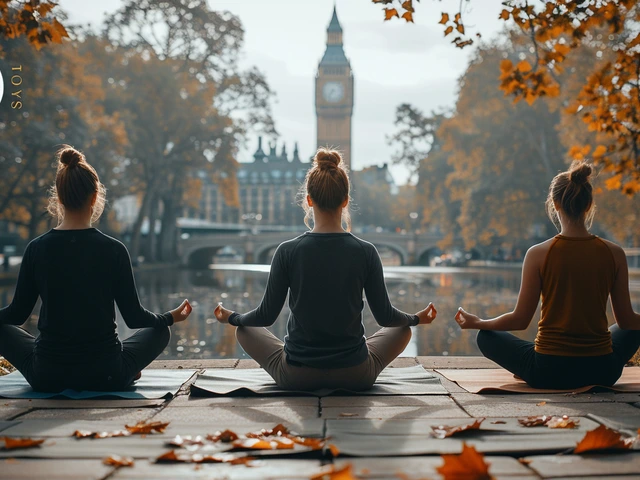

Most people think meditation means sitting cross-legged on the floor, chanting, or clearing your mind completely. That’s not true. You don’t need to empty your thoughts. You just need to notice them. And that’s it. If you’ve ever felt overwhelmed, distracted, or just plain tired of your own mind racing, meditation isn’t some mystical practice reserved for monks. It’s a simple tool anyone can use - even if you’ve never sat still for more than 30 seconds.
Why Meditation Works (Even If You Don’t Believe It)
A 2023 study from Harvard Medical School tracked 120 people who meditated for just 10 minutes a day over eight weeks. The results? Their amygdala - the part of the brain that triggers stress - shrank. Meanwhile, the prefrontal cortex, which handles focus and decision-making, grew thicker. That’s not magic. That’s biology. You don’t need to feel peaceful right away. You just need to show up.
Think of meditation like brushing your teeth. You don’t do it because you love the taste of toothpaste. You do it because skipping it leads to bigger problems later. Meditation works the same way. You won’t feel calm after one session. But after a week? You’ll notice you don’t snap at your partner over spilled coffee. You’ll pause before replying to that angry email. That’s the real win.
Forget Everything You’ve Heard
You don’t need silence. You don’t need incense. You don’t need a special cushion or a crystal or a YouTube video with whale sounds. All you need is a chair, a quiet spot, and two minutes. The idea that meditation requires perfect conditions is one of the biggest reasons people quit before they even start.
Try this: Sit in your kitchen chair while your coffee cools. That’s your meditation spot. No extra gear. No apps. No pressure. If you’re waiting for the perfect time, you’ll wait forever. Start now. Right here. Right where you are.
Step-by-Step: Your First Five Minutes
Here’s exactly what to do - no fluff, no spiritual jargon.
- Find a seat. Doesn’t matter if it’s a chair, the edge of your bed, or a stool. Keep your back straight but not stiff. Imagine a string pulling the top of your head gently toward the ceiling.
- Close your eyes or soften your gaze. Let your eyelids rest lightly. No need to squeeze them shut.
- Focus on your breath. Not your thoughts. Not your to-do list. Just the feeling of air moving in and out of your nose. Feel the coolness as it enters. The warmth as it leaves.
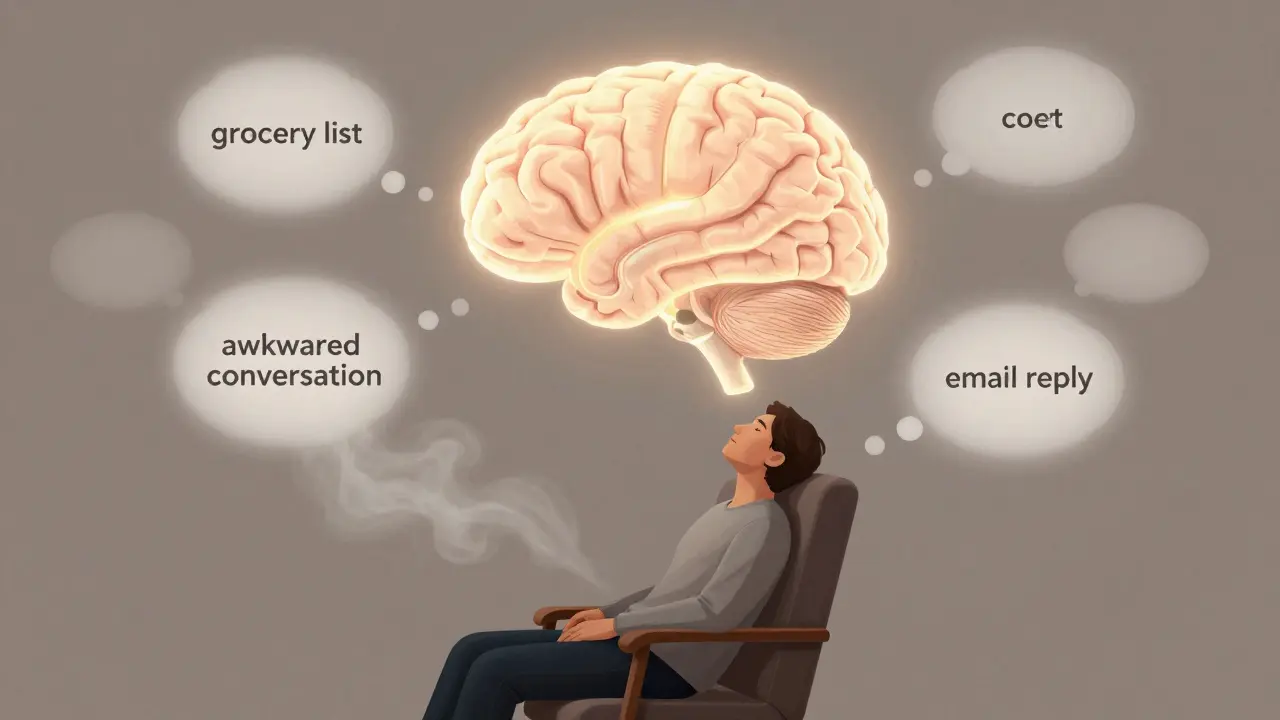
- When your mind wanders - and it will - don’t panic. That’s normal. Even experienced meditators get distracted. When you notice you’re thinking about your grocery list or that awkward conversation from last week, just gently bring your attention back to your breath. No judgment. No frustration. Just return.
- Set a timer for five minutes. Use your phone, but put it on silent and face down. When it rings, open your eyes. Stretch slowly. Notice how you feel.
That’s it. No chanting. No visualizations. Just breathing and returning. Do this every morning for five days. No exceptions. Even if you’re late for work. Even if you’re tired. Even if you think it’s pointless. Show up.
What to Expect - And What Not to Expect
Here’s what usually happens in the first week:
- Day 1: You think you’re doing it wrong because your mind won’t shut up.
- Day 2: You realize your mind is always this loud - you just never noticed.
- Day 3: You catch yourself being impatient. You feel frustrated. Good. That’s progress.
- Day 4: You notice you paused before yelling at the driver who cut you off. That’s meditation working.
- Day 5: You feel slightly more grounded. Not euphoric. Just… steadier.
You won’t feel enlightened. You won’t see colors or hear angels. You might even feel more restless than before. That’s okay. Meditation isn’t about escaping your mind. It’s about learning to be with it - without reacting.
Common Mistakes Beginners Make
Most people quit because they fall into these traps:
- Waiting for peace. You think meditation should feel relaxing. It doesn’t always. Sometimes it feels boring. Sometimes it feels frustrating. That’s part of the process.
- Trying to control thoughts. You can’t stop thinking. You can’t force calm. Trying to suppress thoughts is like trying to hold a beach ball underwater. It pops up harder.
- Comparing yourself to others. You see someone online meditating for an hour with perfect posture. That’s not your goal. Your goal is to sit for five minutes without giving up.
- Skipping days because you missed one. Missed a day? No big deal. Just start again tomorrow. Meditation isn’t a test. It’s a habit.
How to Make It Stick
Habits stick when they’re tied to something you already do. Here’s how to build meditation into your life:
- Link it to your morning coffee. Drink half your cup. Then sit for five minutes.
- Do it right after brushing your teeth. That’s your trigger.
- Use a sticky note on your bathroom mirror: “Breathe before you check your phone.”
- Set a daily alarm labeled “Breathe.” Not “Meditate.” That word scares people. “Breathe” doesn’t.
Track it. Not with an app. Just put an X on a calendar each day you do it. Don’t miss two days in a row. That’s the rule. One missed day? Fine. Two? You reset. This builds momentum without pressure.

When You’re Ready to Go Deeper
After a few weeks, you might want to try a few simple variations:
- Body scan. Lie down. Slowly bring attention to each body part - toes, ankles, knees, stomach, shoulders, face. Notice any tension. Don’t fix it. Just notice.
- Walking meditation. Walk slowly. Feel your feet touching the ground. Left. Right. Left. Right. No headphones. No destination. Just movement.
- Counting breaths. Inhale (1), exhale (2), inhale (3), up to 10. Then start over. If you lose count, go back to 1. No punishment.
These aren’t upgrades. They’re just different ways to practice noticing. Stick with one for at least two weeks before switching.
What Happens When You Keep Going
After three months, people who stick with it report real changes:
- They sleep better - not because they’re tired, but because their minds stop racing at night.
- They react less to stress. A flat tire doesn’t trigger a meltdown. A missed deadline doesn’t ruin their day.
- They notice small joys. The smell of rain. The way sunlight hits their coffee cup. These moments become more vivid.
It’s not about becoming a different person. It’s about becoming more present in the person you already are.
Final Thought
You don’t need to meditate for an hour. You don’t need to sit on a mountain. You just need to sit. Breathe. Return. Again. And again. And again.
The best meditation is the one you do. Not the one you imagine. Not the one you read about. The one you actually do - even if it’s messy, even if it’s short, even if you feel like you’re failing.
Start today. Five minutes. No excuses.
Can I meditate lying down?
Yes, but it’s harder to stay alert. Lying down works if you’re recovering from illness or injury, or if you’re doing a body scan. But for beginners, sitting upright helps keep the mind awake. If you fall asleep every time you lie down, try a chair instead.
Do I need to meditate every day?
You don’t *need* to, but you’ll get more benefit if you do. Think of it like exercise. Skipping a day won’t undo everything, but consistency builds results. Aim for five days a week at first. Once it feels natural, daily becomes easier.
Is it okay to use guided meditations?
Absolutely. Guided meditations are great for beginners. They give your mind something to focus on so it doesn’t wander as much. Apps like Insight Timer or free YouTube tracks work fine. Just don’t become dependent on them. The goal is to eventually sit quietly without any voice telling you what to do.
What if I feel anxious during meditation?
It’s common. Sitting still can bring up emotions you’ve been avoiding. If you feel overwhelmed, open your eyes. Stand up. Walk around. Drink water. Come back when you’re ready. Don’t force it. Meditation isn’t about pushing through discomfort - it’s about learning to be with it gently.
How long until I see results?
Most people notice small shifts in 1-2 weeks. You might feel calmer after a stressful meeting. Or you might catch yourself breathing before reacting. These are real results. Big changes - like deeper sleep or less anxiety - usually show up after 4-8 weeks of consistent practice.
Can children or older adults meditate?
Yes. Meditation works for all ages. Kids can start with one-minute breathing games. Older adults can sit in a recliner. The technique adjusts to the person, not the other way around. Even people with dementia have shown improved calmness with short, guided sessions.
If you’ve made it this far, you’re already doing better than most people who said they’d start someday. Don’t wait for the perfect moment. The perfect moment is now - right here, right now, with your next breath.