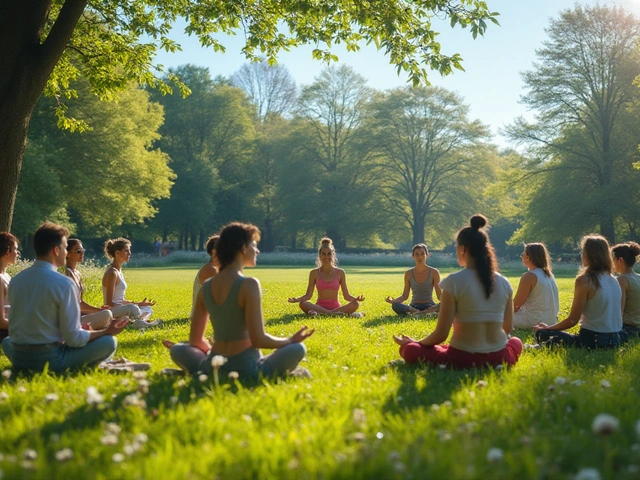
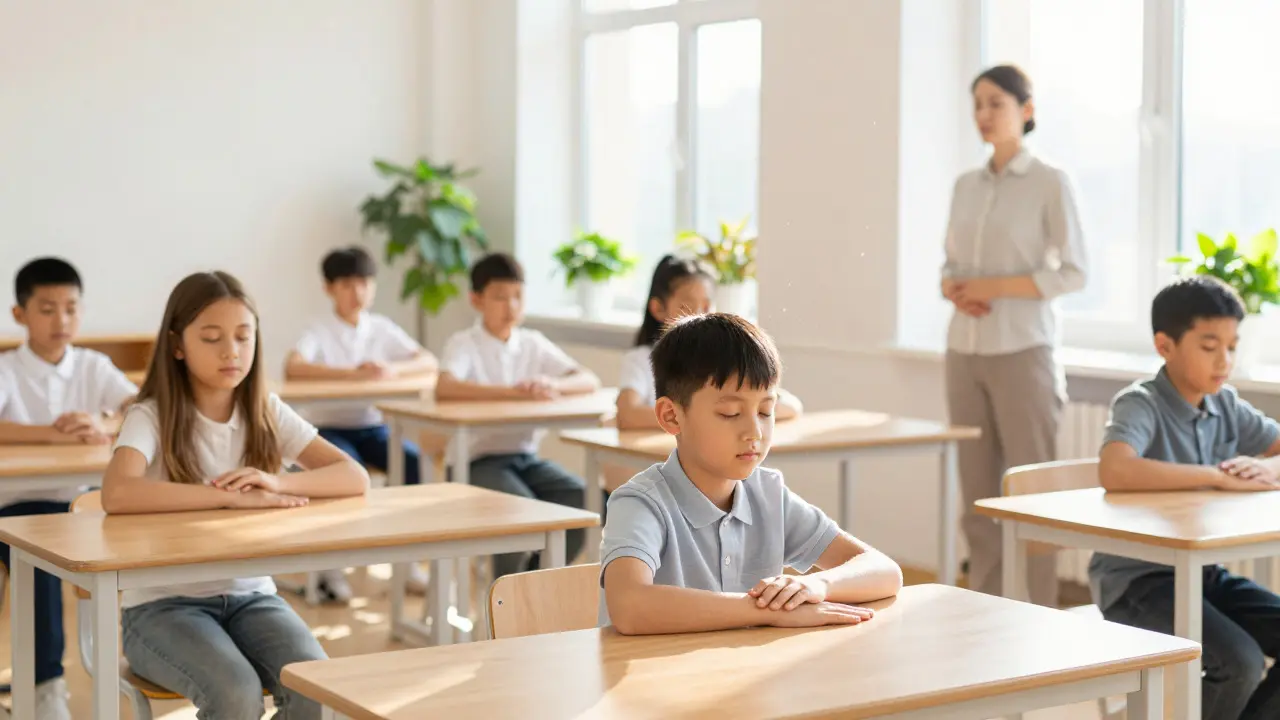
Imagine a classroom where the bell rings, but instead of chaos, there is a moment of calm. Students take three deep breaths, settle into their seats, and turn their attention to the lesson at hand. This isn't a fantasy; it is becoming a reality in schools across Australia and beyond. Mindfulness in education is the practice of bringing present-moment awareness to the learning environment to improve cognitive function and emotional regulation. It moves beyond simple relaxation techniques to become a core strategy for enhancing how students absorb information and manage stress.
The modern school day is intense. Between standardized testing, digital distractions, and social pressures, students are often overwhelmed. Teachers face similar burnout. Integrating mindfulness addresses this directly by training the brain to focus better and react less impulsively. You might wonder if five minutes of breathing exercises can really change academic performance. The evidence suggests it does more than just help kids relax; it fundamentally shifts how they engage with their studies.
Why Attention Is the New Currency in Learning
To understand why mindfulness works, you first have to look at what gets in the way of learning. Distraction is the enemy. When a student’s mind wanders to a text message or a worry about an upcoming game, their brain stops encoding new information. Mindfulness trains the "attention muscle." Think of it like going to the gym, but for your focus.
Research from institutions like the University of Melbourne has shown that even brief mindfulness interventions can improve working memory. Working memory is the mental workspace where you hold and manipulate information. If you are trying to solve a complex math problem, you need to keep several numbers in your head while performing calculations. A distracted mind drops those numbers. A mindful mind holds them tighter. By reducing the "noise" in the brain, mindfulness creates space for deeper processing of educational content.
- Improved Concentration: Students report being able to stay on task longer without needing constant redirection from teachers.
- Better Memory Retention: Calm states facilitate the transfer of information from short-term to long-term memory.
- Reduced Cognitive Load: Less anxiety means fewer mental resources are wasted on worry, leaving more energy for learning.
Practical Techniques for the Classroom
You don’t need a yoga studio or expensive equipment to bring mindfulness into a school setting. The most effective practices are simple, secular, and easy to integrate into existing schedules. Here are three methods that work well for different age groups.
- The Bell Awareness Exercise: Ring a chime or bell and ask students to listen until the sound completely fades away. This teaches sustained attention and patience. It takes less than two minutes and resets the room’s energy.
- Body Scans for Stress Relief: Guide students through mentally checking in with different parts of their body, from toes to head. This helps identify physical tension caused by stress and releases it. It is particularly useful before exams or high-pressure presentations.
- Mindful Breathing Anchors: Teach students to use their breath as an anchor when they feel overwhelmed. Counting breaths (inhale for four, hold for four, exhale for four) activates the parasympathetic nervous system, lowering heart rate and calming the mind.
These techniques are not replacements for curriculum; they are tools that make the curriculum accessible. For younger children, you might use imagery like "smelling the flower and blowing out the candle" to teach breathing. For teenagers, frame it as a performance hack for sports or gaming, which resonates with their desire for optimization.
| Technique | Best Age Group | Primary Benefit | Time Required |
|---|---|---|---|
| Bell Awareness | All Ages | Sustained Attention | 1-2 Minutes |
| Body Scan | Older Children/Teens | Stress Reduction | 5-10 Minutes |
| Breathing Anchors | All Ages | Emotional Regulation | 1-3 Minutes |

Impact on Emotional Intelligence and Behavior
Academic scores are important, but schools also aim to raise well-adjusted individuals. Mindfulness significantly boosts emotional intelligence (EQ). EQ involves recognizing, understanding, and managing your own emotions and those of others. In a classroom, low EQ leads to conflicts, bullying, and disruptive behavior.
When students practice mindfulness, they develop a gap between stimulus and response. Instead of immediately shouting back when teased, a mindful student pauses, notices the anger rising, and chooses a calmer response. This pause is powerful. It reduces disciplinary issues and fosters a more positive school climate. Teachers report spending less time managing behavioral crises and more time teaching. This creates a virtuous cycle: a calmer classroom allows for better learning, which reduces frustration, which further calms the classroom.
Furthermore, empathy increases. Mindfulness encourages non-judgmental observation. When students learn to observe their own thoughts without judgment, they extend that same grace to peers. This is crucial for building inclusive communities, especially in diverse urban settings like Melbourne, where students come from varied cultural backgrounds.
Teacher Well-being: The Hidden Factor
We often talk about students, but teachers are the gatekeepers of mindfulness in education. If a teacher is burned out, stressed, and reactive, it is nearly impossible to model calmness. Teacher stress is a major contributor to turnover in the education sector. Programs that include mindfulness for staff see higher retention rates and job satisfaction.
Teachers who practice mindfulness are better equipped to handle difficult situations. They respond to a crying child with compassion rather than annoyance. They navigate administrative pressures with greater resilience. This benefits the entire school ecosystem. When educators feel supported and centered, their enthusiasm for teaching returns, which directly impacts student engagement. It is not just about fixing students; it is about sustaining the adults who guide them.

Addressing Skepticism and Implementation Challenges
Not everyone is convinced. Some parents worry that mindfulness is too spiritual or religious. Others fear it takes valuable time away from core subjects like math and science. These concerns are valid and need addressing. First, school-based mindfulness is strictly secular. It focuses on psychology and neuroscience, not religion. Terms like "meditation" can be replaced with "focus training" or "mental fitness" to ease worries.
Second, regarding time, mindfulness is not an addition to the workload; it is an efficiency tool. Five minutes of focused breathing can save twenty minutes of lost time due to distraction later in the lesson. Schools that implement these programs successfully do so by integrating them into transitions-between classes, after lunch, or before starting a test. It becomes part of the routine, not an extra burden.
Another challenge is consistency. Sporadic efforts yield little result. Like any skill, mindfulness requires regular practice. Schools need dedicated coordinators or trained staff to ensure the program is delivered consistently across year levels. Professional development for teachers is essential to build confidence in leading these sessions.
The Future of Mindful Learning Environments
As we move further into the 2020s, the integration of technology in education continues to rise. While digital tools offer access to vast information, they also fragment attention. Mindfulness serves as a necessary counterbalance. It teaches students how to disconnect internally, even when connected externally. This skill will be critical for future workforce readiness, where deep work and creative problem-solving are valued over multitasking.
Policy makers in Australia are increasingly recognizing the value of social-emotional learning (SEL), with mindfulness as a key component. Funding is shifting towards holistic education models that prioritize mental health alongside academic achievement. Schools that adopt these practices early position themselves as leaders in preparing students for a complex world. The goal is not just to produce high test scores, but to cultivate resilient, focused, and empathetic humans.
Is mindfulness in education religious?
No, mindfulness in schools is strictly secular. It is based on psychological principles and neuroscience, focusing on attention regulation and stress reduction. Religious terminology is avoided to ensure inclusivity for all families regardless of belief systems.
How much time should be spent on mindfulness daily?
Even 5 to 10 minutes per day can yield significant benefits. Consistency is more important than duration. Short, frequent practices integrated into the school routine are more effective than occasional long sessions.
Can mindfulness help with ADHD symptoms?
Yes, studies suggest mindfulness can improve attention span and impulse control in students with ADHD. It helps strengthen executive functions, though it should be used as a complementary strategy alongside other educational supports.
Do teachers need special certification to teach mindfulness?
While formal certification is not always mandatory, professional development is highly recommended. Teachers benefit from training in specific techniques and classroom management strategies related to mindfulness to deliver programs effectively and confidently.
What are the measurable academic benefits?
Research indicates improvements in working memory, reading comprehension, and math performance. Additionally, reductions in absenteeism and disciplinary referrals contribute to a more stable learning environment, indirectly boosting overall academic outcomes.