
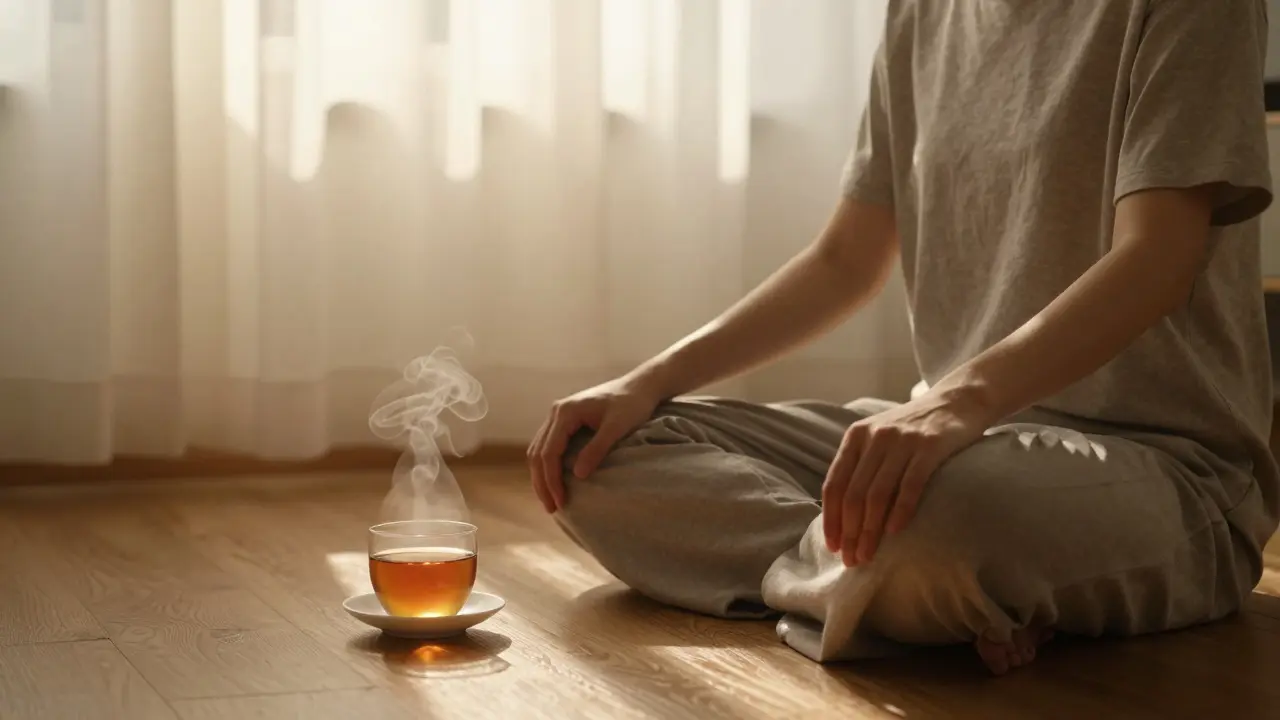
Most people think meditation is just about sitting quietly and clearing your mind. But if you’ve ever tried it-even for five minutes-you know it’s not that simple. It’s harder than it looks. And yet, millions stick with it. Why? Because the real benefits show up in ways you can’t ignore: better sleep, sharper focus, less anger, and a quiet mind that doesn’t spiral over every little thing.
1. Lowers Stress Hormones
When you’re stressed, your body pumps out cortisol. Too much of it over time leads to weight gain, high blood pressure, and trouble sleeping. A 2023 study from the University of British Columbia tracked 120 people who meditated for just 10 minutes a day over eight weeks. Their cortisol levels dropped by an average of 27%. That’s not a small change. It’s the kind of shift that makes you feel lighter, even on days when everything feels heavy.
2. Improves Focus and Concentration
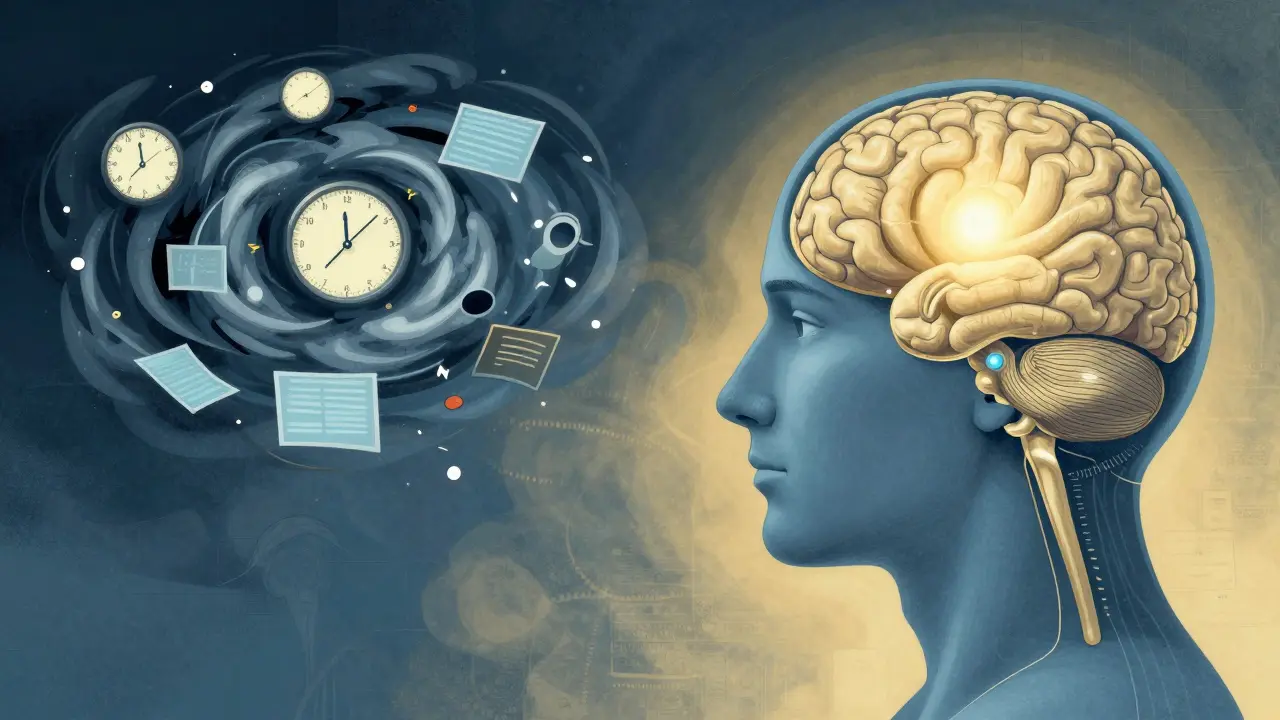
Ever sit down to work and realize you’ve spent 20 minutes scrolling instead of typing? That’s not laziness-it’s a brain that’s been trained to jump from one thing to another. Meditation strengthens the prefrontal cortex, the part of your brain responsible for focus. A Harvard study found that after six weeks of daily meditation, participants showed increased gray matter density in this area. The result? You stop losing your train of thought. You finish tasks faster. You stop feeling mentally scattered.
3. Helps You Sleep Better
If you lie awake at night replaying conversations or worrying about tomorrow, meditation can help. A 2024 meta-analysis of 18 clinical trials showed that people who practiced mindfulness meditation fell asleep 20% faster and stayed asleep longer than those who didn’t. You don’t need to meditate for an hour. Even five minutes of focused breathing before bed signals your nervous system to switch from fight-or-flight to rest-and-digest mode. No pills. No apps. Just your breath.
4. Reduces Anxiety and Panic Attacks
Anxiety doesn’t always come with a warning. Sometimes, it hits out of nowhere-racing heart, tight chest, dizzy feeling. Meditation doesn’t eliminate anxiety, but it changes how you relate to it. Instead of panicking when your thoughts spiral, you learn to notice them without getting swept away. A 2022 Johns Hopkins review of over 4,000 participants found that meditation was as effective as antidepressants for mild to moderate anxiety-with no side effects.
5. Lowers Blood Pressure
High blood pressure is silent, dangerous, and often treated with medication. But research shows meditation can help. The American Heart Association published a scientific statement in 2025 confirming that transcendental meditation and mindfulness practices can reduce systolic blood pressure by 5 to 10 mm Hg. That’s similar to the effect of some blood pressure meds. For someone trying to avoid medication, or reduce their dosage, meditation is a proven tool.
6. Boosts Emotional Resilience
Life throws curveballs. A job loss. A broken relationship. A health scare. Meditation doesn’t stop hard things from happening, but it helps you bounce back. People who meditate regularly show higher activity in the brain’s emotional regulation centers. They don’t ignore pain-they feel it, but they don’t get stuck in it. You start to notice: This feeling will pass. That small shift changes everything.
7. Enhances Self-Awareness
How often do you react without knowing why? You snap at a coworker. You eat when you’re not hungry. You avoid a conversation because it feels too heavy. Meditation helps you see your patterns. You start noticing: I do this every time I’m tired. Or: I say yes because I’m afraid of saying no. That awareness is the first step toward change. It’s not about becoming a better person-it’s about understanding who you already are.

8. Reduces Chronic Pain
Chronic pain isn’t just physical. It’s emotional, mental, and exhausting. Meditation doesn’t make the pain disappear, but it changes how your brain processes it. A 2021 study from Wake Forest University used fMRI scans to show that after four days of mindfulness training, participants reported 40% less pain intensity. Their brains showed reduced activity in areas linked to pain signaling. For people with back pain, arthritis, or migraines, this isn’t a miracle-it’s a manageable shift.
9. Improves Relationships
When you’re calm, you listen better. When you’re not reactive, you respond with care. Meditation helps you pause before you speak. It helps you notice when you’re projecting your own stress onto someone else. Couples who meditate together report higher relationship satisfaction. It’s not magic. It’s presence. When you’re fully there-with your partner, your kid, your friend-you stop making assumptions. You start seeing them.
10. Creates a Sense of Inner Peace
This is the one people don’t talk about enough. Not happiness. Not excitement. Peace. A quiet, steady calm that stays with you even when things fall apart. It doesn’t come from external achievements. It comes from showing up for yourself, day after day, even when you don’t feel like it. You start to realize: I don’t need to fix everything right now. That’s not resignation. That’s freedom.
Meditation isn’t about becoming someone else. It’s about coming home to yourself. You don’t need a cushion, a silent room, or an hour of free time. You just need five minutes. And the willingness to sit with your own thoughts-even the messy ones.