
Plate Balance Checker
Your Meal Composition
Your Meal Balance
Article Insight: Fill half your plate with vegetables for natural weight loss
Most people think weight loss means starving yourself, counting every calorie, or buying expensive meal plans. The truth? It doesn’t have to be that hard. A healthy diet for weight loss isn’t about restrictions-it’s about making small, smart choices that add up over time. You don’t need to quit sugar forever or eat only kale. You just need to eat in a way that keeps you full, gives you energy, and slowly helps you lose weight without feeling like you’re on a diet.
Start with what’s on your plate
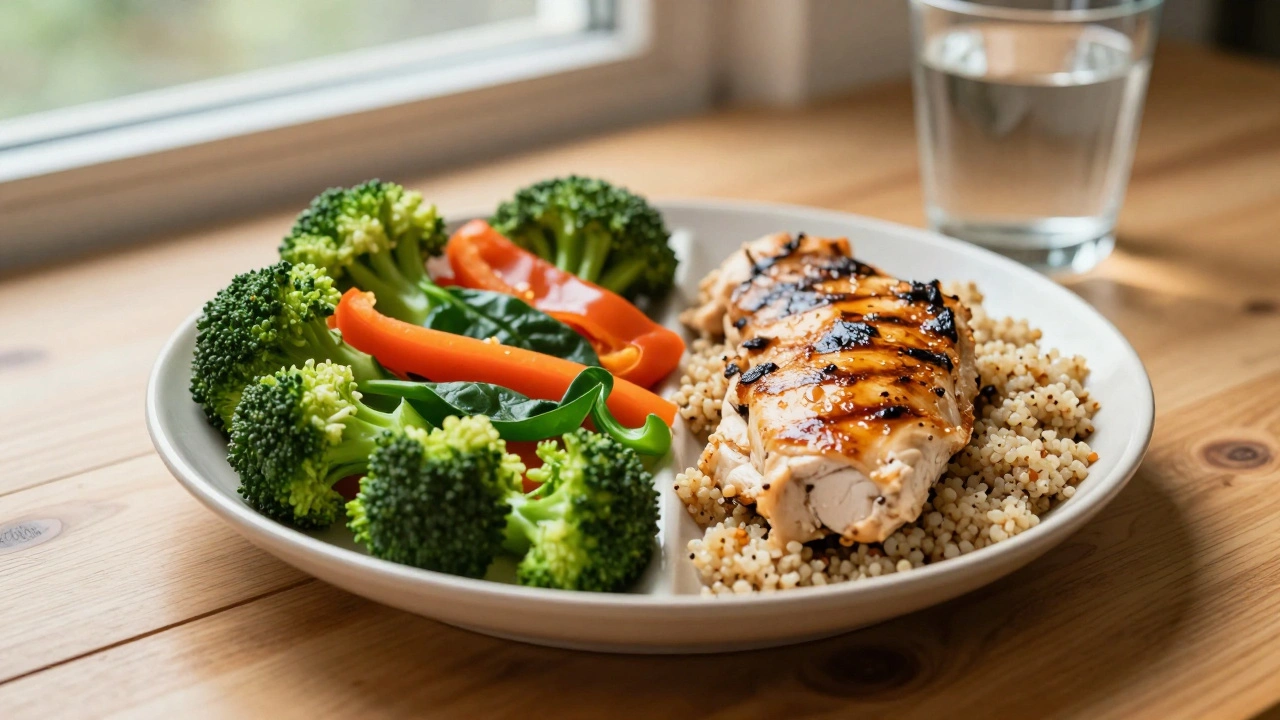
Think of your plate like a pie. Half of it should be vegetables and fruits. That’s not a suggestion-it’s a rule that works. A 2023 study from the University of Toronto followed 500 adults who made this simple change: they filled half their plate with non-starchy veggies like broccoli, spinach, peppers, and carrots before adding anything else. After six months, they lost an average of 8 pounds-without counting calories or skipping meals.Why does this work? Vegetables are low in calories but high in fiber and water. They fill you up fast. When you start your meal with them, you naturally eat less of the higher-calorie stuff-like rice, pasta, or fried chicken-because you’re already satisfied.
Try this: Before you serve yourself, put a big bowl of raw veggies or a side salad on the table. Eat half of it before you touch your main dish. You’ll be surprised how much less you eat after that.
Protein keeps you full longer
If you’re hungry an hour after eating, your meal probably didn’t have enough protein. Protein doesn’t just build muscle-it tells your brain you’re done eating. A 2024 meta-analysis of 22 studies found that people who ate at least 20 grams of protein per meal lost more weight and kept it off longer than those who didn’t.You don’t need to eat steak every meal. A single egg has 6 grams. A cup of lentils has 18. A 3-ounce chicken breast has 26. Even a cup of Greek yogurt has 17. Mix and match. Have eggs for breakfast. Add beans to your lunch salad. Snack on cottage cheese or edamame.
Here’s a simple trick: If you’re unsure how much protein to eat, aim for the size of your palm. That’s about 20-30 grams. Do that at every meal, and you’ll naturally eat fewer carbs and fats without even trying.
Stop drinking your calories
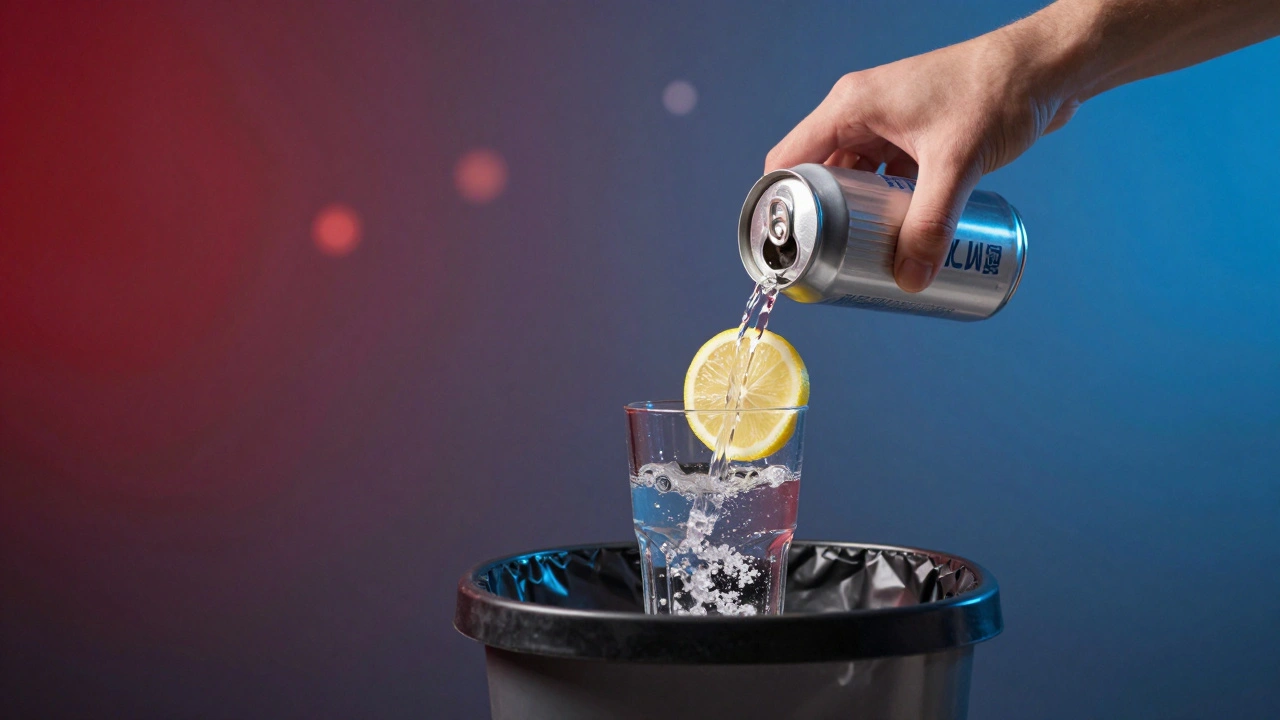
It’s easy to ignore calories in drinks. A grande latte with syrup? 300 calories. A bottle of sweetened iced tea? 250. A glass of wine? 120. These add up fast-and they don’t make you feel full.A 2025 survey by the Canadian Public Health Association found that people who cut out sugary drinks lost an average of 11 pounds in four months-just by switching to water, unsweetened tea, or sparkling water with lemon. No other changes. Just stopping the liquid sugar.
Try this: For one week, drink only water, black coffee, or plain tea between meals. If you crave something sweet, add a slice of orange or cucumber to your water. You’ll start noticing how sweet everything else tastes-and you won’t miss the sugar as much.
Don’t skip meals, but eat slower
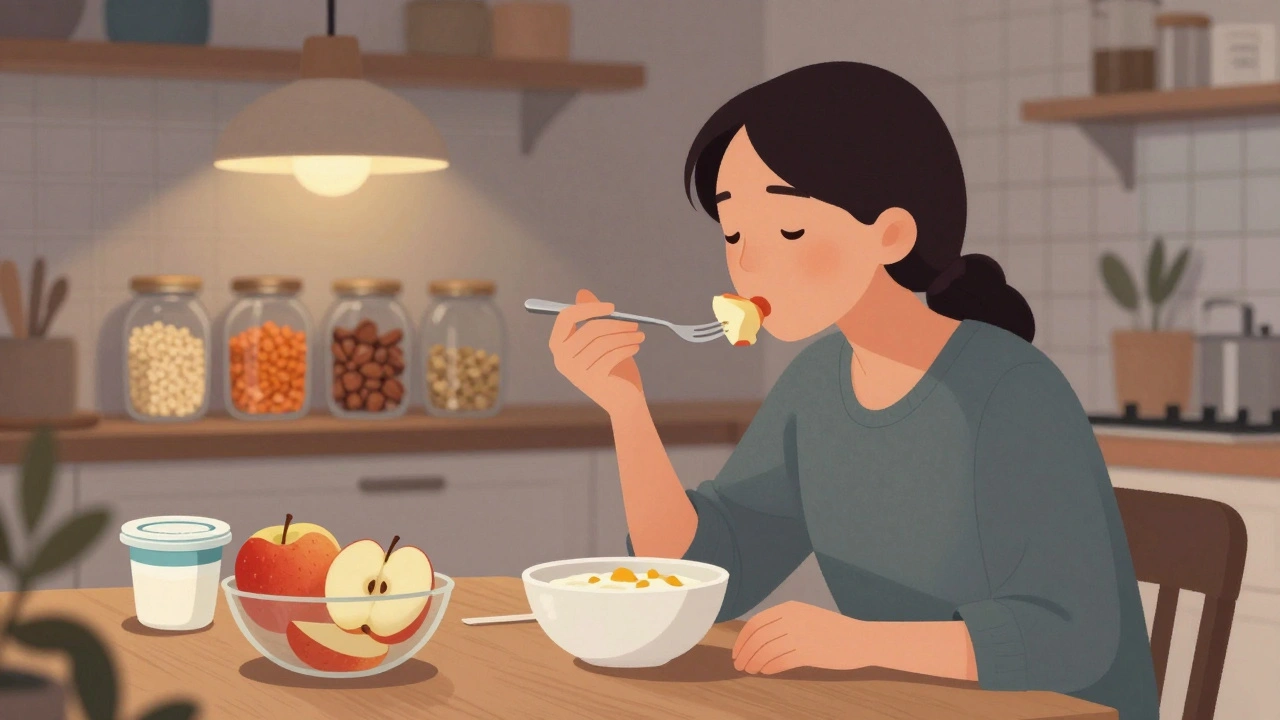
Skipping meals to save calories backfires. When you go too long without eating, your body goes into survival mode. You get hungrier later. You crave carbs. You end up eating more than you would’ve if you’d eaten regularly.Instead, eat three balanced meals a day. And slow down. It takes about 20 minutes for your brain to get the signal that you’re full. If you eat too fast, you’ll eat past that point.
Put your fork down between bites. Chew each bite 15-20 times. Put your phone away. Eat without distractions. You’ll eat less, enjoy your food more, and feel satisfied with smaller portions.
Plan ahead-without overcomplicating it
You don’t need to meal prep for the whole week. But you do need to make one small plan each day.Every Sunday night, pick three simple dinners you can make quickly: grilled chicken with roasted veggies, lentil soup with whole grain bread, or scrambled eggs with spinach and avocado. Write them down. When you’re tired after work, you won’t reach for takeout-you’ll know what’s already planned.
Keep healthy snacks ready: a bag of almonds, a container of sliced apples, hard-boiled eggs, or hummus with carrot sticks. If you’re hungry between meals, you’ll grab one of those instead of cookies or chips.
It’s not about perfection
You will have days when you eat pizza. Or order sushi. Or have dessert. That’s fine. Healthy eating isn’t about being perfect. It’s about consistency over weeks and months.One study from the University of British Columbia tracked people who followed a healthy diet 80% of the time. They lost weight steadily and kept it off for years. The other 20%? They ate what they wanted. No guilt. No reset days. Just balance.
If you slip up, don’t think, “I ruined it.” Just say, “Okay, next meal is back on track.” One bad meal doesn’t undo progress. But one bad habit-like daily soda or skipping breakfast-will.
What you can eat right now
Here’s a simple list of foods that work for weight loss without requiring any special diet:- Leafy greens: spinach, kale, arugula
- Cruciferous veggies: broccoli, cauliflower, Brussels sprouts
- Lean proteins: chicken, turkey, tofu, eggs, fish
- Legumes: lentils, black beans, chickpeas
- Whole grains: oats, quinoa, brown rice, whole wheat bread
- Fruits: berries, apples, oranges, pears
- Healthy fats: avocado, nuts, seeds, olive oil
- Dairy: plain Greek yogurt, cottage cheese
These aren’t “diet foods.” They’re just real foods that keep you full, give you nutrients, and help your body burn fat naturally.
What to avoid-not because they’re bad, but because they’re tricky
Some foods aren’t evil. But they’re designed to make you eat more than you want:- Processed snacks: chips, cookies, granola bars
- Sweetened drinks: soda, juice, flavored coffee
- Refined carbs: white bread, pastries, instant oatmeal
- Fast food: burgers, fries, fried chicken
You don’t have to quit them forever. But if you eat them daily, you’re fighting an uphill battle. Cut them out for two weeks. Notice how your energy changes. Notice how you stop craving them. Then decide if you want them back-even once a week.
Why this works better than diets
Diets fail because they’re temporary. This approach works because it’s not a diet-it’s a way of eating. You’re not trying to “get thin.” You’re learning how to feel good, have steady energy, and enjoy food without guilt.People who follow this method don’t bounce back after losing weight. They don’t hit a plateau. They just keep moving forward, one meal at a time. Because they’re not fighting their hunger. They’re feeding it the right way.
Weight loss isn’t a race. It’s a habit. And habits are built slowly, one choice at a time.