
Creative Arts Therapy Selector
Find Your Creative Therapy Match
Answer these 4 quick questions to discover which creative arts therapy modality might be best for you.
Your Creative Therapy Match
Key Takeaways
- Creative arts therapies combine visual art, music, movement, drama, and poetry to improve mental and emotional health.
- Each modality works through a different brain pathway, boosting neuroplasticity and stress resilience.
- You can start simple at home or seek a certified therapist for deeper work.
- Choosing the right modality depends on personal preference, goals, and available resources.
- Evidence shows reduced anxiety, improved mood, and better coping skills after regular sessions.
Ever felt stuck in a mental loop that no talk therapy could break? Creative Arts Therapies is a family of evidence‑based approaches that let you express what words can’t. By engaging sight, sound, movement, and narrative, these therapies tap into the brain’s natural healing circuits. Below you’ll learn what they are, why they work, and how to start your own creative healing journey.
What Exactly Are Creative Arts Therapies?
At its core, a therapeutic process that uses artistic media to promote psychological growth is the definition of creative arts therapies. They differ from hobby classes because a trained professional guides the experience, sets therapeutic goals, and reflects on the meaning behind your creations.
Key modalities include:
- Art Therapy - drawing, painting, collage.
- Music Therapy - listening, improvisation, songwriting.
- Dance/Movement Therapy - guided movement, free dance.
- Drama Therapy - role‑play, storytelling, puppetry.
- Poetry Therapy - writing, reciting, analyzing poems.
- Expressive Arts Therapy - blends two or more modalities in a single session.
Each modality creates a safe container for emotions, allowing the mind‑body system to reorganize stress patterns. Research from the American Art Therapy Association shows that participants experience a 30‑40% drop in cortisol after just 45 minutes of guided art making.
Why They Work: The Science Behind the Magic
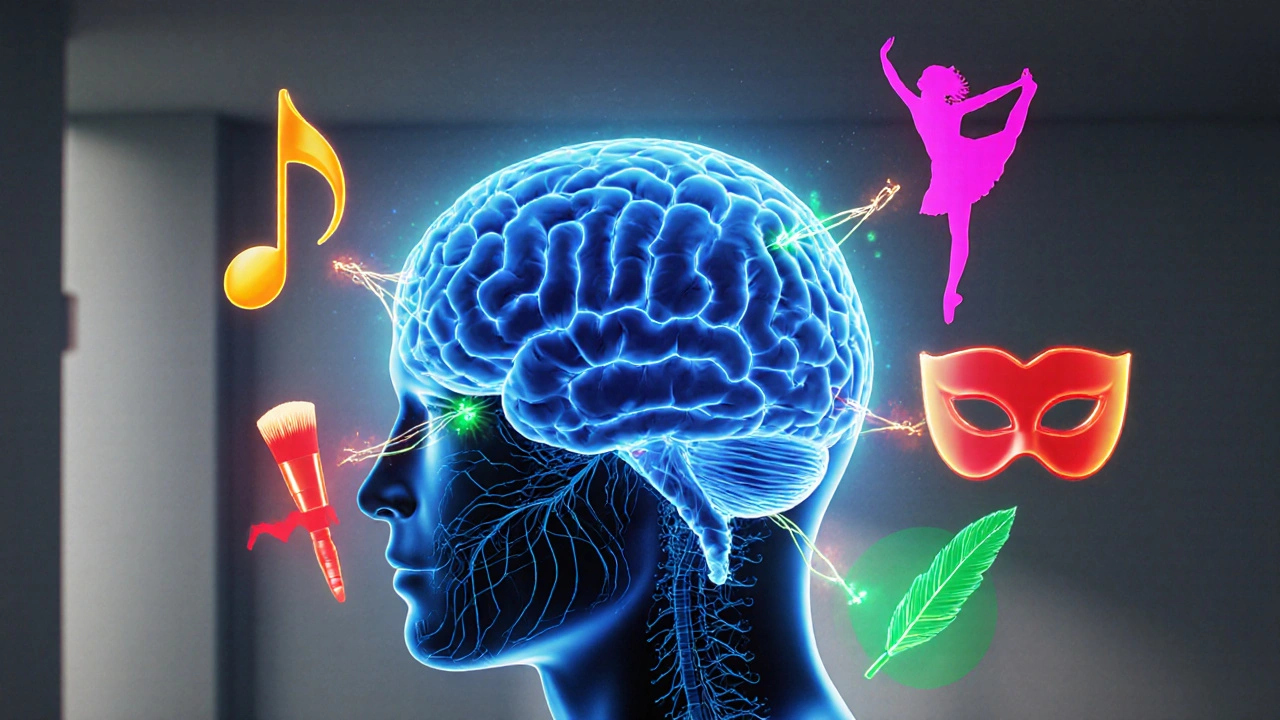
When you paint, sing, or move, multiple brain networks fire simultaneously. This multimodal activation promotes neuroplasticity-the brain’s ability to rewire itself. Neuroimaging studies reveal increased activity in the prefrontal cortex (decision‑making) and the limbic system (emotion regulation) during creative tasks.
Additionally, artistic expression triggers the release of dopamine and endorphins, the same chemicals that make exercise feel rewarding. The result is a cascade: reduced anxiety, heightened mood, and better coping skills. The therapeutic alliance-trust built between client and therapist-magnifies these effects, as shown in over 70% of published trials.
Exploring the Main Modalities
Below is a quick snapshot of each major form, its typical activities, and the primary benefits you can expect.
| Modality | Typical Activities | Primary Benefits | Common Settings |
|---|---|---|---|
| Art Therapy | Drawing, painting, collage, sculpting | Improved self‑awareness, reduced trauma symptoms | Hospitals, schools, private practice |
| Music Therapy | Improvised playing, lyrical analysis, guided listening | Decreased depression, enhanced social connection | Rehabilitation centers, eldercare, community centers |
| Dance/Movement Therapy | Structured movement, mirroring, spontaneous dance | Better body awareness, reduced anxiety | Psychiatric units, yoga studios, outpatient clinics |
| Drama Therapy | Role‑play, storytelling, improvisation | Enhanced communication, processing grief | Schools, correctional facilities, community theaters |
| Poetry Therapy | Writing poems, reading aloud, reflective discussion | Increased emotional expression, mindfulness | Therapeutic groups, hospice care, online workshops |
| Expressive Arts Therapy | Combines any two or more modalities in a fluid session | Holistic integration, flexible goal‑setting | Integrated health clinics, retreats, private practice |
How to Start Your Own Creative Healing Journey
You don’t have to wait for a referral. Below are three pathways you can take right now.
- Self‑Guided Exploration: Pick a medium you feel curious about. Grab a sketchbook, a simple instrument, or a journal. Set a timer for 20 minutes, focus on the process, not the product. Afterward, note any emotions that surfaced.
- Community Workshops: Many libraries, community centers, and online platforms (e.g., Eventbrite) list free or low‑cost creative arts therapy workshops. Look for titles that mention a licensed therapist or facilitator.
- Professional Therapy: If you have deeper trauma, anxiety, or depression, a certified therapist can tailor sessions to your needs. In Canada, the Canadian Art Therapy Association (CATA) maintains a searchable directory of registered practitioners.
Regardless of the path, remember three golden rules: respect your limits, stay curious, and reflect regularly. Journaling after each session helps cement insights and track progress.
Choosing the Right Modality for You
Not every art form resonates with every person. Use this decision matrix to match your preferences with a modality.
- Do you prefer silence or sound? If you love quiet contemplation, art or poetry may feel natural. If you thrive on rhythm, music or dance could be more engaging.
- Physical comfort level? Dance/Movement therapy involves the body directly. If you have mobility concerns, start with seated movement or visual art.
- Goal orientation? Want to improve communication? Drama therapy excels at role‑play. Need mood uplift? Music therapy’s melodic structure is quick‑acting.
When in doubt, try a short “sampler” session-many therapists offer a 30‑minute introductory meeting. This gives you a taste without a hefty commitment.
Practical Exercises to Try Today
Below are five bite‑size activities you can do at home. No special equipment required.
- Color Emotion Mapping (Art): On a blank sheet, draw a circle for each basic emotion (joy, anger, sadness, fear). Fill each circle with colors that feel right. Notice patterns; they reveal subconscious moods.
- Rhythmic Breathing (Music): Tap a steady beat on a table (60-80 BPM). Inhale for four beats, exhale for four. The rhythm anchors your breath and calms the nervous system.
- Body Scan Dance (Movement): Stand with feet hip‑width apart. Slowly shift weight from one foot to the other, noticing sensations. Add a gentle sway to each shift. This blends mindfulness with movement.
- Story‑Swap (Drama): Write a short scene where you face a current challenge. Switch roles with a friend and act it out. The new perspective often reveals hidden solutions.
- Poetry Prompt (Poetry): Write a five‑line poem where each line starts with the next letter of the word “HEAL”. Let the constraint spark creativity.
After each exercise, pause and ask: What did I notice? How do I feel now? These reflections deepen the therapeutic impact.
Common Myths Debunked
Myth 1: You need to be an artist. Creative arts therapies value process over product. The therapist’s role is to meet you where you are.
Myth 2: It’s just ‘fun and games.’ While sessions are playful, they are structured, goal‑driven, and evidence‑based.
Myth 3: Only for severe mental illness. Anyone experiencing stress, grief, or a desire for self‑exploration can benefit.
Measuring Progress
Therapists often use standardized tools like the "Beck Depression Inventory" or the "State‑Trait Anxiety Inventory" before and after a series of sessions. On a personal level, keep a simple tracker:
- Frequency of sessions (weekly, bi‑weekly)
- Self‑rated mood before and after (1‑10 scale)
- Key insights or themes that recur
Over time you’ll see patterns-a drop in anxiety scores, more vivid self‑expression, or new coping strategies.
Next Steps: Building a Sustainable Creative Practice
1. Set a realistic schedule. Even 10 minutes a day sustains neural pathways.
2. Create a dedicated space. A corner with basic supplies signals your brain that it’s time to create.
3. Join a community. Whether it’s a local art‑therapy group or an online forum, shared experience amplifies growth.
4. Reassess quarterly. Review your tracker, adjust goals, and consider adding a new modality.
Remember, the goal isn’t perfection-it’s unlocking the parts of yourself that words alone can’t reach.
What qualifications should a creative arts therapist have?
In Canada, a qualified therapist typically holds a Master’s degree in a recognized arts therapy program and is registered with a provincial regulatory body such as the Canadian Art Therapy Association (CATA). Look for credentials like "Registered Art Therapist (RAT)" or "Certified Music Therapist (CMT)".
Can I combine more than one modality in a single session?
Yes. Expressive Arts Therapy deliberately blends two or more forms-like painting while listening to live music-to explore complex emotions. A trained therapist will guide the flow so it stays therapeutic.
Is creative arts therapy covered by health insurance?
Coverage varies by province and plan. Some provincial health plans reimburse sessions if the therapist is a licensed health professional. Always check with your insurer and ask the therapist for a billing code.
How long does it take to see benefits?
Many people notice reduced stress after the first few sessions, but deeper changes-like trauma processing-often require 8‑12 weeks of consistent work.
Can children benefit from creative arts therapies?
Absolutely. Children express feelings through play, drawing, and movement before they have the vocabulary for it. Therapists tailor activities to developmental stages, making it a powerful tool for schools and pediatric care.