
Fiber Intake Calculator
Track Your Fiber Intake
Daily fiber recommendation: 25-38 grams for adults. The article states most people get less than half the recommended amount.
Your Daily Fiber Intake
If you’re constantly bloated, gassy, or stuck between constipation and diarrhea, you’re not alone. Millions of people think it’s just "normal" to feel off after eating. But it’s not. Your gut is screaming for help-and the fix isn’t a pill. It’s your plate.
What’s Really Going On in Your Gut?
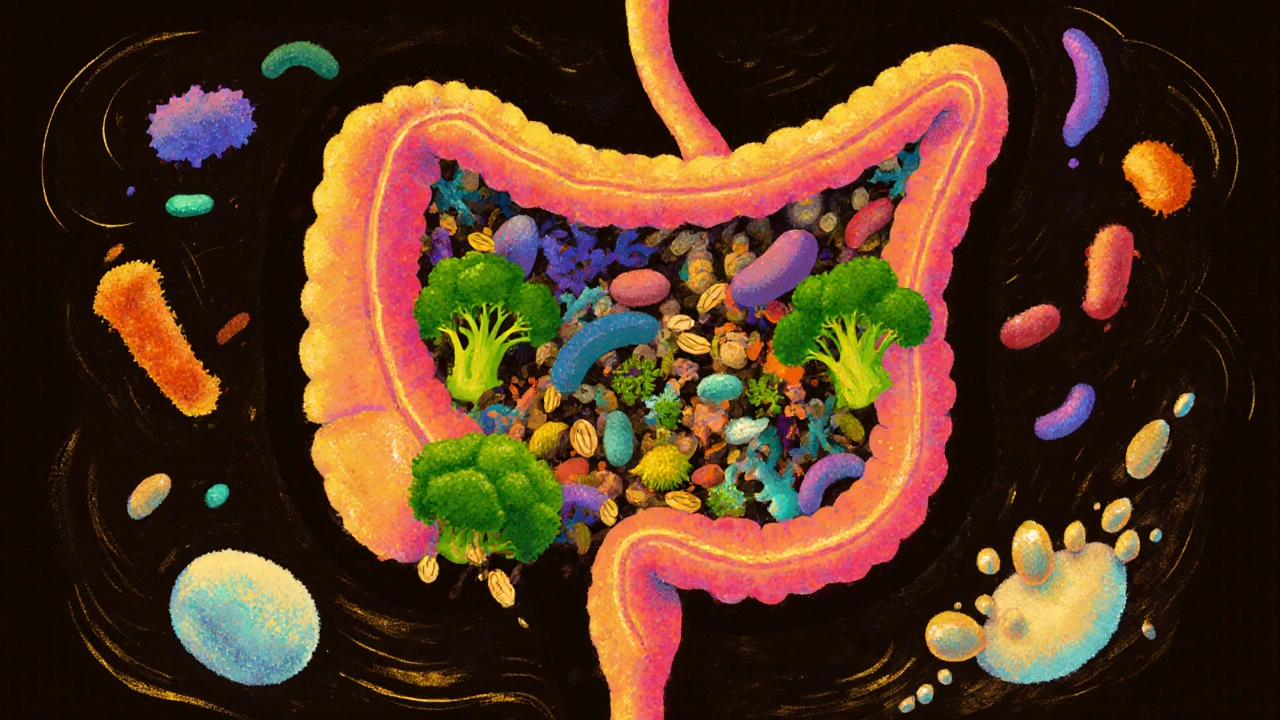
Your digestive system isn’t just a pipe for food. It’s a living ecosystem with trillions of bacteria, viruses, and fungi. When this balance breaks, you get symptoms: bloating after bread, stomach cramps after dairy, or that heavy, sluggish feeling after lunch. Most of the time, it’s not an infection or disease. It’s your diet.Processed foods, added sugars, and low-fiber meals starve your good gut bacteria. At the same time, they feed the bad ones. This imbalance triggers inflammation, slows digestion, and makes your gut lining leaky. The result? Food particles you can’t digest get stuck, gas builds up, and your body starts reacting to things it used to handle fine.
Studies from the American Journal of Gastroenterology show that over 70% of people with chronic digestive issues see major improvement within 4-6 weeks of switching to a whole-food, fiber-rich diet. No medications. No supplements. Just food.
The Four Pillars of a Digestive-Friendly Diet
A healthy diet for digestion isn’t about cutting out everything you love. It’s about adding the right things-and removing the ones that sabotage your gut.1. Fiber isn’t optional-it’s essential. Most people get less than half the recommended 25-38 grams per day. Soluble fiber (oats, apples, beans) soaks up water and slows digestion, keeping you full and steady. Insoluble fiber (broccoli, whole grains, nuts) adds bulk and keeps things moving. Without enough, waste sits too long, bacteria overgrow, and constipation sets in.
2. Fermented foods bring back the good guys. Yogurt with live cultures, sauerkraut, kimchi, kefir, and miso are packed with probiotics. These live bacteria help restore balance in your gut. A 2023 study in the journal Nutrients found that people who ate fermented foods daily had 30% lower levels of gut inflammation markers than those who didn’t.
3. Ditch the sugar and artificial sweeteners. High-fructose corn syrup, sucrose, and even sugar-free sweeteners like sucralose and aspartame feed harmful bacteria and yeast. That’s why diet sodas can cause bloating worse than regular ones. Sugar also disrupts the mucus layer that protects your gut lining. One small study showed that just 7 days of high sugar intake reduced beneficial gut bacteria by nearly 40%.
4. Eat slowly and chew well. Digestion starts in your mouth. When you wolf down food, your stomach gets overwhelmed. Chewing breaks food into smaller pieces and signals your gut to release digestive enzymes. People who eat fast are 3x more likely to report bloating and indigestion, according to research from the University of Manchester.
What to Eat Every Day (Simple Plan)
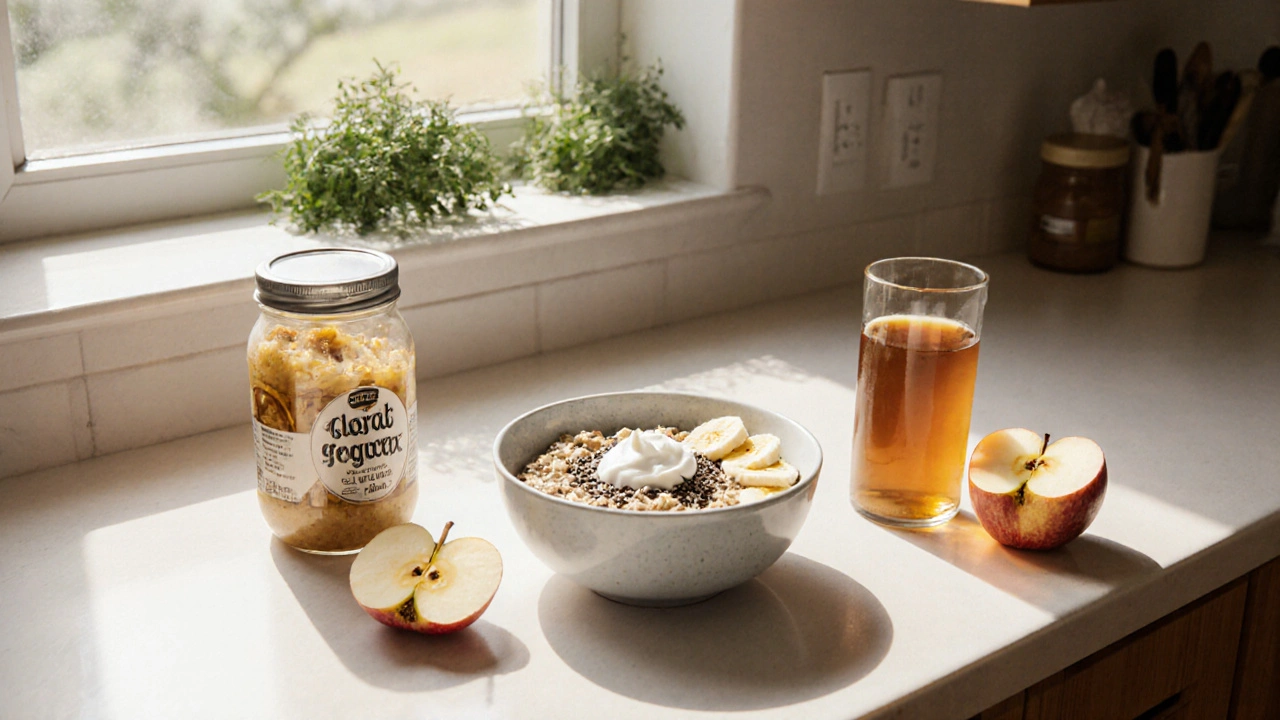
You don’t need a complicated meal plan. Just follow this daily template:- Breakfast: Oatmeal with chia seeds, sliced banana, and a spoon of plain Greek yogurt
- Lunch: Grilled chicken or lentils over spinach, quinoa, roasted carrots, and a side of sauerkraut
- Snack: Apple with almond butter or a handful of raw almonds
- Dinner: Baked salmon with steamed broccoli and sweet potato
- Drink: Water, herbal teas (ginger or peppermint), or kombucha
That’s it. No fancy superfoods. No detoxes. Just real, whole foods that your gut recognizes as food-not chemicals.
What to Avoid (Even If You Think It’s Healthy)
Some foods are marketed as healthy but wreck your digestion:- Granola bars: Often loaded with sugar, corn syrup, and seed oils. Check the label-sugar should be the last ingredient, not the second.
- Gluten-free processed snacks: Many replace wheat with refined rice flour and starches, which spike blood sugar and feed bad bacteria.
- Flavored plant milks: Almond or oat milk with added sugar or carrageenan can trigger bloating. Stick to unsweetened versions.
- Artificially sweetened gum and mints: Xylitol, sorbitol, and mannitol are sugar alcohols that ferment in your gut and cause gas and cramps.
Even if something says "natural" or "organic," if it comes in a package with a long ingredient list, it’s probably not helping your gut.
How Long Until You Feel Better?
Most people notice less bloating within 3-5 days. Energy levels climb by day 7. After 2-3 weeks, regular bowel movements return. Constipation eases. Gas drops. The heavy, foggy feeling after meals? Gone.But it’s not linear. Some days you’ll feel amazing. Other days, stress or a slip-up might bring back symptoms. That’s normal. The goal isn’t perfection. It’s progress. One meal at a time.
If you’ve tried cutting out gluten or dairy and still feel bad, you might be missing something bigger: variety. Your gut thrives on diversity. Eating the same 5 foods every day-no matter how "healthy"-can make your microbiome weaker. Rotate your veggies, grains, and proteins. Try a new fermented food each week. Your gut will thank you.

When to See a Doctor
A healthy diet fixes most digestive issues. But if you have any of these, see a healthcare provider:- Unexplained weight loss
- Bloody or black stools
- Severe pain that wakes you up at night
- Diarrhea that lasts more than 2 weeks
- Fever with digestive symptoms
These aren’t diet problems. They’re signs of something deeper-like Crohn’s, celiac disease, or IBS with complications. A doctor can run tests and rule those out. But for the vast majority of people, food is the first and most powerful medicine.
Real People, Real Results
Sarah, 34, from Orlando, used to have daily bloating after lunch. She blamed her job, stress, even her water. Then she switched to the simple plan above. Within 10 days, her stomach felt flat. After 3 weeks, she stopped taking antacids. "I didn’t realize how much my snacks were hurting me," she said. "Now I eat an apple and peanut butter for lunch-and I feel like I’ve got my energy back."Mark, 51, struggled with chronic constipation for years. He tried laxatives, fiber pills, even colon cleanses. Nothing worked. He started eating more beans, oats, and sauerkraut. Within 12 days, he had his first regular bowel movement in over a year. "I didn’t think food could do that," he told me. "Now I cook with lentils every week."
These aren’t outliers. They’re the rule.
Can a healthy diet cure IBS?
A healthy diet won’t "cure" IBS, but it can control symptoms for most people. The low-FODMAP diet, developed by Monash University, is clinically proven to reduce bloating, pain, and bowel changes in 75% of IBS patients. But you don’t need to follow it strictly forever. Once symptoms improve, you can slowly reintroduce foods to find your personal triggers. The key is focusing on whole, unprocessed foods-not elimination for life.
Do I need probiotic supplements?
Not if you’re eating fermented foods daily. Yogurt, kefir, kimchi, and sauerkraut contain far more live cultures than most pills-and they come with fiber and nutrients. Supplements can help in some cases, like after antibiotics, but they’re not a substitute for real food. Look for supplements with at least 10 billion CFUs and strains like Lactobacillus rhamnosus or Bifidobacterium infantis if you choose to use them.
What if I’m vegetarian or vegan?
You’re in a great position. Plant-based diets are naturally high in fiber and polyphenols, which feed good gut bacteria. Focus on beans, lentils, whole grains, nuts, seeds, and fermented soy like tempeh and miso. Make sure you’re getting enough zinc and B12-those are the two nutrients that can be harder to get without animal products. A daily B12 supplement is recommended for vegans.
Can I drink coffee with digestive issues?
Coffee can irritate the gut lining and speed up digestion, which might worsen diarrhea or acid reflux. But if you tolerate it without symptoms, it’s fine in moderation. Try switching to low-acid coffee or drinking it after a meal instead of on an empty stomach. Herbal teas like chamomile or ginger are gentler alternatives.
How much water should I drink?
Drink when you’re thirsty, but aim for at least 8 cups a day-more if you’re active or live in a hot climate like Orlando. Water helps fiber do its job. Without enough water, fiber can make constipation worse. Don’t overdo it-your body knows how much it needs. Clear or light yellow urine is a good sign you’re hydrated.
Next Steps: Start Small, Stay Consistent
You don’t have to overhaul your whole diet tomorrow. Pick one thing:- Swap your afternoon candy bar for an apple and almonds.
- Add a spoon of sauerkraut to your sandwich.
- Drink a glass of water before every meal.
- Chew each bite 15-20 times.
Do that for a week. Then add another. Small changes build lasting results. Your gut doesn’t need a miracle. It just needs real food, time, and a little patience.