
Therapy Matchmaker
Find Your Therapy Match
Select your condition to see evidence-based creative arts therapy recommendations
Therapy Recommendation
Select a disorder to see your recommendation
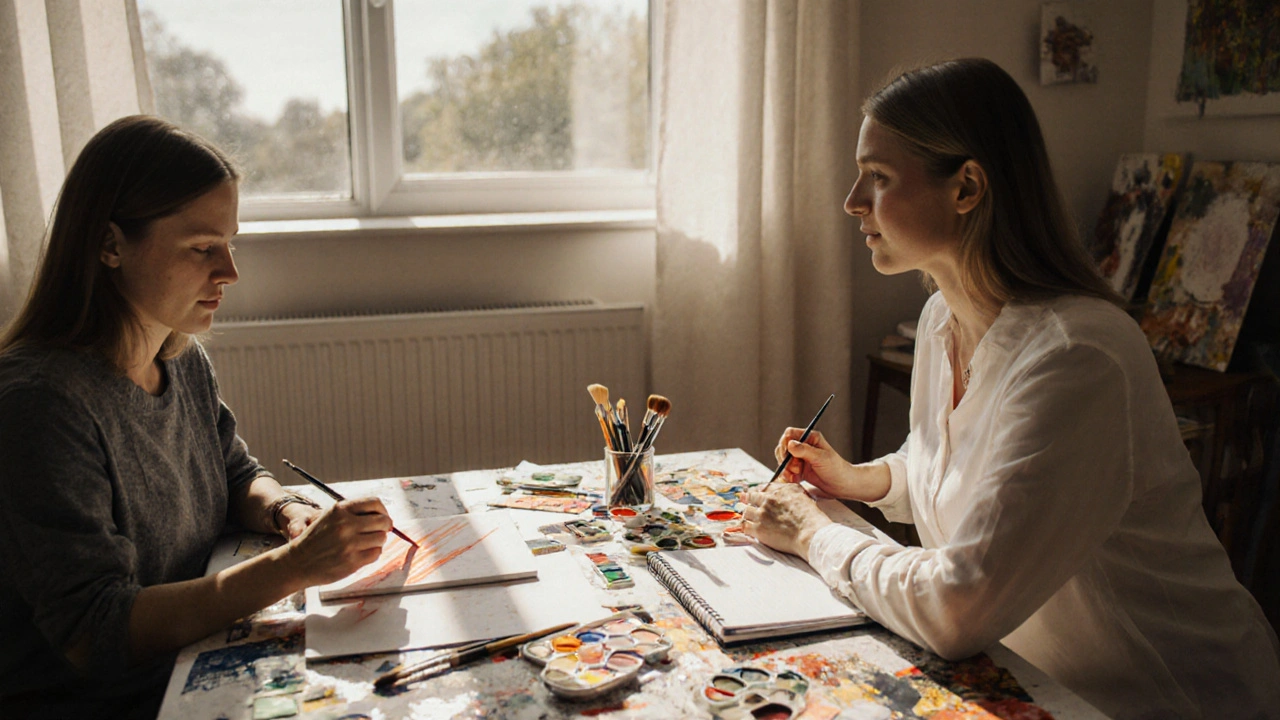
Creative Arts Therapies is a group of therapeutic approaches that use artistic expression-such as visual art, music, dance, drama, and writing-to promote mental health and emotional well‑being. When you hear the term, you might picture a therapist handing out paintbrushes or a drum circle in a clinic. It’s more than a hobby; it’s a science‑backed method that reaches the brain where words sometimes fail.
Why Traditional Talk Therapy Isn't Always Enough
Talk therapy works for many, but some clients struggle to articulate trauma, grief, or anxiety. The brain’s limbic system, which handles emotions, often bypasses the verbal centers when stress spikes. Creative arts tap into the sensory‑motor pathways, allowing feelings to surface in color, rhythm, or movement. Studies from 2022‑2024 show that clients who combine talk therapy with an arts modality report a 30% faster reduction in depressive symptoms.
Core Modalities of Creative Arts Therapies
- Art Therapy - uses drawing, painting, collage, or sculpture to explore inner experiences.
- Music Therapy - employs singing, instrument playing, or listening to structured musical pieces.
- Dance/Movement Therapy - leverages body‑based expression to process emotions.
- Drama Therapy - uses role‑play, storytelling, and improvisation.
- Expressive Writing Therapy - guides clients to write about traumatic events or personal narratives.
Each modality shares three core ingredients: a safe space, a trained therapist, and a reflective debrief that links the artistic experience back to the client’s mental health goals.
How Creative Arts Influence the Brain
Neuroimaging research reveals that creative engagement activates the prefrontal cortex (decision‑making), the anterior cingulate (error monitoring), and the default mode network (self‑referential thinking). Simultaneously, it lowers cortisol levels and boosts brain‑derived neurotrophic factor (BDNF), a protein linked to neuronal growth. In a 2023 fMRI study, participants who painted for 30 minutes showed a 15% reduction in amygdala activity-meaning less fear response-compared to a control group watching a neutral video.

Evidence for Specific Psychological Disorders
Below is a snapshot of the most robust findings across five major disorders.
| Disorder | Top Modality | Key Outcome | Evidence Level |
|---|---|---|---|
| Depression | Art Therapy | 20‑30% reduction in PHQ‑9 scores | High |
| Anxiety | Music Therapy | Lowered GAD‑7 scores, reduced heart rate | Moderate |
| PTSD | Drama Therapy | Decreased flashback frequency | High |
| Schizophrenia | Dance/Movement Therapy | Improved social functioning, reduced negative symptoms | Low‑Moderate |
| Complex Grief | Expressive Writing | Faster acceptance, lower suicidal ideation | Moderate |
Deep Dive: Modality‑Specific Benefits
Art Therapy and Depression
Depressed clients often feel stuck in negative thought loops. Creating a visual narrative lets them externalize those loops, making them easier to examine. A randomized controlled trial (RCT) with 120 adults showed that weekly 60‑minute art sessions, combined with cognitive‑behavioral therapy, cut remission time from 12 weeks to 7 weeks.
Music Therapy for Anxiety
Music engages the autonomic nervous system. Slow tempo (60‑80 BPM) synchronizes breathing, while harmonic progressions stimulate reward pathways. In a meta‑analysis of 17 studies, participants exposed to soothing music reported a 25% reduction in self‑rated anxiety and a measurable drop in blood pressure.
Drama Therapy in PTSD
Role‑playing allows trauma survivors to rehearse alternative endings and regain a sense of agency. A 2021 study with combat veterans used a 12‑week drama program; 68% reported fewer intrusive memories and improved sleep quality.
Dance/Movement for Schizophrenia
Movement therapy addresses motor deficits and social isolation common in schizophrenia. Group dance improves mirror‑neuron activation, fostering empathy. Small‑scale trials indicate a modest rise in Positive and Negative Syndrome Scale (PANSS) social scores after eight weeks.
Expressive Writing and Complex Grief
Writing about loss in a structured format (prompt → emotions → meaning‑making) accelerates emotional processing. A longitudinal study followed 250 bereaved adults; those who wrote for 20 minutes on three separate days showed a 40% lower risk of prolonged grief disorder after six months.

How to Incorporate Creative Arts into a Treatment Plan
- Assessment: Determine the client’s preferences, cultural background, and symptom profile. Use the DSM‑5 or ICD‑11 criteria to pinpoint the primary disorder.
- Select Modality: Match the disorder’s evidence base with the client’s artistic comfort. For a trauma survivor uncomfortable with visual expression, drama or music may be a better entry point.
- Set Goals: Define measurable outcomes-e.g., PHQ‑9 reduction by 5 points, or a 10‑minute decrease in heart rate during sessions.
- Structure Sessions: Typically 45-60 minutes, 1‑2 times weekly. Begin with grounding, proceed to the creative task, end with reflective discussion.
- Evaluate Progress: Re‑administer symptom scales every 4‑6 weeks. Adjust modality or frequency based on data.
Collaboration with a licensed therapist trained in the chosen art form is crucial. Many universities now offer dual‑credential programs (e.g., MA in Art Therapy + Clinical Counseling).
Potential Pitfalls and How to Avoid Them
- Over‑Romanticizing: Not every client will experience a “breakthrough.” Set realistic expectations and monitor for frustration.
- Cultural Mismatch: Some cultures view certain artistic expressions as taboo. Conduct a cultural humility interview before starting.
- Insufficient Training: Therapists must hold certification from bodies such as the American Art Therapy Association (AATA) or the International Association for Music and Medicine (IAMM).
- Neglecting Safety: Artists sometimes trigger traumatic memories unintentionally. Have grounding tools (e.g., breathing beads, safe‑space prompts) ready.

Future Directions: Tech‑Enhanced Creative Arts Therapies
Virtual reality (VR) is bringing immersive art experiences to clinics. A 2024 pilot used VR painting to treat adolescent anxiety, reporting a 22% drop in State‑Trait Anxiety Inventory scores after six sessions. AI‑generated music tailored to heart‑rate variability is also emerging, allowing real‑time mood‑responsive soundscapes.
Quick Checklist for Practitioners
- Confirm client’s artistic comfort and cultural preferences.
- Choose modality with strongest evidence for the target disorder.
- Set clear, quantifiable treatment goals.
- Schedule 45‑60 minute sessions, 1‑2 times per week.
- Use validated symptom scales (PHQ‑9, GAD‑7, CAPS‑5, PANSS) for monitoring.
- Maintain safety protocols: grounding, de‑brief, emergency contacts.
- Stay updated on certification requirements and emerging tech.
Wrapping Up
Creative arts therapies aren’t a gimmick; they’re a research‑backed complement to traditional mental‑health care. By engaging the brain’s sensory pathways, they unlock emotions that words can’t reach, fast‑track recovery, and often make the therapeutic journey more enjoyable. Whether you’re a clinician looking to broaden your toolbox or a client curious about alternative routes to healing, the evidence shows you’ve got a powerful option on your side.
Can creative arts therapies replace medication?
No. Arts‑based approaches are most effective as adjuncts to medication or conventional psychotherapy, especially for moderate‑to‑severe conditions. They can reduce dosage needs over time, but they don’t address biochemical imbalances on their own.
Do I need prior artistic skill to benefit?
Absolutely not. The therapeutic focus is on expression, not technical mastery. Therapists tailor tasks to each client’s comfort level, from doodling with crayons to improvising a simple rhythm.
How long before I see results?
Results vary. Meta‑analyses suggest noticeable symptom reduction after 6‑8 weekly sessions for depression and anxiety. Trauma‑related disorders may require 12‑16 weeks to observe steady gains.
Is insurance coverage available?
Many health plans in Canada and the U.S. now list creative arts therapies under mental‑health benefits, especially when provided by certified practitioners. Always verify with your insurer before starting.
What qualifications should a therapist have?
Look for credentials such as a Master's in Art Therapy (AATA‑accredited), Board‑Certified Music Therapist (MT‑BC), or a Licensed Clinical Social Worker with a dance‑movement specialization. Ongoing supervised practice is a must.