Most people skip breakfast or grab a sugary pastry on the way to work-only to crash by 10 a.m. You’re not lazy. You’re just eating the wrong kind of breakfast. A meal that spikes your blood sugar and leaves you hungry an hour later isn’t breakfast. It’s a setup for cravings, overeating, and afternoon fatigue. The good news? You can build a breakfast that keeps you full until lunch, without feeling like you’re on a diet. It’s not about cutting calories. It’s about choosing the right mix of nutrients.
Why Your Breakfast Isn’t Working
If you’re eating toast with jam, a banana, or a granola bar, you’re getting mostly sugar and carbs. These digest fast. Your blood sugar spikes, your body releases insulin, and then it drops faster than it rose. That’s when you feel shaky, tired, or irritable. A 2023 study from the University of Melbourne tracked 1,200 adults and found that those who ate breakfasts high in refined carbs were 47% more likely to snack before lunch than those who ate meals with protein and fiber.
What’s missing? Protein. Fiber. Healthy fats. These three work together to slow digestion, stabilize blood sugar, and trigger fullness hormones like cholecystokinin (CCK) and peptide YY. You don’t need to count macros. You just need to include them.
The Three Pillars of a Filling Breakfast
Forget fads. The science is clear: a breakfast that lasts until lunch has these three components.
- Protein (20-30 grams): Helps reduce ghrelin, the hunger hormone. Eggs, Greek yogurt, tofu, cottage cheese, and lean meats all work. One large egg has about 6 grams. Two eggs? That’s 12. Add a cup of Greek yogurt? You’re at 20. Easy.
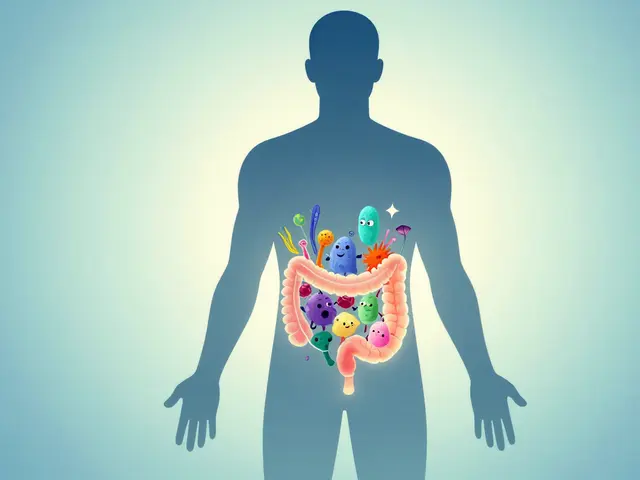
- Fiber (8-12 grams): Slows digestion and feeds good gut bacteria. Oats, chia seeds, berries, whole-grain bread, and vegetables like spinach or mushrooms are top choices. One cup of cooked oats gives you 4 grams. Add half a cup of raspberries? That’s another 4. You’re halfway there.
- Healthy fats (10-15 grams): Fats signal fullness to your brain. Avocado, nuts, seeds, and olive oil don’t spike insulin. A quarter of an avocado has 5 grams of fat. A tablespoon of almond butter? Another 9. You don’t need to go overboard-just include some.
Combine these and you’ve got a meal that keeps your energy steady. No crashes. No 11 a.m. snack attacks.
Real Breakfasts That Actually Work
Here are three simple, real-world examples-no fancy ingredients, no complicated recipes.
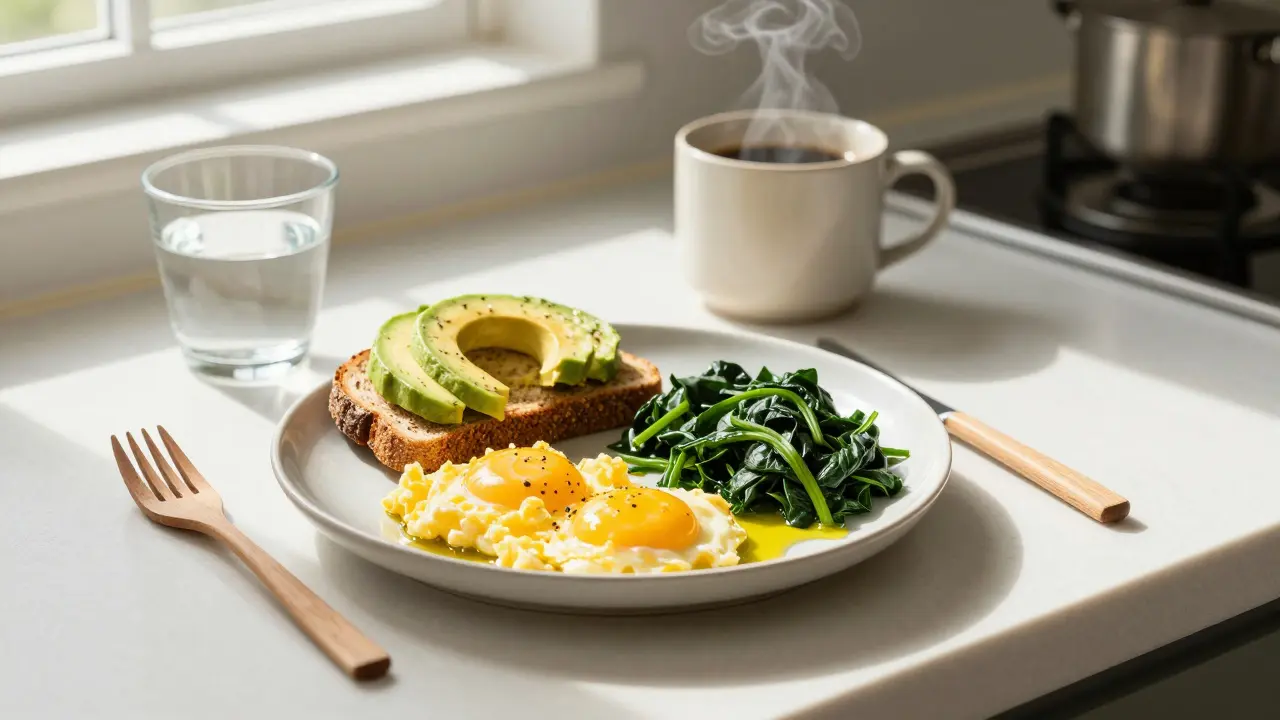
- Scrambled eggs with spinach and whole-grain toast: Two eggs, a handful of spinach (cooked with a little olive oil), one slice of 100% whole-grain bread, and half an avocado. That’s 25g protein, 11g fiber, 14g fat. Eat it slowly. You won’t feel hungry until lunch.
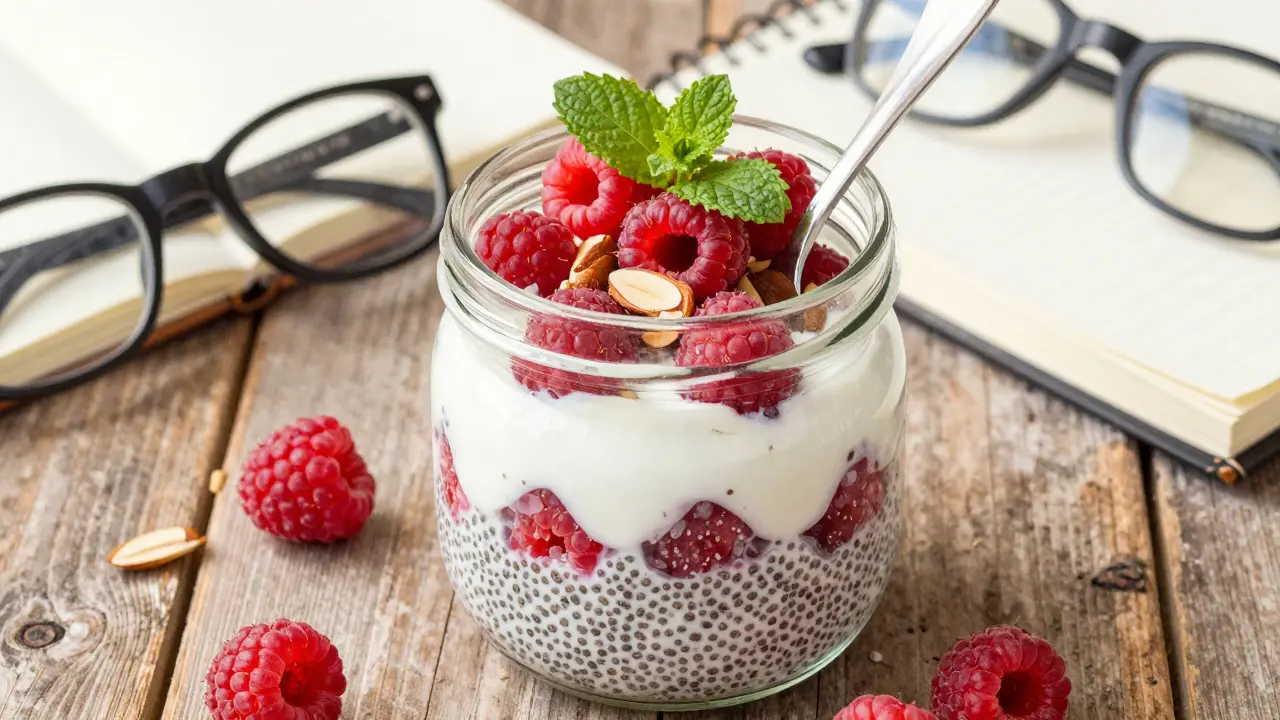
- Overnight chia pudding with Greek yogurt and berries: Mix 3 tablespoons chia seeds with 1 cup unsweetened almond milk. Let it sit overnight. Top with 3/4 cup plain Greek yogurt and 1/2 cup raspberries. Add a sprinkle of almonds. Protein: 22g. Fiber: 13g. Fat: 12g. It’s like dessert, but it keeps you full.
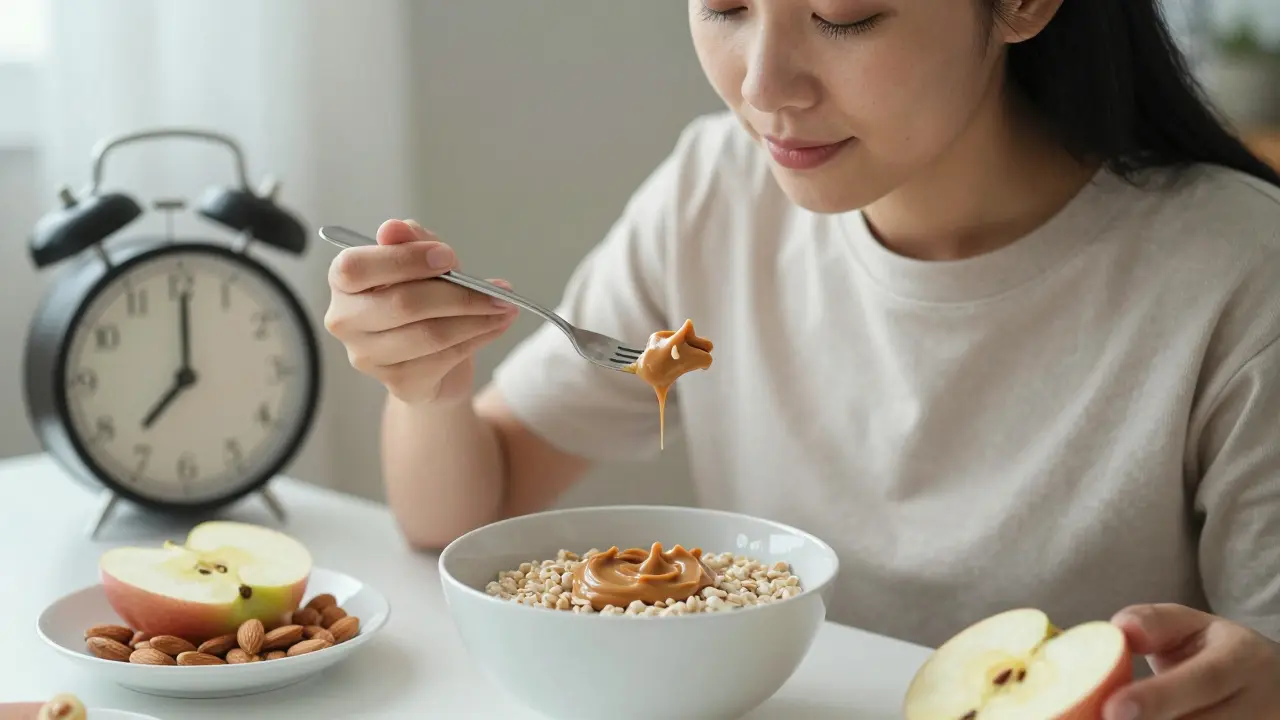
- Steel-cut oats with peanut butter and apple: Half a cup dry steel-cut oats (cooked in water or milk), stirred with 1 tablespoon natural peanut butter, and one small apple (with skin). Add a pinch of cinnamon. Protein: 15g. Fiber: 10g. Fat: 9g. It’s warm, satisfying, and takes 5 minutes to prep.
These aren’t meal-prep masterpieces. They’re practical. You can make them on a weekday morning with kids running around or while waiting for the coffee to brew.
What to Avoid
Some foods look healthy but are sugar bombs in disguise.
- Flavored yogurt: A single cup can have 20+ grams of sugar-more than a cookie. Always choose plain, then add your own fruit.
- Granola: Most store-bought versions are coated in honey or syrup. A quarter cup can have 15g sugar. If you eat it, make your own with oats, nuts, and a tiny bit of maple syrup.
- Smoothies from cafes: They’re often just blended fruit juice with added protein powder. No fiber. No chewing. Your brain doesn’t register liquid calories the same way. Stick to whole foods.
- Bagels with cream cheese: A plain bagel has 50g of refined carbs. Add cream cheese? You’ve got fat, but almost no protein or fiber. It’s a sugar ride with a crash.
These aren’t forbidden. Just don’t make them your daily default. If you want them once in a while? Fine. But don’t expect them to keep you full.
Why Timing and Eating Speed Matter
Even the best meal won’t work if you eat it like a race. When you scarf down food in 3 minutes, your brain doesn’t get the signal that you’re full. It takes 20 minutes for your stomach to tell your brain, “Hey, we’re done.”
Try this: Sit down. Put your fork down between bites. Chew each mouthful 15 times. Drink water. Make your breakfast a ritual, not a task. You’ll naturally eat less and feel more satisfied.
Also, don’t skip breakfast just because you’re not hungry. Your body gets used to eating in the morning. If you skip it, your hunger hormones get out of sync. Eat something small-like an egg and a few almonds-even if you’re not starving. Your body will thank you.
What About Intermittent Fasting?
Some people say skipping breakfast is healthy. But that’s not true for everyone. If you’re trying to lose weight, intermittent fasting might help. But if you’re trying to stay full, focused, and energized through the day, breakfast matters.
A 2024 review in the Journal of Nutrition and Metabolism found that people who ate breakfast regularly had better concentration, fewer cravings, and more stable energy than those who skipped it-even when total calorie intake was the same. The key difference? Breakfast eaters chose more protein and fiber.
So if you’re doing intermittent fasting, fine. But if you’re eating within a 10-hour window, make your first meal count. Don’t just have coffee. Add a boiled egg. Or a spoonful of nut butter. Something with protein.
Final Rule: Keep It Simple
You don’t need a smoothie bowl with 12 toppings. You don’t need quinoa pancakes. You don’t need to buy special superfoods.
Just remember: protein + fiber + fat. That’s the formula. Eggs. Oats. Yogurt. Nuts. Berries. Avocado. Whole grains. These are the real players. Not kale smoothies or protein powders.
Start tomorrow. Make one of the three meals above. Sit down. Eat slowly. Notice how you feel at 11 a.m. Are you reaching for snacks? Or are you calm, focused, and not thinking about food?
If you feel better, you’ve got your blueprint. If not, tweak it. Swap the yogurt for cottage cheese. Try flaxseed instead of chia. Adjust until it works for you. There’s no one perfect breakfast. There’s just the one that works for you.
What’s the fastest filling breakfast I can make?
The fastest option is two hard-boiled eggs, a tablespoon of almond butter, and a small apple. Prep the eggs ahead of time, and you’ve got a complete meal ready in under 2 minutes. It has 18g protein, 6g fiber, and 11g fat.
Can I have a vegetarian filling breakfast?
Absolutely. Try 3/4 cup of plain Greek yogurt with 2 tablespoons chia seeds, 1/2 cup blueberries, and 10 almonds. That’s 20g protein, 12g fiber, and 13g fat. Or go for tofu scramble with spinach, whole-grain toast, and avocado. Plant-based protein works just as well as animal protein.
Is it okay to eat fruit for breakfast?
Fruit is healthy, but it’s not enough on its own. A banana or apple alone will spike your blood sugar and leave you hungry. Always pair fruit with protein and fat-like peanut butter on apple slices, or berries with yogurt. That combo turns a quick snack into a lasting meal.
How much protein do I really need at breakfast?
Aim for 20-30 grams. That’s the amount science shows helps reduce hunger hormones and stabilize energy. For reference: 2 eggs = 12g, 1 cup Greek yogurt = 17g, 3 oz tofu = 20g. You don’t need a protein shake-just include one or two of these sources.
Why do I still feel hungry after a ‘healthy’ breakfast?
You’re probably missing one of the three pillars: protein, fiber, or fat. Many so-called healthy breakfasts are high in carbs but low in these. Check your meal: if it’s mostly fruit, oats, or toast, you’re missing the fullness signals. Add an egg, some nuts, or avocado. That’s all it takes.