Feeling like your brain is stuck on high alert? You’re not alone. In 2025, over 60% of adults in Australia report chronic stress, with many saying they don’t know how to truly switch off. The good news? Relaxation isn’t a luxury-it’s a skill you can learn, and it doesn’t take hours. You don’t need candles, incense, or a mountain retreat. Just 10 simple, science-backed steps can retrain your nervous system to calm down-fast.
Step 1: Breathe Like You Mean It
Most people breathe shallowly, using only the top of their lungs. That’s why you feel tense even when you’re sitting still. Try this: inhale slowly through your nose for 4 seconds, hold for 4, exhale through your mouth for 6. Repeat 5 times. That’s it. This triggers your parasympathetic nervous system-the one that says, “We’re safe now.” A 2023 study from the University of Melbourne found that people who practiced this 3 times a day for two weeks cut their cortisol levels by 27%. No apps needed. Just your lungs.Step 2: Scan Your Body from Head to Toe
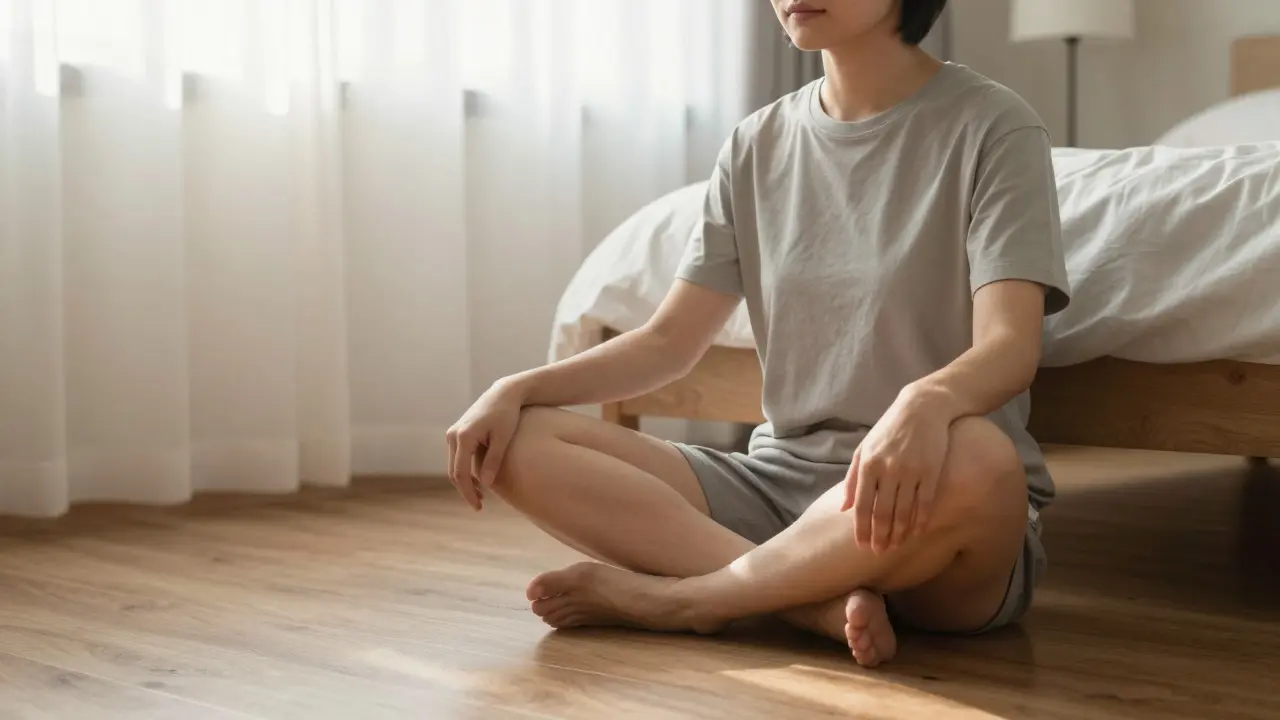
Lie down or sit comfortably. Close your eyes. Start at the top of your head. Notice any tightness-your forehead, jaw, shoulders. Don’t try to fix it. Just notice. Move down to your neck, arms, chest, stomach, legs, feet. Spend 10 seconds on each area. This isn’t meditation. It’s body awareness. People who do this daily report feeling more in control of their stress triggers. Your body holds tension you didn’t even know you had. This step helps you find it.Step 3: Tense and Release Your Muscles
Progressive muscle relaxation isn’t new, but it works better than most people think. Start with your fists. Clench them tight for 5 seconds. Then let go. Feel the difference. Move to your shoulders-roll them back, squeeze hard, then drop them. Do the same with your legs: tighten your quads, hold, release. Do this for 8 major muscle groups. The key is contrast. You can’t relax what you don’t feel. After 10 minutes, your whole body feels lighter. Try it before bed. You’ll sleep deeper.Step 4: Use the 5-4-3-2-1 Grounding Trick
When your mind is racing, this trick stops the spiral. Name: 5 things you can see. 4 things you can touch. 3 things you can hear. 2 things you can smell. 1 thing you can taste. It forces your brain out of panic mode and into the present. I’ve seen people use this in traffic jams, before job interviews, even in hospital waiting rooms. It works because your senses can’t lie. Your mind can spin stories. Your eyes? They just see what’s there.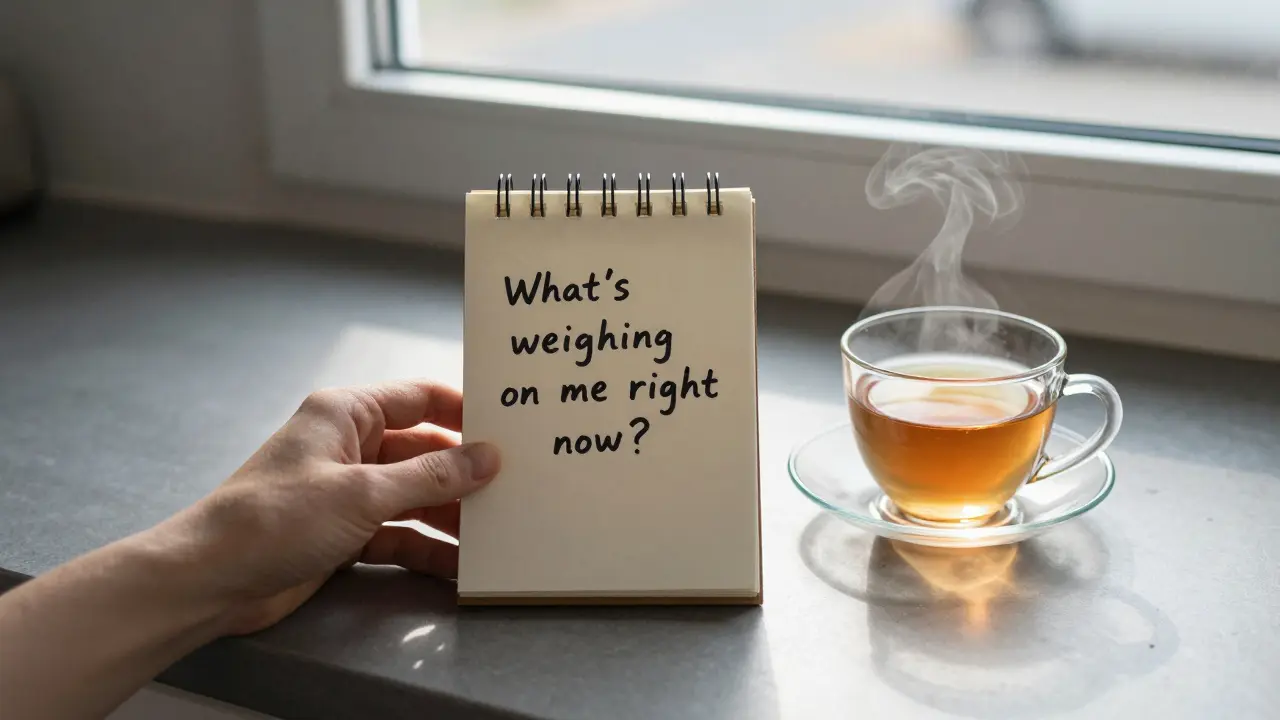
Step 5: Create a “Calm Trigger”
Pick one small thing you can do that instantly signals safety to your brain. Maybe it’s sipping warm tea. Or putting on your favorite sweater. Or listening to the same 30-second song every time you need to reset. Do it the same way every time. After a week, your brain starts linking that action with calm. It’s like Pavlov’s dog-but for relaxation. No expensive gadgets. Just consistency.Step 6: Write Down What’s Bothering You
Don’t journal. Don’t write pages. Just grab a notepad and write one sentence: “What’s weighing on me right now?” Then stop. Don’t analyze it. Don’t solve it. Just get it out of your head. A 2024 study from Monash University showed that people who did this for 5 minutes before bed had 40% fewer nighttime anxiety spikes. Your brain stops looping when it knows the thought is captured. It’s like hitting save on a file you don’t need to open again.Step 7: Move Without Purpose
You don’t have to yoga. You don’t have to run. Just walk. Slowly. For 10 minutes. No headphones. No phone. Look at the sky. Feel the air. Notice how your feet hit the ground. This isn’t exercise. It’s sensory reconnection. People who do this daily report feeling less wired, even on busy days. In Melbourne, even a walk around the block past the gum trees helps. Nature doesn’t care if you’re stressed. It just is. And that’s calming.
Step 8: Say “No” Without Guilt
Overcommitment is the silent killer of relaxation. You can’t relax if your calendar is full of other people’s demands. Start small. Say “I can’t take that on right now” without apologizing. Or “Let me check my schedule and get back to you.” Boundaries aren’t rude-they’re necessary. The people who respect you will understand. The ones who don’t? They’re not worth your peace.Step 9: Set a “Worry Window”
Give yourself 10 minutes a day to worry. Set a timer. Write down every anxious thought that comes up. When the timer goes off, close the notebook. That’s it. No more thinking about it until tomorrow. This sounds weird, but it works. Your brain stops trying to solve problems 24/7 when it knows there’s a scheduled time. It’s like putting your worries in a locked box. You can open it later-on your terms.Step 10: End Your Day with One Good Thing
Before you turn off the light, name one thing that went well today. Not big. Not perfect. Just one. Maybe it was the way your coffee tasted. Or your cat curled up beside you. Or you didn’t snap at someone. This trains your brain to look for calm, not chaos. Over time, your default setting shifts from “What’s wrong?” to “What’s right?” That’s how lasting relaxation begins.These steps aren’t magic. They’re habits. Do one. Then add another. After a month, you won’t need a list-you’ll just know how to find calm. Your nervous system remembers what you practice. So practice being still. Practice being present. Practice letting go. You’ve been waiting for permission to relax. Here it is.
How long does it take to see results from relaxation techniques?
Most people notice a difference in 3 to 7 days if they practice consistently. Physical signs like reduced jaw tension or better sleep show up first. Emotional shifts-like feeling less reactive-take longer, usually 2 to 4 weeks. The key isn’t perfection. It’s showing up. Even 5 minutes a day builds momentum.
Can relaxation techniques help with anxiety disorders?
Yes, but they’re not a replacement for professional care. Techniques like deep breathing and progressive muscle relaxation are often used alongside therapy for generalized anxiety disorder (GAD) and panic attacks. Studies show they reduce symptom frequency by up to 50% when practiced daily. If your anxiety feels overwhelming or persistent, talk to a psychologist. Relaxation tools help you manage, but therapy helps you heal.
What’s the best time of day to practice relaxation?
There’s no single best time-it depends on your rhythm. Morning helps set a calm tone for the day. Evening helps you unwind before sleep. Many find midday breaks (after lunch) useful to reset before afternoon stress hits. The most effective time is the one you actually stick to. Pick a moment that fits your life, not your ideal life.
Do I need special equipment or apps for these techniques?
No. None of the 10 steps require apps, gadgets, or subscriptions. While some people like guided audio, you don’t need it. Your breath, your body, and your attention are all you need. In fact, relying on apps can make you dependent. The goal is to build internal skills you can use anywhere-even without your phone.
What if I can’t sit still or quiet my mind?
That’s normal. Most people think they’re doing it wrong because their mind wanders. But wandering is part of the process. The goal isn’t to stop thoughts-it’s to notice them and gently return to your breath or body. Every time you bring your focus back, you’re strengthening your calm muscle. Think of it like lifting weights. The effort is the workout.
Can children or older adults use these techniques?
Absolutely. Children respond well to the 5-4-3-2-1 method and breathing games (like blowing bubbles). Older adults benefit from gentle movement and muscle relaxation, especially if they have chronic pain. Techniques can be shortened or adapted. The core idea-connecting with your body and breath-works at any age. No one is too young or too old to learn calm.
Why do I feel more anxious after trying to relax?
It’s common when you’re used to being busy. Stillness can feel uncomfortable because your brain isn’t used to it. You might notice thoughts or emotions you’ve been ignoring. That doesn’t mean it’s not working. It means you’re becoming aware. Keep going. The discomfort fades with practice. Try doing it with a trusted friend or in a quiet room with soft lighting. Support helps.
Are there any risks with relaxation techniques?
For most people, there are none. But if you have severe trauma, deep relaxation can sometimes bring up intense memories. If that happens, pause and seek support from a therapist trained in trauma-informed care. Otherwise, these techniques are safe, natural, and free of side effects. They’re the opposite of risky-they’re restorative.