
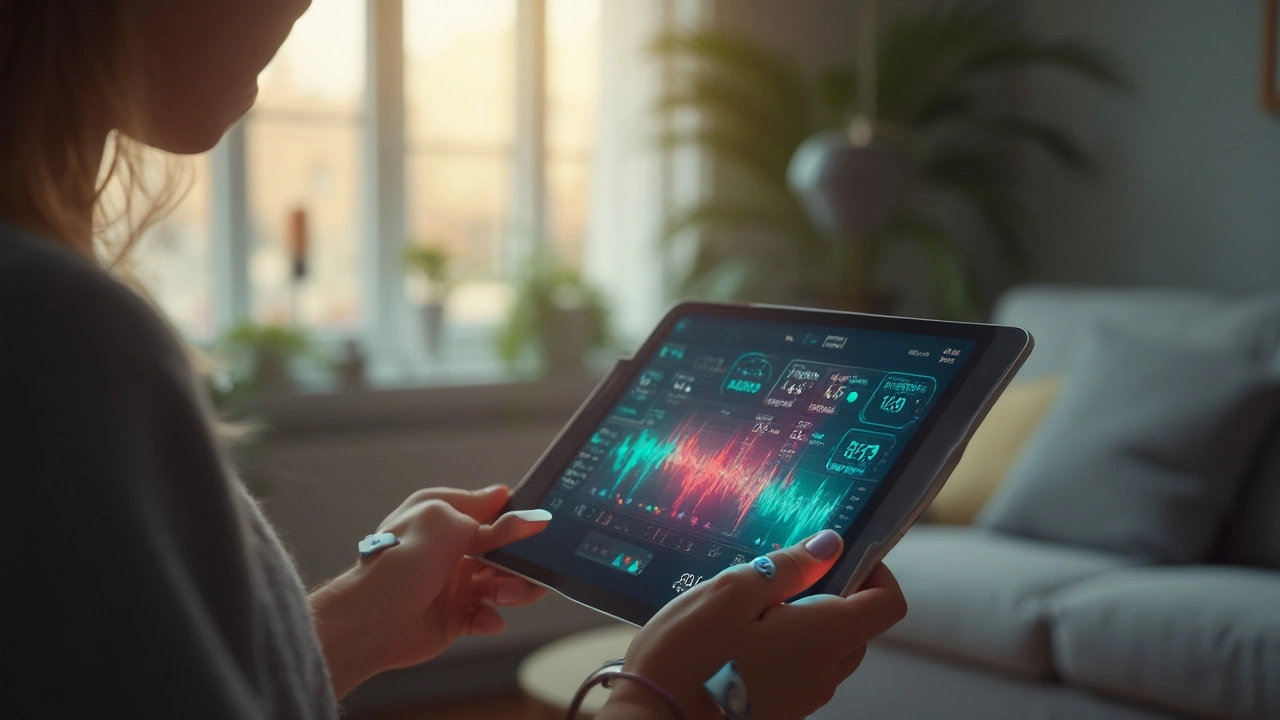
Imagine you could see what’s happening inside your own body—your heart rate, your skin temperature, every little sign your body uses to tell you how you’re doing. But what if you could also learn to control some things you always thought were automatic? That’s the basic idea behind biofeedback, where science meets DIY health. This isn’t science fiction. Biofeedback takes the mystery out of your heartbeat and your stress, letting you use real data about your own body as a kind of cheat code for better living. For anyone who’s tried meditation but gotten lost in their own thoughts, or for people with chronic headaches who’ve run out of patience and pills, biofeedback can feel like a revelation.
What Exactly Is Biofeedback? Peeking Inside the Body’s Control Room
At its heart, biofeedback is about learning to listen to your own body—but with gadgets doing the translating. Sensors are placed on your skin to monitor things like heart rate, muscle tension, brain activity, breathing, or even how much you sweat. The data pops up on a screen, so you see in real time how stress, pain, or excitement changes your body. It's like getting a live transcript of your nervous system’s conversations. Imagine biting into a lemon, and you watch your heart speed up or your fingers get colder. You suddenly know, oh, that’s my response right there.
It started in the late 1960s, when scientists like Dr. Neal Miller showed that animals—and later, people—could learn to control things we thought were totally involuntary, like heart rate and blood pressure, just by watching the numbers and getting feedback. The term "biofeedback" itself was born in 1969, linking biology (your body) to feedback (info sent back to you). Today, biofeedback comes in all flavors, from hospital-grade machines tracking your brainwaves to cheap at-home gadgets that fit in your pocket.
There are three main types that get the most attention: Electromyographic (EMG) biofeedback looks at muscle tension—so you can catch yourself clenching your jaw without realizing it. Thermal biofeedback tracks body temperature—surprisingly useful for migraine headaches, since cold fingertips often mean you’re stressed. Neurofeedback measures brain waves—think of it as meditation with a dashboard. Add in heart rate variability (HRV) biofeedback, and you’ve got a real-time window into your stress response. With each, the goal is simple: notice what's happening, try calming techniques, and see instant results on the display.
What’s wild is how quickly people start picking up the tricks. Training sessions usually last anywhere from 30 to 60 minutes, often once or twice a week, and most people start noticing changes in four to ten sessions. A well-known example: people with chronic migraines cut their headaches nearly in half by learning to keep their hands warmer. Pretty cool, right?
Tech’s not slowing down. These days, there are smartphone apps and wearables—think headbands or chest straps—that sync with your phone, delivering similar feedback at home or at work. Some companies even build biofeedback games for kids with ADHD or anxiety, turning self-regulation into something less boring than homework.
Check this out for a quick snapshot of what biofeedback measures and how each works:
| Type of Biofeedback | What It Measures | Best For | How It Feels |
|---|---|---|---|
| EMG (Electromyographic) | Muscle Tension | Chronic pain, tension headaches, TMJ | Painless sensors stick to skin |
| Thermal | Skin Temperature | Migraines, stress, circulation issues | Sensor on finger or hand |
| Neurofeedback | Brainwaves | ADHD, insomnia, anxiety | Electrodes on scalp |
| HRV (Heart Rate Variability) | Beat-to-beat heart changes | Stress, athletic performance, PTSD | Clip or chest strap |
| Galvanic Skin Response | Sweat gland activity | Stress, anxiety | Sensors on fingers or palm |
Even pets are getting in on the act. No joke—my dog Hugo would be a perfect candidate for a canine version of biofeedback, if they ever make one for boxers with separation anxiety. If you can teach a dog to chill out with feedback, just imagine the potential for people.
The Science: How Biofeedback Changes Your Brain and Body
You know that feeling when your doctor takes your blood pressure and it jumps up just because you’re there? That’s called “white coat syndrome.” With biofeedback, you get used to seeing your body’s reactions—so they aren’t scary anymore. That alone helps you chill out.
The magic really happens because of neuroplasticity. Your brain can learn new habits, even around things you always believed were out of your control. The data you see on the monitor acts like a personal coach, showing you exactly how your body shifts when you slow your breathing, unclench your jaw, or just pause and relax your shoulders. The effects show up in real life, not just during sessions. Blood pressure can stay lower, headaches can fade, panic attacks shrink, and sleep gets easier.
Let’s talk facts. The American Psychological Association has weighed in on this: several legit studies over the last decade show that biofeedback can lower anxiety symptoms by up to 50% within a couple of months. Another study published in 2023, tracking over 400 teens with ADHD, found that combining neurofeedback with regular classroom work improved attention spans 30% more than behavioral therapy alone. And the U.S. National Institutes of Health lists biofeedback as a top-tier option for chronic migraines and tension headaches. That’s not just hype; that’s hard data.
So how does the learning happen? When you see your stress or pain show up on the screen, you try a calming skill—maybe slow, deep breathing or thinking about something peaceful. The numbers shift. That “aha!” moment rewires your nervous system, bit by bit. Think of it as a video game, where you keep leveling up your relaxation powers every time you play.
Here’s where things get technical. HRV, or heart rate variability, is the new buzzword in both sports performance and mental wellness. It measures how much your heart rate changes from beat to beat. More variability means you bounce back from stress faster. Big companies like Firstbeat Sports use HRV data to train Olympic athletes. Regular folks can use HRV biofeedback, too, syncing with smartwatches or even rings, to fine-tune their response to daily stress.
Biofeedback isn’t a miracle cure. People still need to practice, because it only works as well as you use it. You might have to spend a few weeks learning how to keep your mind and muscles relaxed. But a lot of people call it life-changing, especially if they’ve tried other things with no luck.
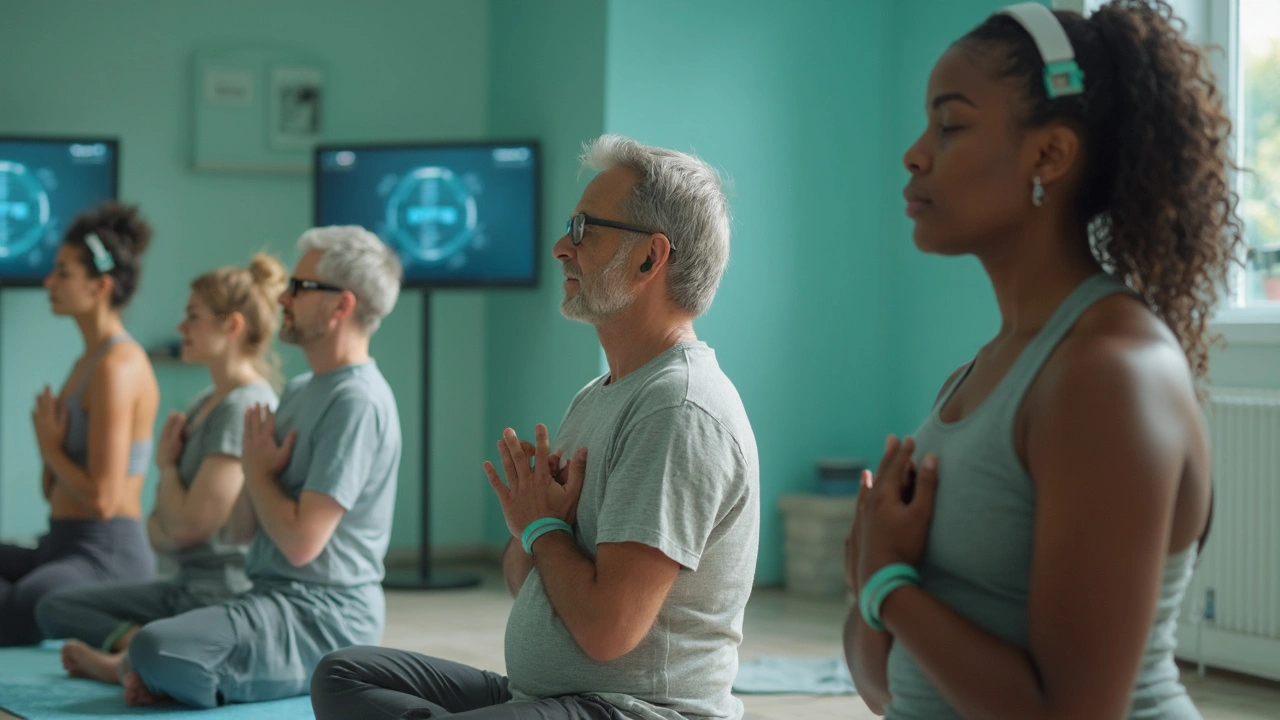
There’s a growing circle of mental health experts and physical therapists who use biofeedback for their clients. They’ll set you up with gear in the office—a bit like sticking on heart monitors—and coach you through the process. After a month or two, most people are comfortable using similar at-home versions to keep the progress going. You don’t have to be a tech wizard. Most modern systems are as easy as wearing a fitness tracker, and some clinics rent out devices or recommend reliable brands if you want to keep it up solo.
It’s not just about stress or pain, though. Athletes use biofeedback to hit peak performance, writers swear by it for breaking through creative blocks, and people with irritable bowel syndrome or Raynaud’s disease use it to dial down flare-ups.
If you want to get started, here are a few tried-and-true tips for making biofeedback work for you:
- Stick with it—plan on at least 8-10 sessions for real skills to stick.
- Keep your sessions regular, like setting a standing coffee date with yourself.
- Write down your results—seeing progress keeps you motivated.
- Be patient—some people hit breakthroughs in a few sessions, others take a month or two.
- Choose your goals in advance (lowering anxiety, fewer headaches, better sleep).
- If pain or insomnia is your main issue, look for a therapist certified by the Biofeedback Certification International Alliance.
- For at-home gear, check user reviews and go for FDA-cleared devices when possible.
Just remember, this isn’t a replacement for real medical advice. It’s a way to add another tool, not toss your meds or skip your checkups.
Real-World Impact: Who Should Try Biofeedback—and What You Can Expect
People usually come to biofeedback when nothing else works, but it doesn’t have to be the last stop. If you have migraines, chronic pain, anxiety, high blood pressure, ADHD, stress symptoms, or even hot flashes, biofeedback might help give you some power back. Insurance in the U.S. often covers biofeedback for certain conditions. Check with your provider, but migraine, tension headaches, and urinary incontinence for women are common approved uses.
Here’s a twist you might not know—kids and even seniors often do just as well, if not better, with biofeedback than adults in their 40s and 50s. Young brains pick up the skills fast, and older folks who’ve tried meditation for years find it easier to stick with feedback when they can see proof on a screen.
Anyone can try this, but people who like gadgets or numbers tend to love biofeedback most. If you already track your steps or use a fitness watch, you’ll probably get a kick out of seeing your “stats” improve. Some people notice quick changes in a few weeks; for others, progress is slow and steady. Either way, the sense of control is real.
Here’s what your first experience might look like: you sit in a comfy chair. A friendly clinician (or an app, if you’re going solo with home gear) connects sensors—nothing scary, no needles, just stick-on pads or clips. You watch the numbers spike as you worry about your to-do list, then fall as you follow the therapist’s voice or a breathing animation. Think of it as a high-tech relaxation class where you know if you’re “doing it right.”
Some clinics trick out their therapy rooms with soothing lights—think mellow blues and greens—and biofeedback plays along, changing color as you reach calm or focus. A lot of people say that seeing their stress number drop is addictive in a good way; they start bringing those skills into traffic jams, work presentations, or even family dinners (where, let’s be honest, everybody could use more calm).
Biofeedback isn’t just hype. Mayo Clinic includes it in their headache protocols. The Cleveland Clinic trains their neurologists on it. Elite sports teams put it in their warmup routines. And insurance companies fund it because—surprise—it works often enough to save money on meds and hospital visits.
If you’re curious, here are some easy ways to try the basics at home, even before looking for a clinic:
- Warm your fingers by soaking them in hot water, then notice what stresses you out enough to cool them off.
- Use a smartphone HRV app paired with a chest strap to practice slow breathing and watch your numbers rise.
- Try guided muscle relaxation audio—clench and release different muscle groups, then check in with your body.
- Play around with simple “mindfulness of breath”—count your inhales and exhales for a minute, and jot down how you feel.
The bottom line: you don’t have to stay in the dark about your own stress or pain. Biofeedback flips the script. It lets you spy on your body, teach it new tricks, and see real results. Whether you’re a hardcore data junkie, just tired of tension headaches, or you want to reclaim your cool during a tough work week, biofeedback is worth a shot. Your mind and body are talking—all you need is the gear and a little patience to start listening.