Sports Massage Timing Reference
When to Get Your Sports Massage
Select your activity type to see optimal timing recommendations based on athletic science and professional guidelines:
Pre-Event Massage
Light, stimulating strokes to increase blood flow and warm up tight areas. Avoid deep pressure—it can leave you sore.
Post-Event Massage
Focus on flushing out lactic acid and calming inflamed tissues. Gentle effleurage and compression work best.
Training Phase Massage
Maintenance mode. Targets recurring tight spots—hamstrings for cyclists, shoulders for swimmers, calves for runners.
Injury Recovery
Helps manage scar tissue and restore mobility after strains or sprains. Never do this on your own if you have a recent injury.
Timing Mistakes to Avoid
Getting a massage too soon before an event
Deep pressure right before competition can cause soreness and reduce performance. Stick to 24-48 hours.
Getting a massage too late after an event
Waiting more than 24 hours after exercise reduces the effectiveness of lactic acid flushing and inflammation reduction.
Ever finished a hard workout and felt like your muscles were made of concrete? You stretched, you foam rolled, you even iced down-but the tightness won’t budge. That’s when you need more than just rest. You need sports massage.
What Is Sports Massage, Really?
Sports massage isn’t just a deep tissue massage with a gym towel draped over you. It’s a targeted form of manual therapy designed for people who move hard and often. Unlike relaxation massage, which aims to calm the nervous system, sports massage focuses on improving performance, speeding recovery, and preventing injuries. It’s used by Olympic athletes, weekend warriors, and everyone in between.
This therapy combines techniques from Swedish massage, deep tissue work, trigger point therapy, and myofascial release. But it’s not random. Every stroke, pressure, and movement is chosen based on your sport, your training cycle, and your current physical state. A runner before a marathon gets a different treatment than a weightlifter after a heavy squat day.
Why Athletes Swear By It
Science backs what athletes have known for decades: regular sports massage improves circulation, reduces muscle stiffness, and lowers levels of cortisol-the stress hormone that lingers after intense training.
A 2023 study published in the Journal of Athletic Training tracked 120 competitive runners over 12 weeks. Those who received biweekly sports massages reported 37% less muscle soreness and improved stride efficiency compared to the control group. They also missed 28% fewer training days due to tightness or minor strains.
It’s not magic. It’s mechanics. Massage helps break up adhesions-those sticky spots between muscle fibers that form after microtears from training. These adhesions restrict movement, reduce blood flow, and make you feel stiff. A skilled therapist can identify and release them before they turn into chronic pain.
When to Get a Sports Massage
Timing matters. You can’t just show up after a 10K and expect instant relief. Here’s when to schedule it:
- Pre-event (24-48 hours before): Light, stimulating strokes to increase blood flow and warm up tight areas. Avoid deep pressure-it can leave you sore.
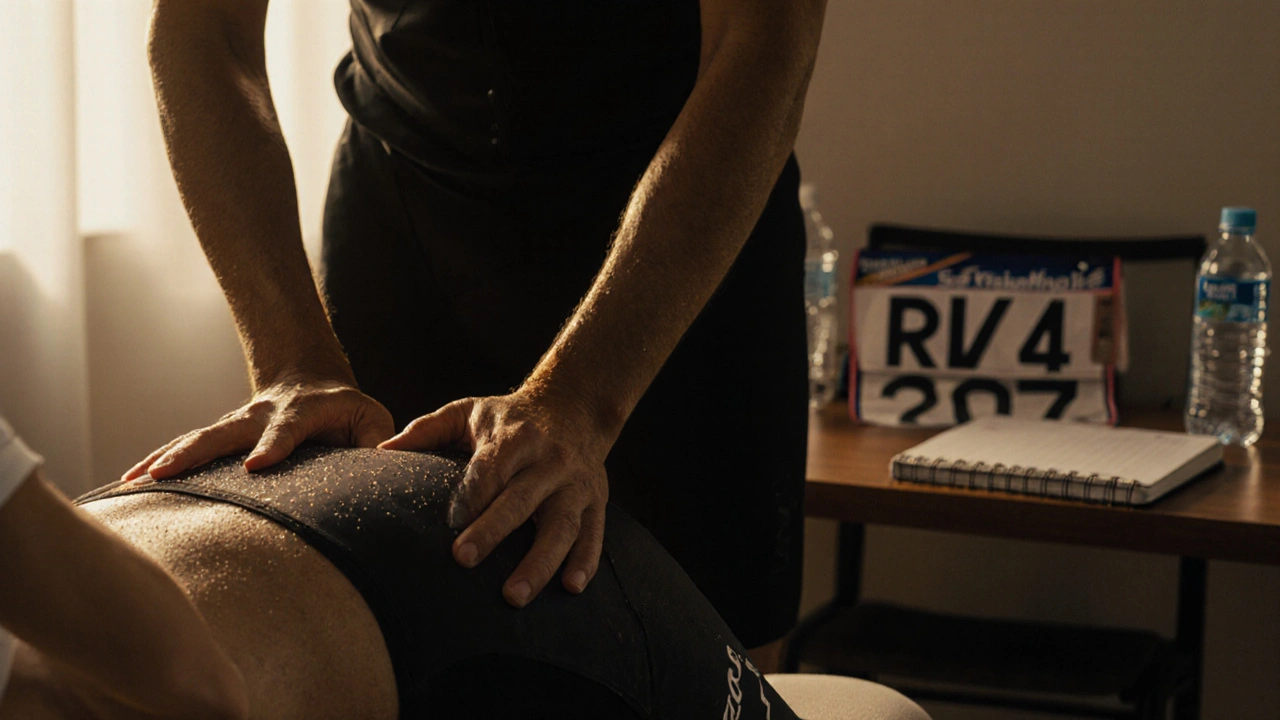
- Post-event (within 2 hours to 24 hours): Focus on flushing out lactic acid and calming inflamed tissues. Gentle effleurage and compression work best.
- Training phase (weekly or biweekly): Maintenance mode. Targets recurring tight spots-hamstrings for cyclists, shoulders for swimmers, calves for runners.
- Injury recovery (under professional guidance): Helps manage scar tissue and restore mobility after strains or sprains. Never do this on your own if you have a recent injury.
Don’t wait until you’re in pain to book a session. The best athletes treat massage like hydration or sleep-non-negotiable.
What Happens During a Session
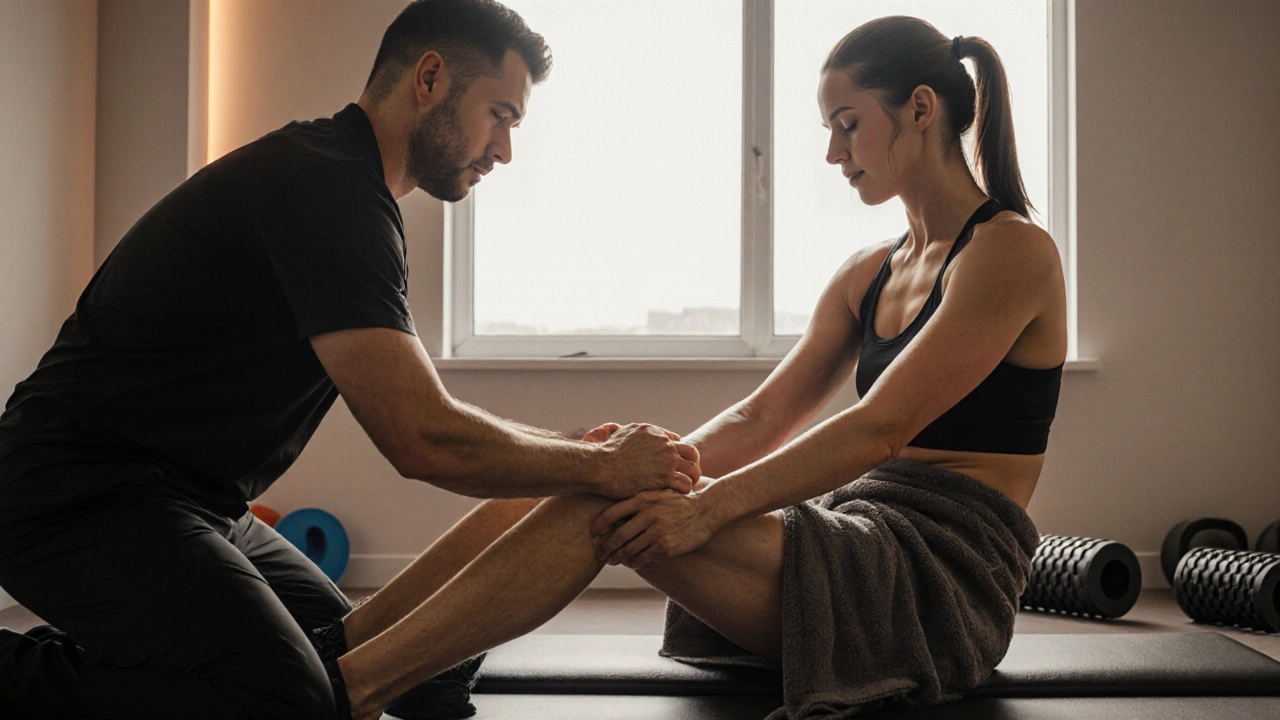
First, your therapist will ask about your sport, training schedule, and any areas that feel “off.” They’ll check your posture, range of motion, and muscle tension. Then they’ll tailor the session.
Typical techniques you’ll feel:
- Effleurage: Long, gliding strokes to warm up tissue and increase circulation.
- Petrissage: Kneading and lifting muscles-like wringing out a towel. Great for breaking up knots.
- Friction: Deep, focused pressure on specific trigger points. It might hurt for a second, but then it releases.
- Myofascial release: Sustained pressure on connective tissue to free up restrictions that limit movement.
- Stretching: Passive or active movements to improve flexibility and reset muscle length.
A full session lasts 60 to 90 minutes. You’ll be draped appropriately, and you should feel pressure but never sharp pain. If it hurts too much, speak up. Good therapists adjust on the spot.
Who Benefits Most?
Sports massage isn’t just for pros. Anyone who trains regularly can benefit:
- Runners: Focus on calves, quads, hamstrings, and IT bands. Prevents shin splints and runner’s knee.
- Weightlifters: Targets shoulders, lats, hips, and forearms. Helps with grip strength and joint mobility.
- Cyclists: Works on hip flexors, glutes, and lower back-areas that get locked in a forward position.
- Swimmers: Addresses rotator cuffs, pecs, and thoracic spine tightness from repetitive overhead motion.
- Team sport players (soccer, basketball, football): Manages asymmetries from unilateral movements and sudden stops.
Even yoga instructors and dancers use sports massage to stay mobile and avoid overuse injuries. If your body moves under load, you need this.
What to Avoid
Not every massage therapist is trained for athletes. Avoid these red flags:
- They don’t ask about your sport or training routine.
- They use the same routine on everyone.
- They promise to “fix” a torn muscle in one session.
- They ignore your feedback on pressure.
Also, don’t get a sports massage if you have:
- Open wounds or recent burns
- Deep vein thrombosis (blood clots)
- Uncontrolled high blood pressure
- Acute inflammation (red, hot, swollen area)
- Recent surgery (wait at least 6-8 weeks unless cleared by your doctor)
If you’re unsure, talk to your physiotherapist or doctor first.
How Often Should You Get One?
There’s no one-size-fits-all answer. It depends on your volume and intensity:
- Recreational athletes (3-5 days/week): Once every 2-4 weeks
- Competitive athletes (6+ days/week): Once a week or biweekly
- Elite athletes: Multiple times per week, often integrated into daily recovery protocols
Some people do self-massage with foam rollers or massage guns daily. That’s great-but it doesn’t replace hands-on work. A therapist can feel what you can’t: subtle asymmetries, hidden tension, and tissue texture changes.
Pair It With Other Recovery Tools
Sports massage works best as part of a recovery system. Combine it with:
- Hydration: Drink water before and after. Massage moves fluids-your body needs water to flush them out.
- Proper sleep: Muscle repair happens during deep sleep. Massage enhances this process.
- Active recovery: Light walks, swimming, or cycling the day after a massage helps circulation.
- Nutrition: Protein and anti-inflammatory foods (turmeric, omega-3s, leafy greens) support tissue repair.
Don’t expect massage to fix poor sleep or bad nutrition. It’s a tool, not a band-aid.
What to Expect After
Right after your session, you might feel:
- Lighter, looser, more mobile
- Slightly sore-like after a good workout
- More relaxed mentally
Some people feel tired. That’s normal. Your body is processing the work. Avoid intense training for 24 hours. Take a walk, stretch gently, and hydrate.
Don’t expect miracles after one session. Real change builds over time. Most athletes notice significant improvements after 3-4 consistent sessions.
Where to Find a Good Therapist
Look for someone with:
- Certification in sports massage (CSM or similar)
- Experience working with athletes in your sport
- Positive reviews from other active people
- Willingness to communicate and adjust based on your feedback
Ask your physiotherapist, coach, or local running club for recommendations. Don’t just pick the cheapest option. A $50 massage that doesn’t address your needs is a waste. A $120 session that unlocks your next PR? Worth it.
Can You Do It Yourself?
You can use tools like foam rollers, massage balls, or handheld massagers. They’re great for daily maintenance. But they can’t replace the precision of a trained therapist.
Self-massage is like brushing your teeth. Professional massage is like a dental cleaning. You need both.
Use tools to stay loose between sessions. But don’t skip the hands-on work if you’re serious about performance and longevity.
Final Thought: It’s Not a Luxury-It’s a Performance Tool
Sports massage isn’t about pampering. It’s about staying in the game longer, stronger, and healthier. Whether you’re chasing a personal best or just trying to keep up with your kids on the weekend hike, your muscles deserve care.
Stop treating pain as normal. Tightness isn’t just part of being active-it’s a warning sign. Address it early. Get regular sports massage. Your future self will thank you.
Is sports massage painful?
It shouldn’t be excruciating. You’ll feel deep pressure, maybe some discomfort in tight areas, but it should never feel like sharp or burning pain. A good therapist adjusts based on your feedback. If it hurts too much, speak up. Pain can cause muscles to tense up, which defeats the purpose.
How long does it take to see results?
Many athletes feel looser right after the session. But lasting changes-like improved range of motion, reduced chronic tightness, or fewer injuries-usually take 3 to 6 sessions over several weeks. Consistency matters more than intensity.
Can sports massage help with chronic injuries?
Yes, but only as part of a broader rehab plan. Massage helps break down scar tissue, improve circulation to injured areas, and restore mobility. But it won’t heal a torn tendon on its own. Always work with a physical therapist or doctor for chronic issues.
Do I need to be an athlete to get sports massage?
No. If you’re physically active-whether you hike, dance, play weekend soccer, or lift weights at home-you can benefit. Sports massage is for anyone whose body endures repetitive stress or strain. It’s not just for elite competitors.
Should I get a massage before or after a big race?
Get it 24 to 48 hours before the event. This helps loosen muscles without causing soreness. After the race, aim for a session within 24 hours. This helps flush out metabolic waste and reduces next-day stiffness. Never get a deep massage right before or immediately after a race-it can leave you feeling drained.
How much does a sports massage cost?
Prices vary by location and therapist experience. In the U.S., expect $75-$150 for a 60-minute session. Some clinics offer packages for athletes, like 5 sessions for $300. Insurance rarely covers it, but some HSA/FSA accounts allow it if you have a prescription from a doctor.
Can sports massage prevent injuries?
Yes, indirectly. By keeping muscles flexible, balanced, and free of adhesions, massage reduces the risk of strains, overuse injuries, and compensatory movement patterns. It doesn’t prevent all injuries, but studies show athletes who get regular massage miss fewer training days due to muscle-related issues.
What’s the difference between sports massage and deep tissue massage?
Deep tissue massage is focused on releasing chronic muscle tension anywhere on the body. Sports massage is goal-oriented: it’s designed around athletic performance, recovery, and injury prevention. A sports massage therapist knows how different sports affect the body and adjusts techniques accordingly. It’s more specific, more strategic.
Can I get a sports massage if I’m pregnant?
Yes, but only with a therapist trained in prenatal sports massage. Standard techniques may not be safe. Look for someone who understands the changes in posture, ligament laxity, and blood flow during pregnancy. Avoid deep pressure on the abdomen and inner thighs.
Do I need to shower before or after?
Shower before if you’re sweaty or have lotions on your skin-it helps the therapist work better. Afterward, a lukewarm shower can help soothe muscles, but avoid hot tubs or saunas for at least 2 hours. Your body is still processing the session.