
Expressive Arts Therapy and Mental Health
When working with Expressive Arts Therapy, a collection of creative approaches—art, music, movement, drama, poetry—used to foster emotional healing and mental well‑being. Also known as expressive arts mental health, it bridges creativity and psychology, giving people a safe outlet to explore feelings and build resilience.
One core branch is Art Therapy, which uses drawing, painting, collage and other visual media to help clients externalize inner experiences. Another is Music Therapy, a practice that leverages rhythm, melody, and lyrics to regulate mood, reduce anxiety, and improve social connection. Dance Therapy (or movement therapy) engages the body’s innate ability to express what words cannot, supporting trauma release and body awareness. Finally, Drama Therapy uses role‑play, storytelling, and improvisation to explore identity, conflict, and coping strategies. These modalities share three key attributes: a trained facilitator, a safe therapeutic setting, and a focus on process over product.
Research shows expressive arts therapy boosts mental health by activating multiple brain pathways. The act of creating music stimulates the limbic system, which controls emotion, while painting engages the prefrontal cortex, improving executive function and attention. Dance moves the body’s proprioceptive system, lowering cortisol and raising endorphins. In practice, a typical session might start with a grounding breathing exercise, followed by a 20‑minute art activity, then a short reflective discussion. The therapist observes non‑verbal cues, offers gentle guidance, and helps the client link the creative experience to everyday challenges. This workflow demonstrates the semantic triples: "Expressive Arts Therapy encompasses art, music, and dance", "Expressive Arts Therapy requires a trained facilitator", and "Music Therapy influences emotional regulation".
Below you’ll find a curated set of articles that dive deeper into each creative modality, explore the science behind them, and offer step‑by‑step guides to try them at home or with a professional. Whether you’re curious about starting a journaling doodle practice, looking for evidence‑based benefits, or seeking tips to integrate drama exercises into a wellness routine, the posts ahead cover a broad spectrum of real‑world applications. Keep reading to discover practical tools, inspiring stories, and actionable strategies that bring expressive arts therapy into your daily mental‑health toolkit.
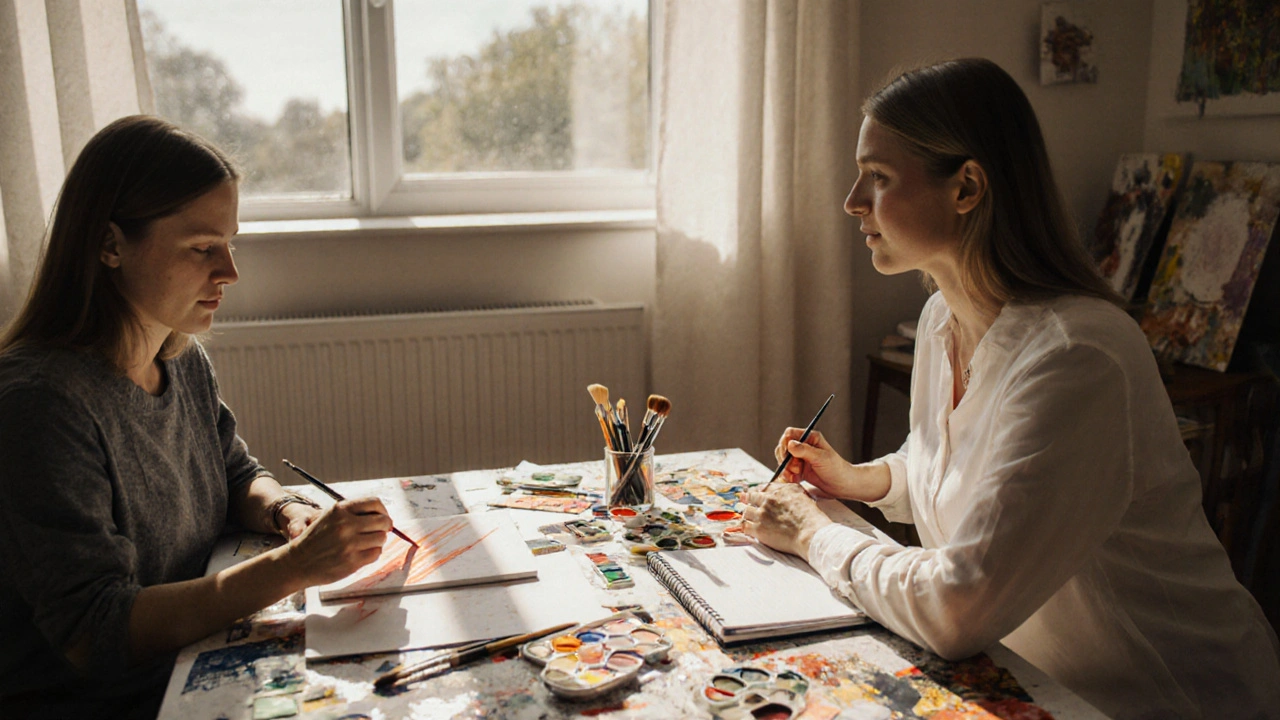
How Creative Arts Therapies Transform Psychological Disorder Treatment
Oct 23 2025 / Mental HealthExplore how creative arts therapies-like art, music, dance, drama, and writing-help treat depression, anxiety, PTSD, and more with science‑backed evidence and practical guidance.
VIEW MORE