
Senior Digestion Tips: Simple Ways to Improve Gut Health After 60
When you’re over 60, your digestive system, the network of organs that breaks down food and absorbs nutrients. Also known as gastrointestinal tract, it doesn’t work the same way it did in your 20s. Slower motility, lower stomach acid, and changes in gut bacteria are normal—but they don’t mean you have to live with bloating, constipation, or discomfort. The good news? Small, daily changes can make a big difference.
Fiber-rich foods, plant-based items like beans, oats, vegetables, and whole grains that help food move smoothly through your system. Also known as dietary fiber, they’re one of the most powerful tools for senior digestion. Most adults over 60 get less than half the recommended 25–30 grams a day. Start with one extra serving—add lentils to soup, swap white rice for brown, or snack on an apple with skin. It’s not about perfection. It’s about consistency.
Probiotics, live bacteria found in fermented foods and supplements that support a healthy gut microbiome. Also known as good gut bacteria, they help break down food, reduce inflammation, and crowd out harmful microbes. You don’t need expensive pills. A daily spoonful of plain yogurt with live cultures, a small serving of sauerkraut, or a cup of kefir works just as well. Try one of these every morning with breakfast. Give it four weeks. You might notice less gas and more regularity.
Hydration matters more than you think. As you age, your thirst signal weakens. Dehydration slows digestion and makes constipation worse. Keep a water bottle nearby. Sip throughout the day—not just when you’re thirsty. Add lemon, cucumber, or mint if plain water feels boring. And skip the sugary drinks. They feed bad bacteria and make bloating worse.
Stress doesn’t just affect your mind—it slows your gut. Chronic stress reduces blood flow to your digestive organs and changes how your gut bacteria behave. Even five minutes of deep breathing before meals can help. Sit quietly. Breathe in for four counts. Hold for two. Breathe out for six. Repeat three times. It’s not magic. It’s biology.
Movement is non-negotiable. You don’t need to run a marathon. A 20-minute walk after dinner helps your intestines contract and move food along. Try standing up every hour if you sit a lot. Stretch your torso. Roll your shoulders. These small motions keep your digestive system active.
And don’t ignore sleep. Poor sleep messes with your gut clock. Studies show people who sleep less than six hours a night have less diverse gut bacteria—which links to more bloating and slower digestion. Aim for seven hours. Keep your room cool. Avoid screens an hour before bed. Your gut will thank you.
There’s no single fix for senior digestion. It’s a mix of what you eat, how you move, how you rest, and how you breathe. The posts below give you real, no-fluff advice from people who’ve been there—how to pick the right fiber sources, which probiotics actually work, how to stop bloating without meds, and simple routines that fit into a busy life. No hype. Just what helps.
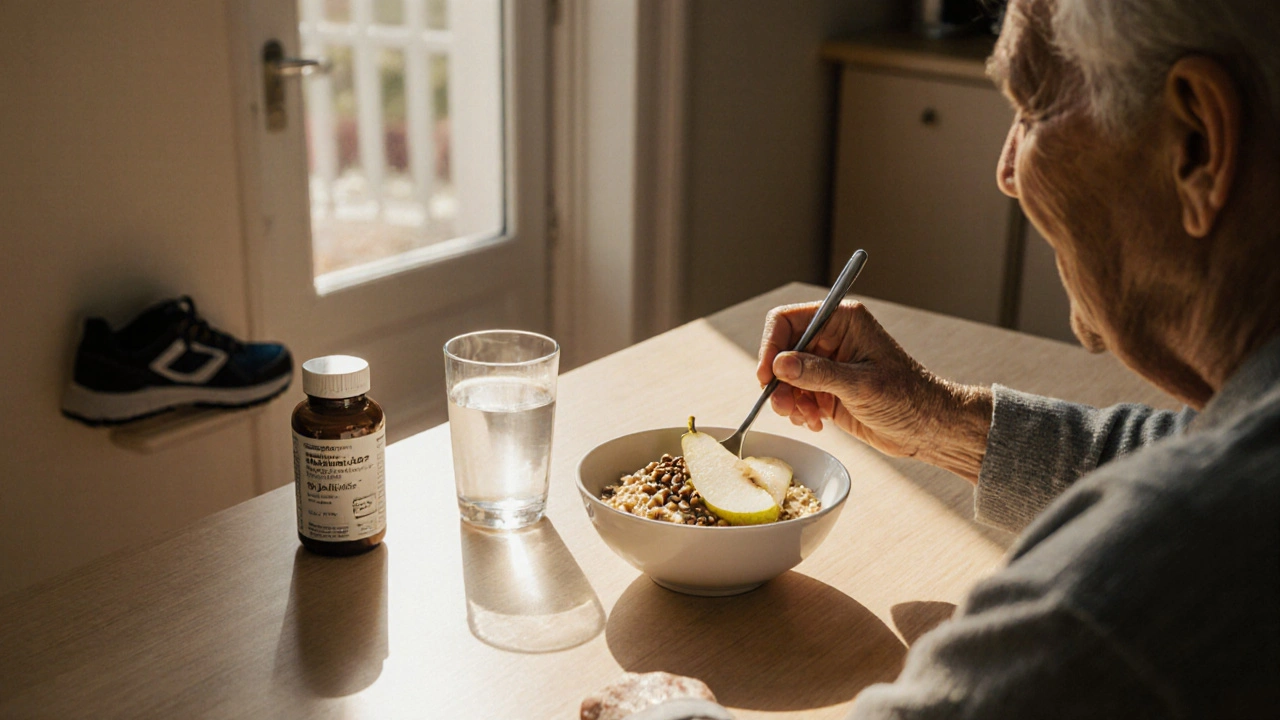
The Essential Guide to Gut Health for Seniors
Nov 16 2025 / Gut HealthLearn practical, science-backed ways to improve gut health after 60. Discover how fiber, hydration, movement, and probiotics can reduce bloating, prevent constipation, and boost overall wellness in seniors.
VIEW MORE