
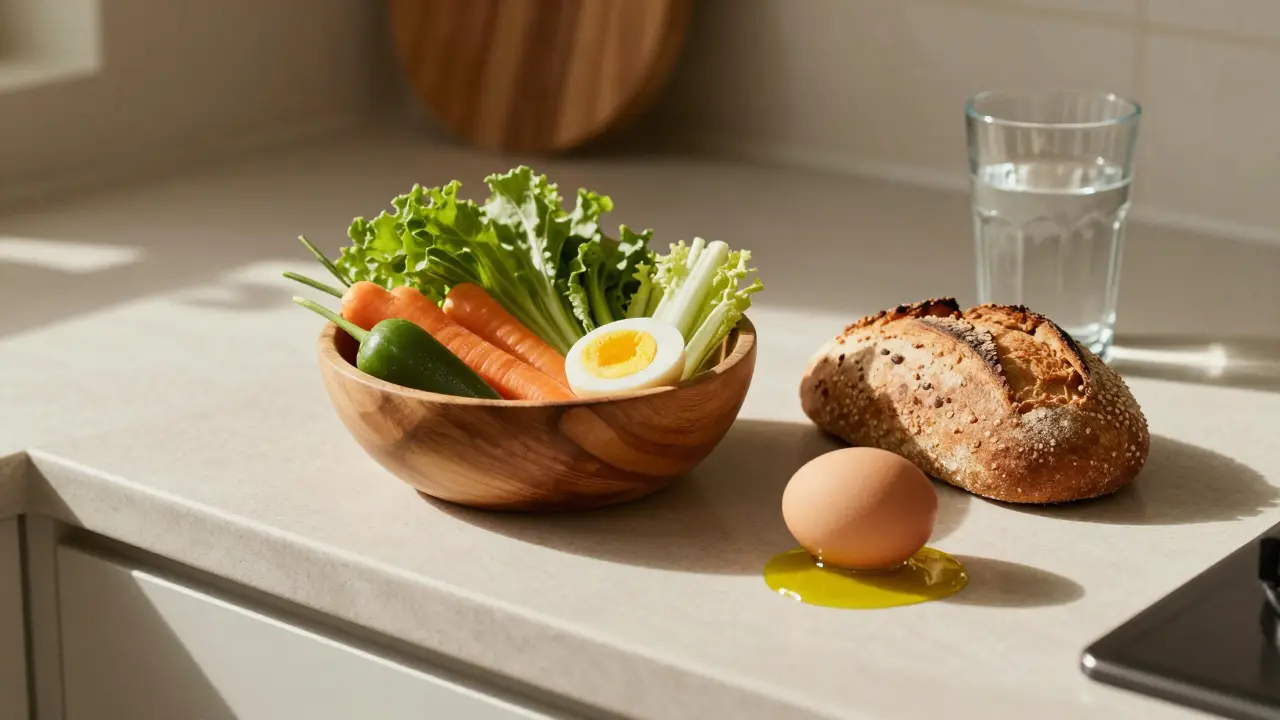
Ever stared into your fridge wondering why you still feel tired, bloated, or sluggish-even though you're "eating healthy"? You're not alone. Most people think a healthy diet means cutting out carbs, counting calories, or buying expensive superfoods. But real health doesn’t come from restriction. It comes from consistency, simplicity, and eating foods that actually work for your body.
The truth? A healthy diet isn’t about perfection. It’s about building habits that stick. And the best part? You don’t need to overhaul your life overnight. Start with what’s already in your kitchen. Focus on real food. Not labels. Not trends. Just food that looks like it came from the ground, the sea, or an animal.
What Does a Healthy Diet Really Look Like?
A healthy diet isn’t a set of rules. It’s a pattern. And the pattern is simple: eat mostly whole, minimally processed foods. That means vegetables, fruits, whole grains, legumes, nuts, seeds, lean proteins, and healthy fats. These foods are packed with nutrients your body needs to function, repair, and thrive.
Think of it this way: if your great-grandmother wouldn’t recognize it as food, it probably shouldn’t be a regular part of your plate. That includes sugary drinks, packaged snacks with long ingredient lists, and anything labeled "low-fat" or "diet"-those are often just sugar in disguise.
A 2023 study from the Australian National University tracked over 12,000 adults for five years. Those who ate the most whole foods had a 32% lower risk of developing chronic diseases like type 2 diabetes and heart disease. The key? Not weight loss. Not fasting. Just eating real food, most days.
Forget the Myths: What Doesn’t Work
Let’s clear up some noise. You don’t need to go keto, vegan, or paleo to be healthy. You don’t need to eliminate entire food groups unless you have a medical reason. And you definitely don’t need to buy $10 bags of chia seeds or $25 protein powders.
Here’s what actually happens when people follow extreme diets:
- They lose weight fast-but gain it back within a year
- They feel deprived, then binge
- They miss out on key nutrients (like fiber from whole grains or calcium from dairy)
- They burn out and quit
The body isn’t a calculator. It doesn’t care if you ate 1,200 calories or 1,800. It cares if those calories came from refined sugar or from lentils, spinach, and eggs. One gives you a spike and crash. The other gives you steady energy, better mood, and stable blood sugar.
Build Your Plate: The Simple Formula
Forget complicated macros. Here’s a foolproof way to build every meal:
- Fill half your plate with vegetables and fruits
- Put a quarter with whole grains or starchy vegetables (brown rice, sweet potato, quinoa)
- Put the last quarter with protein (chicken, fish, tofu, beans, eggs)
- Add a thumb-sized portion of healthy fat (olive oil, avocado, nuts)
That’s it. No measuring. No tracking. Just balance.
For example:
- Breakfast: Oatmeal with berries, chia seeds, and a boiled egg
- Lunch: Lentil salad with spinach, cherry tomatoes, olive oil, and feta
- Dinner: Grilled salmon, roasted broccoli, and wild rice
- Snack: Apple with almond butter
This approach works because it’s flexible. You can eat it at home, at work, or at a restaurant. It’s sustainable. And it naturally limits processed foods without you even trying.
The Sugar Trap: Why It’s the Real Culprit
Sugar isn’t the enemy. But added sugar? That’s the problem.
Average Australians consume 60 grams of added sugar daily-that’s 15 teaspoons. Most of it comes from sauces, breakfast cereals, yogurt, and "healthy" drinks like flavored lattes or protein shakes.
That sugar doesn’t just make you gain weight. It messes with your hormones, spikes your insulin, and leaves you craving more. It’s why you feel fine after lunch, then crash by 3 p.m. and reach for a cookie.
Start cutting back by:
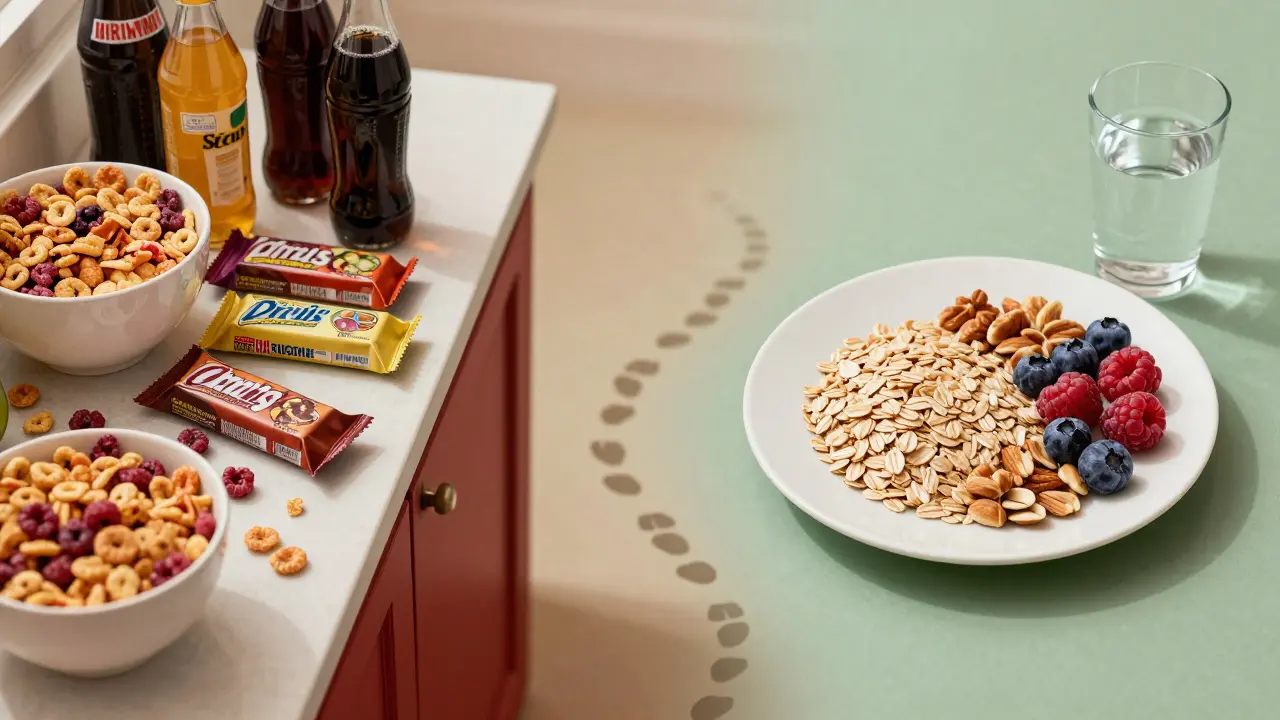
- Switching from sugary cereals to plain oats or whole grain toast
- Choosing plain yogurt and adding your own fruit
- Drinking water or sparkling water instead of juice or soda
- Reading labels-anything with more than 5g of sugar per 100g is a red flag
After just two weeks of reducing added sugar, most people notice better sleep, fewer mood swings, and less afternoon fatigue.

Meal Planning: No More Guesswork
Planning meals doesn’t mean cooking five different dishes every Sunday. It means having a system so you don’t end up eating takeout because you’re too tired to cook.
Here’s a low-effort method:
- Every Sunday, pick 3 simple dinners (e.g., stir-fry, soup, sheet-pan chicken)
- Buy ingredients for those meals
- Prep one or two components ahead-chop veggies, cook grains, hard-boil eggs
- Keep healthy snacks on hand: nuts, fruit, hummus, cheese
You don’t need to meal prep every single meal. Just plan enough to avoid the trap of "I’m hungry, what now?" That’s when you grab chips or a muffin.
And if you eat out? Choose grilled over fried. Ask for dressing on the side. Swap fries for a side salad. Small choices add up.
Hydration, Sleep, and Movement: The Hidden Trio
A healthy diet doesn’t live in isolation. It’s tied to three other habits:
- Hydration: Drink water before coffee. Aim for 1.5-2 liters a day. Dehydration mimics hunger and makes you feel sluggish.
- Sleep: Poor sleep increases cravings for sugar and carbs. Aim for 7-8 hours. No exceptions.
- Movement: You don’t need the gym. Walk 20 minutes a day. Stretch. Take the stairs. Movement helps digestion, blood sugar control, and mood.
These aren’t extras. They’re part of the system. Eat well, but stay up until 2 a.m. scrolling? You’ll undo half your progress.
What About Supplements?
Most people don’t need them. If you’re eating a varied diet with vegetables, protein, and healthy fats, you’re getting what you need.
There are a few exceptions:
- Vitamin D-if you don’t get much sun (common in winter)
- Omega-3-if you don’t eat fatty fish twice a week
- Iron or B12-if you’re vegetarian or vegan and have been tested
Don’t take random supplements because they’re on Instagram. Talk to a doctor. Blood tests tell you what you actually need.
Progress, Not Perfection
You’re not going to eat perfectly every day. And that’s okay. A healthy diet isn’t about 100% compliance. It’s about 80% consistency.
Miss a meal? Eat a snack with protein and fiber. Crave pizza? Have it. Then have a salad tomorrow. No guilt. No punishment.
The goal isn’t to be the healthiest person in the room. It’s to feel better today than you did last week. More energy. Clearer mind. Fewer cravings. Better sleep.
That’s the real win. And it’s within reach-not with a cleanse, not with a detox, but with real food, simple habits, and patience.
Start Small. Stay Consistent.
Here’s your first step:
- Replace one sugary drink with water today
- Add one extra vegetable to your dinner tonight
- Walk for 10 minutes after lunch
Do those three things for a week. Then add one more. You don’t need a plan. You just need to start.
Can I still eat carbs on a healthy diet?
Yes-especially whole grains like oats, brown rice, quinoa, and whole wheat bread. These provide fiber, B vitamins, and steady energy. Avoid refined carbs like white bread, pastries, and sugary cereals. The difference is night and day.
Is a healthy diet expensive?
Not if you focus on the right foods. Beans, lentils, eggs, seasonal vegetables, and frozen fruits are cheaper than processed snacks and takeout. Buying in bulk, cooking at home, and avoiding waste saves money. A bag of dried lentils costs less than $2 and makes six meals.
Do I need to be vegetarian or vegan to eat healthy?
No. Many cultures thrive on diets that include meat, fish, and dairy. The key is balance. If you eat mostly plants, you’ll get more fiber and antioxidants. If you eat animal products, choose lean cuts and limit processed meats like bacon or sausages. Both paths can be healthy.
How long until I notice changes?
Most people notice improved energy and digestion within 5-7 days. Better sleep and mood often follow in 2-3 weeks. Weight loss, if that’s a goal, comes slowly and sustainably-about 0.5-1 kg per week. The real change? You stop craving junk food.
What if I have food allergies or intolerances?
A healthy diet still works. Replace allergens with alternatives: gluten-free grains, dairy-free milks, nut-free seeds. Focus on what you can eat. Many people with intolerances feel better just by cutting out processed foods-even if they keep their allergens. Always work with a dietitian if you’re unsure.
What’s Next?
Start with one change. Not five. Not ten. One. Maybe it’s swapping soda for sparkling water. Maybe it’s adding spinach to your scrambled eggs. Maybe it’s eating dinner without your phone.
Do that for a week. Then add another. You don’t need motivation. You don’t need a fancy app. You just need to show up-and eat something real.
Health isn’t a destination. It’s a daily choice. And you’ve already made the first one by reading this.