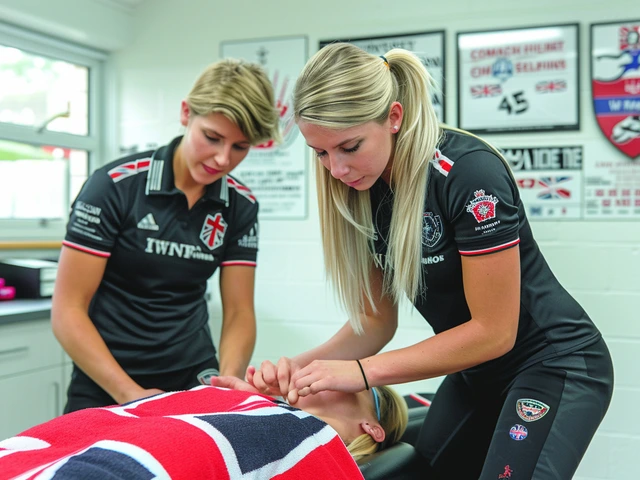
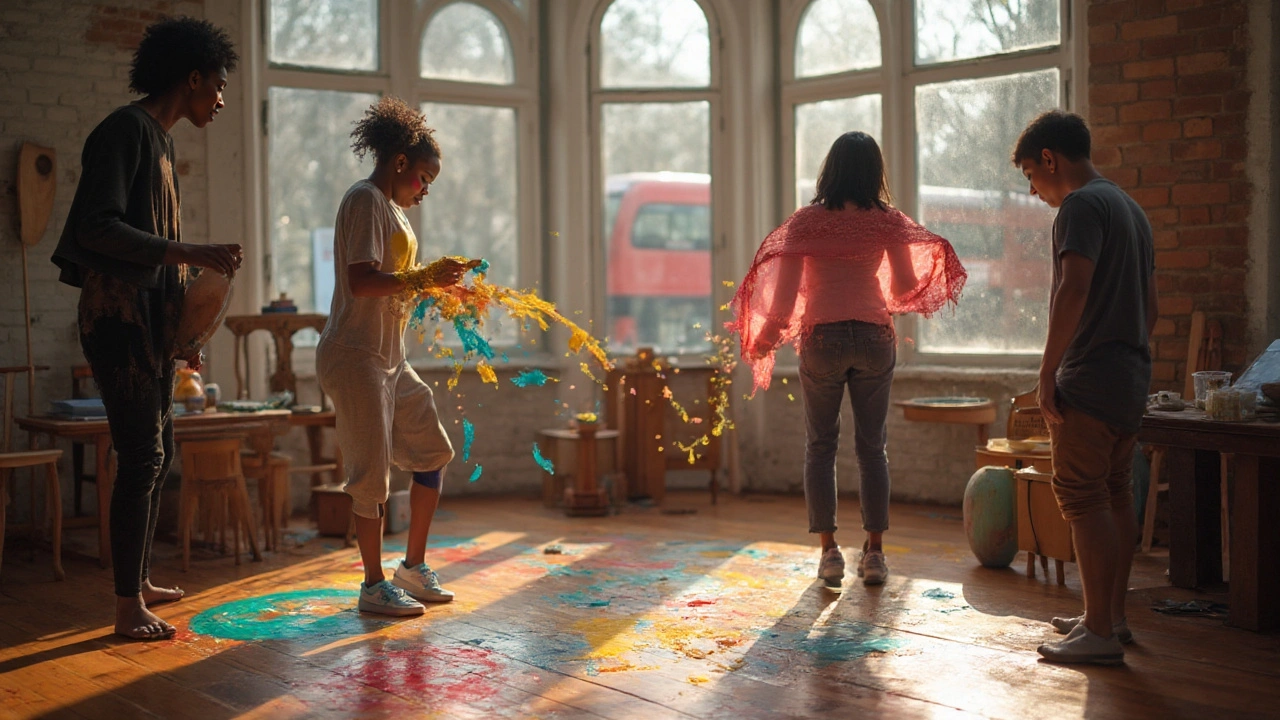
Creative arts therapies are structured, evidence-informed psychotherapies that use art, music, movement, drama, and mixed-modal expression to improve mental health and functional outcomes. Arts therapies blend creative processes with clinical methods to regulate emotion, rewire stress responses, and support recovery after trauma or illness. Clinical psychotherapy modality that engages sensory, motor, and social brain networks to drive neuroplastic change.
Here’s the promise-and the limit: these therapies don’t turn you into an artist. They use creativity as a treatment tool. The science sits in plain view: changes in heart rate variability, cortisol, and activity across the amygdala and prefrontal systems show why people feel calmer, safer, and more flexible after sessions. We’ll unpack what’s happening under the hood, who benefits most, how to choose a modality, and how to measure progress like a pro.
TL;DR
- Creative arts therapies change the brain (neuroplasticity) by pairing safe expression with movement, rhythm, and imagery.
- Evidence shows benefits for stress, trauma, depression, anxiety, pain, and rehab after injury or illness.
- Different modalities (art, music, dance, drama, expressive arts) target different circuits-pick based on your goals and comfort.
- Track outcomes with simple tools (PHQ-9, GAD-7, PCL-5, HRV, session goals) to see what’s working.
- It’s not about talent-it’s about nervous system regulation and safe connection.
What creative arts therapies actually do in your brain and body
Think of stress and trauma like grooves worn into the nervous system. Talk alone sometimes skims the surface. Rhythm, movement, imagery, and play cut new, healthier grooves.
Neuroplasticity is the brain’s ability to change its wiring through repeated, meaningful experience. Neuroscience concept Brain plasticity. When you paint a hard memory with a therapist, drum in sync with a group, or role-play a stuck conversation, you’re pairing safety cues with previously threatening signals. That pairing can weaken old associations and build new ones.
On the threat side sits the amygdala a limbic structure central to detecting threat and tagging emotional salience Neuroanatomy Amygdaloid complex. When creative tasks feel safe and engaging, the amygdala settles. On the regulation side, the prefrontal cortex ramps up, helping with impulse control, planning, and reappraisal. You also see signals through the vagus nerve-breath, vocal tone, and posture shift, raising heart rate variability (HRV), a marker of flexible stress response.
Biochemistry moves too. Music and coordinated movement nudge dopamine (motivation and reward) and oxytocin (bonding and trust), which is partly why singing together in a choir feels good and builds social glue. Salivary cortisol, a stress marker, often drops during and after sessions. Put simply: the body starts believing it’s safe, so the mind can do the deeper work.
What each modality brings to the table
Different tools, same principle: safe, embodied expression that changes what your brain expects will happen next.
Art therapy is a psychotherapy that uses visual media (drawing, painting, clay, collage) to process emotion, build insight, and improve regulation Clinical modality Art psychotherapy. You don’t need to be “good” at art. The point is externalising what’s hard to say. Making something tangible lets you step back, look, and reframe. In hospitals and oncology units, brief art sessions reduce anxiety and pain ratings. In trauma work, working with images can feel safer than words when language shuts down.
Music therapy uses live music, singing, songwriting, and receptive listening to target mood, cognition, and motor function Clinical modality Clinical music therapy. Rhythm is a direct line to the motor system; melody rides emotion. In depression, a 2017 Cochrane review (Aalbers et al.) found music therapy added to standard care reduced symptom severity. In Parkinson’s and stroke rehab, rhythmic auditory stimulation improves gait and timing. Group music boosts connection and HRV, especially when singing in synchrony.
Dance/movement therapy is a psychotherapy that uses movement and body awareness to process emotion, build agency, and regulate arousal Clinical modality DMT. Movement is emotion in motion. A 2019 meta-analysis (Koch et al., Frontiers in Psychology) showed reductions in depression and anxiety, with gains in body image and vitality. For trauma, tracking and expanding movement choices helps the nervous system learn it has options besides freeze or fight.
Drama therapy uses role-play, improvisation, and storytelling to rehearse new behaviours and integrate difficult experiences Clinical modality Psychodrama (related approach). Trying on a role changes how the brain predicts social outcomes. It’s exposure with agency: you choose the script, you practice boundaries, you repair endings. Useful in social anxiety, trauma, and adolescent work. The research base is growing, with early trials showing improved social cognition and reduced avoidance.
Expressive arts therapy integrates two or more arts modalities (e.g., drawing to drumming to movement) within one session to match nervous system needs moment by moment Clinical modality Intermodal expressive therapy. The win here is flexibility: if image-making spikes arousal, you might shift to steady drumming or paced walking to settle, then return to the image. It’s a real-time dance between activation and regulation.
Why this works: simple rules of thumb
- Bottom-up first, then top-down: use breath, sound, and movement to stabilise; then use words to make meaning.
- Predictability and play: rhythm and repetition calm the survival brain; play builds new options safely.
- Safe other: co-regulation with a trained therapist is the catalyst; DIY helps, but the relationship accelerates change.
- Small wins, repeated: lots of short, successful exposures outperform one big plunge.
Evidence snapshots you can trust
Here’s a quick map of reputable findings clinicians actually use:
- Music therapy for depression: Cochrane Review (2017, Aalbers et al.)-symptom reduction when added to treatment-as-usual.
- Dance/movement therapy: Meta-analysis (Koch et al., 2019)-improvements in depression, anxiety, and quality of life.
- Art therapy in medical settings: Randomised and controlled studies show reduced pain and anxiety within single-session interventions (oncology and surgical wards).
- Group singing: HRV and oxytocin increases observed during synchronised breathing and vocalisation (small but consistent physiological studies).
- Stroke and Parkinson’s: Rhythmic auditory stimulation improves gait speed and stride regularity (rehabilitation trials).
Standards bodies like the American Art Therapy Association, the World Federation of Music Therapy, and national counselling and psychology associations summarise this evidence for practitioners. In Australia, ANZACATA sets training and ethics for creative arts therapists.
How sessions work (so you know what to expect)
- Check-in and goal: agree on one small outcome for today (e.g., “reduce panic from 7/10 to 4/10”).
- Warm-up: breath, gentle movement, or receptive listening to reach a workable arousal zone.
- Creative process: make, move, play, or listen-guided by your therapist’s cues and your body’s signals.
- Witness and reflect: look at what happened (images, lyrics, movement), name patterns, track body sensations.
- Integration: pick one takeaway and one micro-practice for the week (e.g., 4 minutes of paced drumming after work).
Common outcomes: a quieter inner critic, better sleep within weeks, easier access to words, less startle, and more social ease. For rehab, expect clearer timing, smoother gait, and longer time-on-task.
Choosing the right modality for your goal
Quick heuristics:
- Struggle to find words? Try art therapy or music therapy.
- Feel cut off from your body? Dance/movement therapy helps you feel and choose.
- Stuck in people dynamics? Drama therapy rehearses new scripts.
- Need flexibility or have fluctuating energy? Expressive arts therapy pivots in-session.
| Modality | Primary mechanism | Evidence highlights | Good starting use-cases | Physio markers often seen | Typical session length |
|---|---|---|---|---|---|
| Art therapy | Externalising emotion; visual reappraisal | Reduced anxiety/pain in medical settings | Trauma processing, oncology, grief | Lower cortisol; calmer breath | 45-60 min |
| Music therapy | Rhythm entrainment; affect modulation | Cochrane support in depression; motor rehab gains | Depression, Parkinson’s, stroke rehab | Higher HRV; synchronised respiration | 45-60 min |
| Dance/movement therapy | Interoception; motor choices | Meta-analytic reductions in depression/anxiety | Trauma, body image, stress regulation | HRV up; muscle tension down | 45-60 min |
| Drama therapy | Role flexibility; safe exposure | Growing RCTs; social cognition gains | Social anxiety, adolescents, trauma | Improved prosody; steady breath | 60-90 min |
| Expressive arts therapy | Intermodal regulation; choice | Emerging mixed-modality evidence | Complex trauma, fluctuating arousal | HRV up; rapid down-shifting | 60 min |
How to measure if it’s working
Don’t guess. Track it.
- Self-report scales: PHQ-9 (depression), GAD-7 (anxiety), PCL-5 (PTSD). Fill them in every 2-4 weeks.
- Session targets: rate distress before/after on a 0-10 scale. Aim for a 20-40% drop within the session.
- Sleep and energy: simple 1-5 rating daily. Look for upward drift after 2-3 weeks.
- HRV: if you have a chest strap or watch, spot-check weekly during a 5-minute paced breathing. Trends beat single data points.
- Function: pick one real-world task (e.g., supermarket, work meeting). Track time-on-task or avoidance rate.
If three consecutive weeks show no change, tweak dosage (more frequent, shorter sessions), switch elements (from visual to rhythmic), or add co-regulation (group format).
Safety, ethics, and scope
These are psychotherapy modalities, not craft classes. Qualified therapists work within ethical codes and trauma-informed practice. In Australia, look for membership with ANZACATA or relevant national boards. Good care means consent, choice, collaboration, and clear goals.
- Trauma cautions: go slow, keep one foot in the present. If images or movement spike distress, pause and stabilise with breath, grounding, or music pacing.
- Medical conditions: for neurological or cardiac issues, coordinate with your GP or specialist, especially for movement-based sessions.
- Psychosis or mania: modalities can be adapted, but require experienced clinicians and medical oversight.
- Children and teens: parental involvement and school coordination improve results; consent matters.
Related concepts and connected topics
These therapies sit alongside cognitive behavioural therapy (CBT), acceptance and commitment therapy (ACT), EMDR, mindfulness-based interventions, occupational therapy, and physiotherapy. Pairing is common: music therapy plus CBT for depression; DMT plus EMDR for trauma; art therapy inside pain rehab programs. This article sits within the broader cluster of mind-body therapies and clinical neuroscience, with child topics like “Art therapy for trauma,” “Music therapy in Parkinson’s,” and “Drama therapy for social anxiety.”
Real-world examples
Grief group: six people meet weekly. Warm-up with breath and slow humming. Each paints a memory in two colours: what was lost and what remains. The room gets quiet. People share one symbol from their image. By week four, someone notices they can now talk about the person without a throat choke. Sleep improves from 5/10 to 7/10.
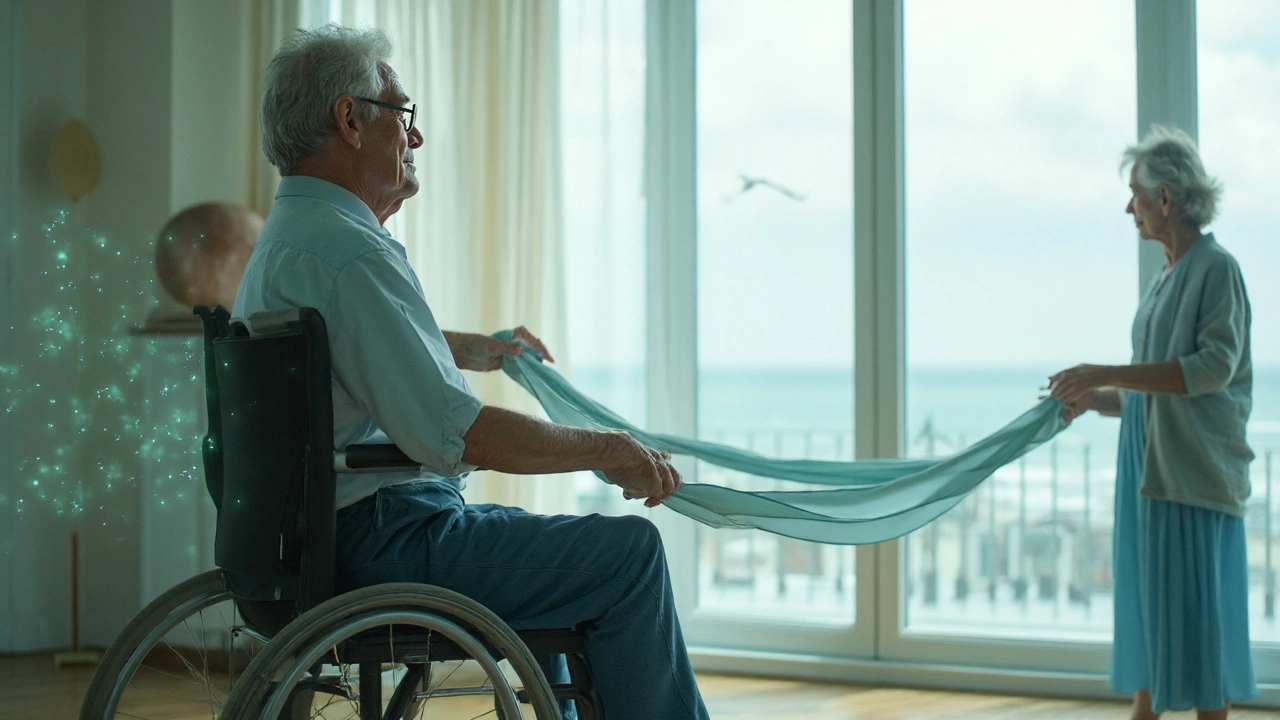
Stroke rehab: gait training meets rhythm. A music therapist uses 90 BPM metronome cues; the patient’s stride evens out, then the therapist introduces a favourite song at the same tempo. Motivation rises. Home program: 10 minutes walking to the track daily. Two weeks later, walking distance increases 15%.
Teen with social anxiety: drama therapy uses role-play for “ordering food.” They try three scripts and two boundary phrases. The teen picks one line that feels natural. Homework: order a smoothie using the new line. The next session, they report success and less dread.
How to get started (and what to ask)
Here’s a simple path:
- Clarify your goal (sleep better, panic less, handle crowds, walk smoother).
- Pick a starting modality that matches your nervous system-quiet visual, steady rhythm, gentle movement, or playful role.
- Find a qualified therapist. In Australia, search ANZACATA or hospital rehab networks. Ask about training, supervision, and trauma-informed practice.
- Plan dosage: 6-8 weekly sessions before you judge it.
- Track outcomes using the tools above.
Questions to ask in the first call:
- “How do you adapt sessions for trauma or high anxiety?”
- “What does a first session look like?”
- “How will we measure progress?”
- “What’s between-session practice like?”
One more thing: creative arts therapies pair best with everyday anchors-5 minutes of paced breathing, a playlist for morning energy, or a doodle ritual before bed.
Myth-busting
- “I’m not creative.” Your nervous system is. No talent required.
- “It’s just fun and games.” It’s fun when safe. It’s clinical when needed. Both matter.
- “Talk therapy failed, so this won’t help.” Different pathway, different result.
- “It’s alternative.” The evidence base is mainstream and growing.
Key entity snapshots (for clarity)
To keep terms straight, here are the core entities you’ll see across research, training, and clinical practice:
Creative arts therapies umbrella for art, music, dance/movement, drama, and expressive arts therapy used in clinical care Psychotherapy family Arts therapies.
Art therapy visual process to express, regulate, and reframe Modality Art psychotherapy.
Music therapy rhythm and melody for mood and motor change Modality Clinical music therapy.
Dance/movement therapy movement-based regulation and agency Modality DMT.
Drama therapy role-play and storytelling for social and emotional change Modality Psychodrama (related).
Expressive arts therapy intermodal approach flexing across art forms Modality Intermodal expressive therapy.
Neuroplasticity brain change via experience Neuroscience Brain plasticity.
Amygdala emotion and threat detector Neuroanatomy Amygdaloid complex.
Next steps
- Pick one modality that matches your nervous system today.
- Book a consult with a credentialed therapist and ask how they measure outcomes.
- Commit to 6-8 sessions, track weekly, and adjust based on data-not vibes.
- Pair sessions with daily micro-practices (2-5 minutes beats zero minutes).
Frequently Asked Questions
Do I need to be artistic or musical for this to work?
No. Skill isn’t the mechanism. Regulation is. Therapists design tasks so anyone can engage safely-think simple marks on paper, steady rhythms, small movements, or short role-plays. The brain shifts because of repetition, rhythm, imagery, and safe connection, not because the art is “good.”
How strong is the evidence compared with talk therapy?
For depression and anxiety, evidence is moderate and growing, with solid support in music therapy and dance/movement therapy meta-analyses. For trauma, evidence is promising and expanding, especially when arts therapies are integrated with established protocols (e.g., EMDR, CBT). For rehab (Parkinson’s, stroke), rhythmic and motor improvements are well documented. It’s not a replacement; it’s a complementary path that often helps when words stall.
What happens if I get overwhelmed during a session?
Your therapist should slow things down and switch to stabilisers: paced breath, grounding, soft rhythm, or a lighter focus. You can pause, change the task, or stop. Trauma-informed practice emphasises choice, consent, and titration. It’s your session; you steer with the therapist’s support.
How quickly should I see results?
Many people feel calmer within a session or two. Measurable changes typically build over 4-8 weeks: better sleep, lower distress scores, and more flexible responses to stress. Neurological or rehab goals may show rhythm and movement gains within the first few weeks when practice is consistent.
Can I combine arts therapy with medication or other therapies?
Yes. Many care plans combine medication with arts therapies and talk therapies. Integration is common in hospitals, community mental health, and rehab. Tell your team what you’re doing so goals align and practices reinforce each other.
Is group or individual better?
Different strengths. Groups boost belonging and synchrony; they’re great for mood, social anxiety, and grief. Individual work goes deeper on personal themes and trauma processing. Many people do both across a year.
How do I find a qualified therapist in Australia?
Search ANZACATA for credentialed creative arts therapists, or ask hospital rehab teams and community mental health services. Ask about training, supervision, experience with your goals, and how they measure outcomes. If you’re on NDIS or using private health, check coverage and referrals.
What if I’m sceptical about the “arts” part?
Treat it like physiotherapy for your nervous system. You’ll use rhythm, breath, and movement to stabilise, then light creative tasks to explore and reframe. Keep sessions short at first, set a clear target, and measure outcomes. If it helps, it helps; if not, you’ll know quickly and can pivot.