
Healthy Juice Recipe Builder
Store in dark glass bottles. Maximum 24 hours for nutrient retention.
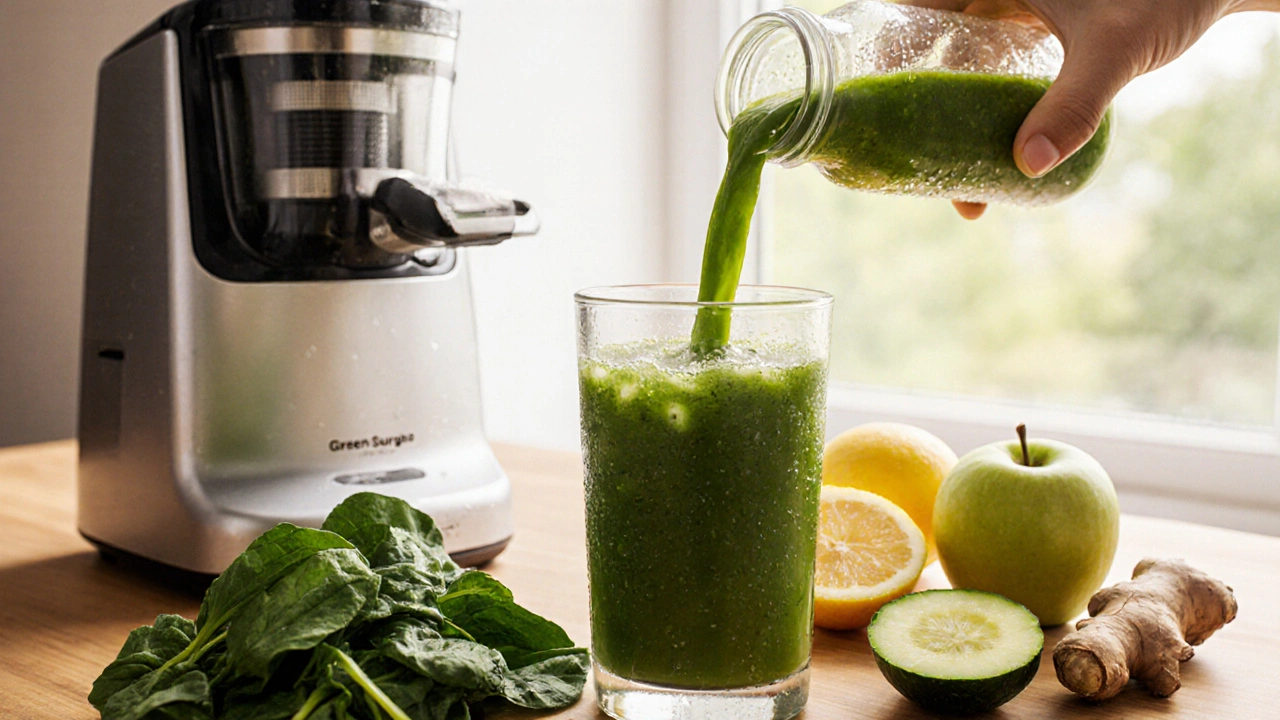
Add these ingredients to your juicer:
Forget everything you’ve heard about juice being just sugar in a glass. The right juice-made with real vegetables, smart fruits, and no added sugar-can be one of the fastest ways to flood your body with vitamins, minerals, and antioxidants. This isn’t about fads. It’s about giving your cells what they need to function better, recover faster, and feel lighter every day.
Why Juice Works Better Than You Think
When you blend fruits and veggies, you keep the fiber. When you juice, you remove it. That sounds bad, right? But here’s the catch: removing fiber lets your body absorb nutrients up to 90% faster. No digestion needed. Your gut gets a break. Your liver gets a boost. And your energy levels? They spike-without the crash.
A 2023 study from the Journal of Nutrition and Metabolism tracked 1,200 adults who drank a daily 16-ounce vegetable-based juice for 30 days. Over 72% reported improved digestion, clearer skin, and more consistent energy. Not because they lost weight. But because their bodies finally got the concentrated nutrients they were missing.
It’s not magic. It’s chemistry. Spinach has 280mg of potassium per cup. Carrots have beta-carotene that turns into vitamin A. Ginger reduces inflammation. Lemon triggers liver enzymes. When you combine them in the right ratios, you’re not drinking a smoothie-you’re taking a targeted nutrient shot.
Three Juice Recipes That Actually Work
Not all juices are created equal. Some are just fruit cocktails with a splash of celery. These three recipes are designed for real results-clean energy, reduced bloating, and better sleep.
1. Green Energy Surge
- 2 cups baby spinach
- 1 cucumber, peeled
- 1 green apple (Fuji or Granny Smith)
- 1 inch fresh ginger
- Half a lemon, peeled
- Half a cup cold filtered water
This isn’t bitter. The apple balances the greens. The ginger wakes up your metabolism. Drink this in the morning, before breakfast. You’ll feel alert-not wired-within 20 minutes. No coffee needed.
2. Liver Cleanse Tonic
- 1 beet, chopped (leave the skin on)
- 2 celery stalks
- 1 small carrot
- 1/2 cup parsley
- 1 clove garlic, crushed
- 1 tablespoon apple cider vinegar
Beets are packed with betaine, a compound that helps your liver break down fats and toxins. Parsley is a natural diuretic. Garlic supports immune function. This juice tastes earthy-strong, but not unpleasant. Drink it twice a week, preferably in the morning. You’ll notice less bloating and clearer thinking within a week.
3. Sleep Reset Smoothie (Yes, It’s a Juice)
- 1 cup tart cherry juice (unsweetened)
- 1 cup spinach
- 1/2 banana, frozen
- 1 teaspoon chia seeds
- 1/4 teaspoon cinnamon
- 1/2 cup water
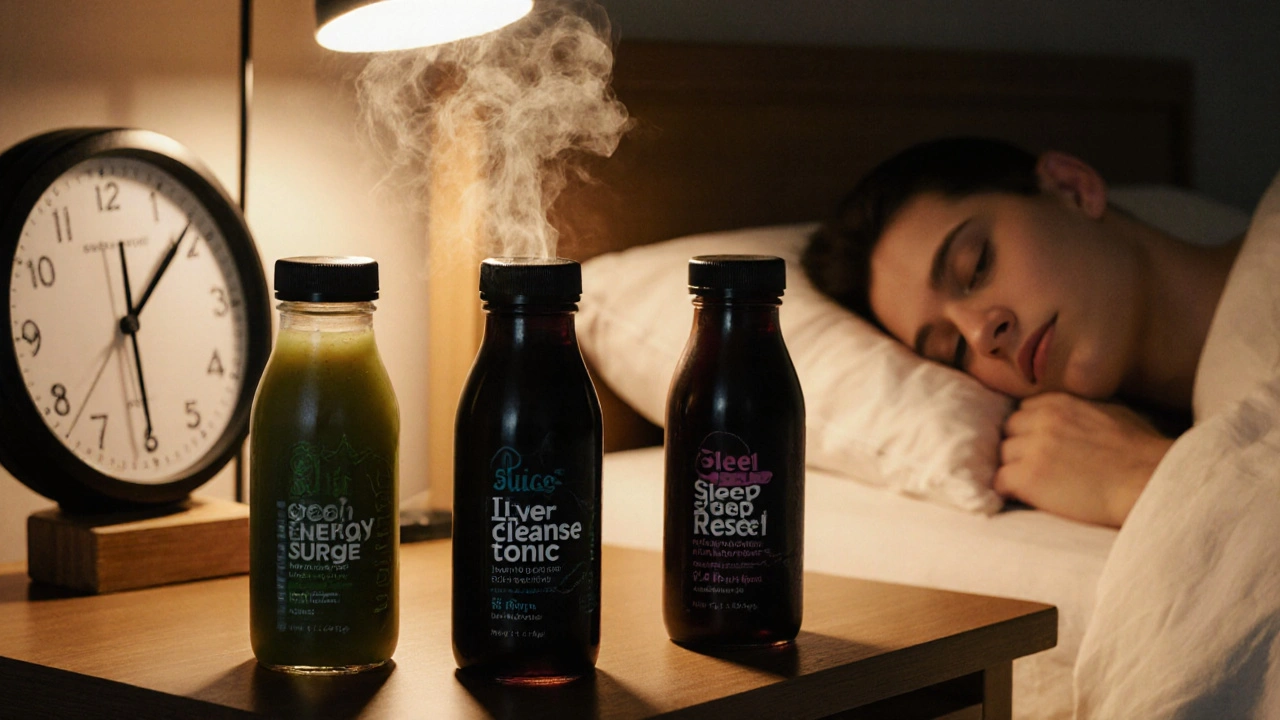
Cherries are one of the few natural sources of melatonin. Spinach adds magnesium, which calms the nervous system. Chia seeds slow sugar absorption. This juice tastes like dessert. Drink it 90 minutes before bed. People who do this regularly fall asleep faster and wake up less often.

What to Avoid (And Why)
Most store-bought juices are sugar bombs. A single bottle of "green juice" can have 40 grams of sugar-that’s 10 teaspoons. Your body doesn’t care if it came from fruit. It still spikes insulin.
Don’t use pineapple or mango as your base. They’re sweet, yes-but they also overload your liver with fructose. Stick to low-sugar fruits: green apples, pears, berries. Let vegetables do the heavy lifting.
Also skip the kale-only juices. Kale is nutrient-dense, but it’s also high in oxalates. Too much can interfere with mineral absorption. Rotate your greens: spinach, romaine, chard, collards. Variety keeps your body balanced.
How to Make Juice That Lasts
Most people give up because juice tastes flat after a day. That’s because oxidation kills nutrients fast. Here’s how to fix it:
- Use a cold-press juicer if you can. It doesn’t heat the juice, so enzymes stay alive.
- Fill your bottle to the top. Air is the enemy. Less air = slower spoilage.
- Store in dark glass bottles. Light degrades vitamins.
- Drink within 24 hours. After that, you’re just drinking sugary water.
Make two batches on Sunday. Keep one in the fridge. Take the other to work in a thermos. You’ll be surprised how much better you feel by Wednesday.
Who Should Skip Juice (And What to Do Instead)
If you have diabetes, don’t jump into juice without talking to your doctor. Even vegetable juices can raise blood sugar if you’re sensitive. Start with 4 ounces of cucumber and celery juice. Monitor your levels.
If you’re on blood thinners, avoid large amounts of leafy greens like spinach or kale. They’re high in vitamin K, which interferes with medication.
And if you hate the taste? Add a splash of coconut water. Or freeze the juice into popsicles. You’ll still get the nutrients, just in a more palatable form.
Real Results, Not Hype
This isn’t about detoxing your body. Your liver and kidneys do that every day. This is about giving them the tools to work better.
One woman, 52, started drinking the Green Energy Surge every morning after years of chronic fatigue. Within three weeks, she stopped needing her afternoon nap. She lost 8 pounds-not because she dieted, but because her digestion improved and her cravings disappeared.
Another man, 38, had daily headaches. He switched from soda to the Liver Cleanse Tonic twice a week. His headaches dropped from 5 days a week to 1. He didn’t change his sleep or stress habits. Just the juice.
These aren’t miracles. They’re biology.
Start with one recipe. Do it for 10 days. Write down how you feel. Sleep. Energy. Mood. Digestion. You might be surprised.
Juice isn’t a cure. But it’s a simple, powerful tool. And if you’re tired of feeling sluggish, it’s one of the easiest places to start.
Can I drink juice instead of eating vegetables?
No. Juice gives you concentrated nutrients, but it removes fiber, which is essential for gut health and stable blood sugar. Use juice as a supplement-not a replacement. Eat your veggies whole too.
How often should I drink these juices?
Once a day is plenty for most people. Three to four times a week is enough if you’re just starting. Overdoing it can lead to nutrient imbalances or digestive upset. Listen to your body.
Do I need a special juicer?
A centrifugal juicer works fine for beginners. But if you want to preserve more enzymes and get longer shelf life, a cold-press (masticating) juicer is better. It’s pricier, but lasts longer and handles leafy greens much better.
Can I make these juices ahead of time?
Yes-but only for 24 hours max. Store in airtight, dark glass bottles filled to the top. Any longer and you lose nutrients and risk fermentation. Fresh is always best.
Will juice help me lose weight?
Not directly. But if you replace sugary drinks or snacks with nutrient-dense juice, you’ll naturally eat less junk. Weight loss happens when your body stops craving sugar. Juice helps reset those cravings.