Anxiety Cycle Breaker
Break the Anxiety Feedback Loop
Calculate how long your anxiety decreases when you practice the "delay checking" technique from the article
Why this works
According to the article, waiting for symptoms to pass without checking them breaks the anxiety feedback loop. Your body's physical sensations typically decrease faster than your anxiety, and this tool demonstrates that pattern.
Research shows that delaying symptom checks can reduce anxiety by 50-75% in 15-30 minutes.
CBT Technique for Today
Practice this now: When you feel a symptom, set a timer for 15 minutes and focus on something you enjoy instead of checking your symptoms.
"The goal isn't to prove you're healthy. It's to live with the possibility that you might not be."
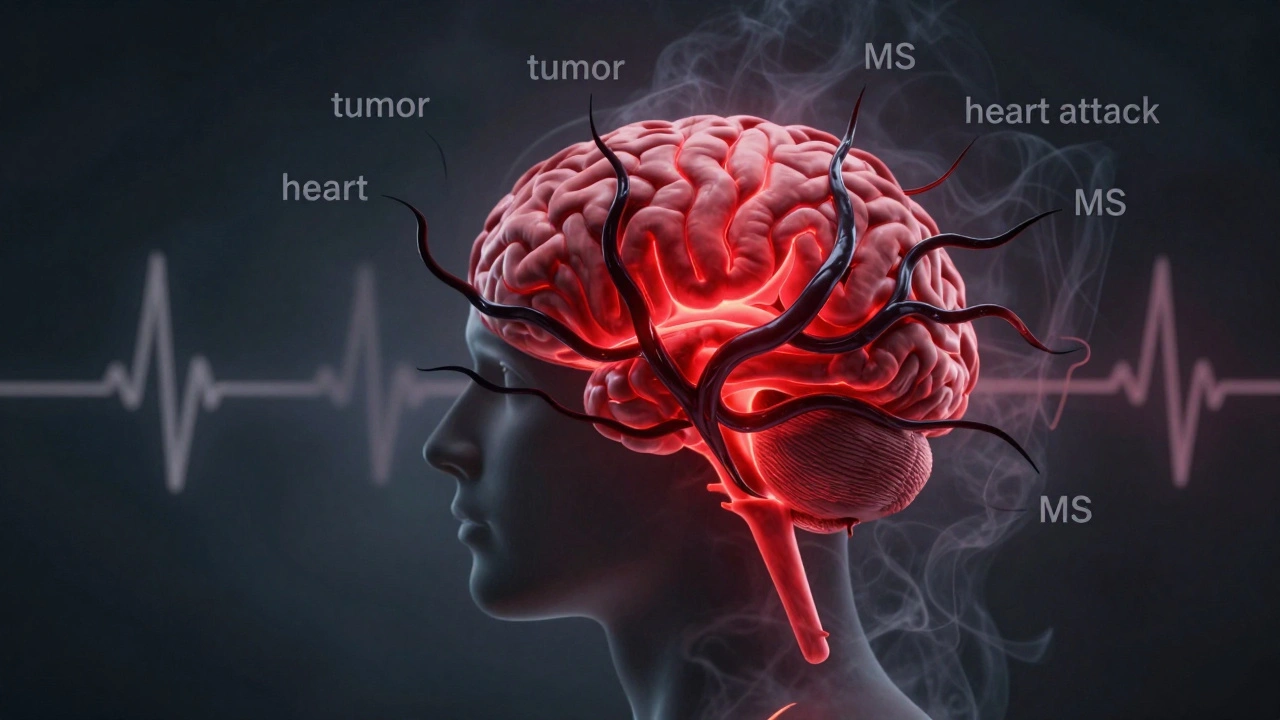
Every time you feel a headache, your mind races: brain tumor. A skipped heartbeat? heart attack. A cough that won’t go away? lung cancer. If this sounds familiar, you’re not alone. Health anxiety isn’t just worrying about being sick-it’s living in a constant state of dread that something terrible is happening inside your body, even when doctors say you’re fine.
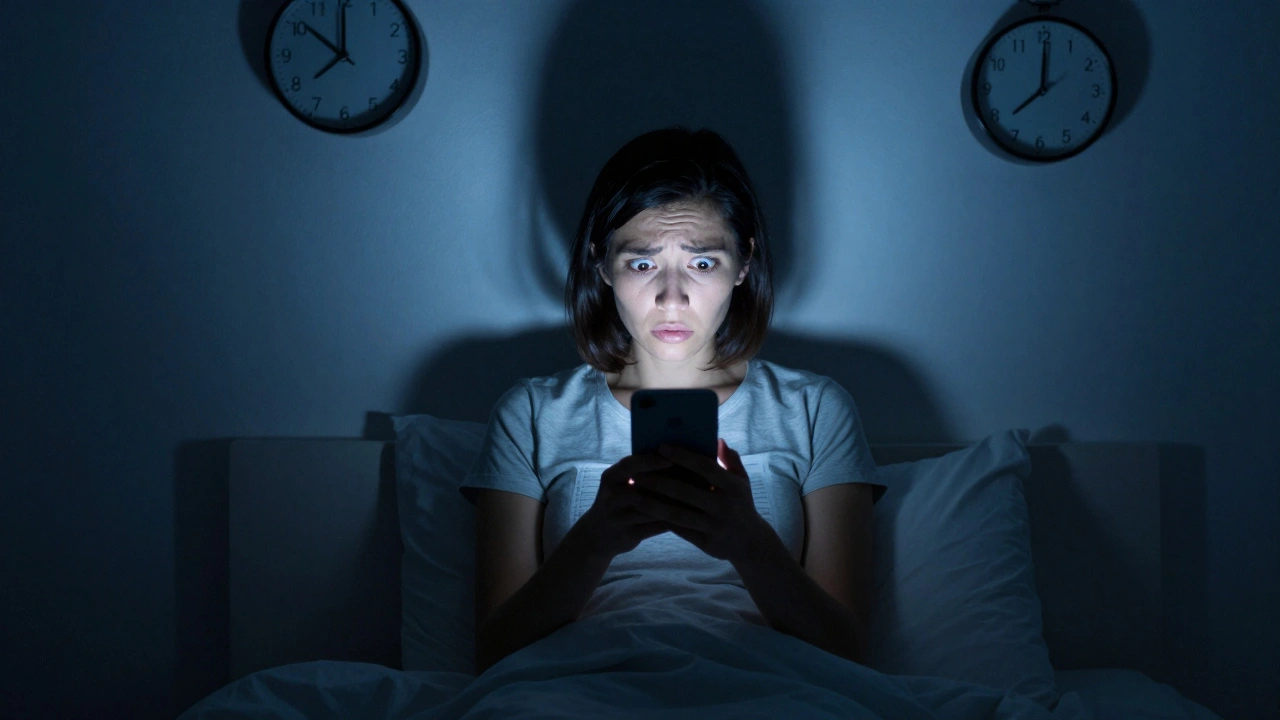
People with health anxiety don’t just check their symptoms once. They check them ten times a day. They scroll through medical websites until their eyes burn. They call their doctor for reassurance, only to feel worse when the appointment is weeks away. They avoid hospitals because they’re terrified of catching something, or go to the ER every time they feel off-even if it’s just a sore throat. This isn’t being careful with your health. It’s being trapped by fear.
What Health Anxiety Really Looks Like
Health anxiety isn’t a single symptom. It’s a pattern. It’s the person who spends hours reading about rare diseases after a friend mentions one. It’s the one who can’t sleep because they’re convinced their chest pain is a sign of something deadly. It’s the person who cancels plans because they feel a weird tingling in their arm and are sure it’s early-stage MS.
In Australia, about 4% of adults experience health anxiety severe enough to interfere with daily life, according to data from the Australian Bureau of Statistics. That’s roughly 1 in 25 people. And it’s growing. The rise of online symptom checkers, YouTube medical videos, and social media health influencers has made it easier than ever to turn normal body sensations into red flags.
Here’s the catch: the more you search, the worse it gets. A 2023 study from Monash University found that people who used symptom-checking apps more than three times a week were 3.7 times more likely to report high levels of health anxiety. The internet doesn’t give answers-it gives possibilities. And when you’re already scared, every possibility feels like a certainty.
Why Your Body Feels Like a Threat
Your body is constantly sending signals. Your heart beats. Your stomach gurgles. Your muscles twitch. Your skin itches. For most people, these are background noise. For someone with health anxiety, they’re alarm bells.
It’s not that your body is broken. It’s that your brain’s threat detector is stuck on high. The amygdala-the part of your brain that sounds the alarm when danger is near-is overactive. It mistakes normal physical sensations for life-threatening ones. And once it starts, your body responds. Your heart races. Your breathing gets shallow. Your muscles tense. You feel dizzy. And now you have even more "proof" something is wrong.
This is called the anxiety feedback loop. You feel a sensation → you think it’s dangerous → you get anxious → your body reacts → you feel more sensations → you think it’s worse. It’s not a physical illness. It’s a mental one. And it’s self-sustaining.
The Doctor’s Office Isn’t the Answer
Many people with health anxiety go to doctors constantly. They get blood tests, X-rays, MRIs. They’re told, "You’re perfectly healthy." And for a few hours, they feel relieved. Then the next day, a new sensation appears. The fear comes back. Harder.
Reassurance doesn’t fix this. It fuels it. Every negative test becomes temporary relief, not permanent proof. The brain starts thinking: "If I didn’t have cancer last time, maybe I have it now. Maybe the test missed it. Maybe I need more tests. Maybe I need a specialist. Maybe I need a second opinion. Maybe I need a third."
Doctors can’t keep ordering tests forever. And when they say, "There’s nothing wrong," it can feel like they’re dismissing you. But they’re not. They’re seeing the same pattern over and over: normal results, no physical cause, escalating fear. They’re trying to help-but the help isn’t in more scans. It’s in changing how you think.
How to Break the Cycle
There’s no quick fix. But there are proven ways to get better. And they don’t involve more testing.
- Stop Googling symptoms. Set a rule: no medical searches after 8 p.m. Or better yet, delete symptom-checker apps. If you feel the urge, write down the thought instead: "I’m scared my headache means a brain tumor." Then set it aside. Don’t argue with it. Just notice it.
- Delay checking. When you feel a symptom, wait 15 minutes before checking it again. Then 30. Then an hour. You’ll notice the fear drops faster than the sensation. Your body isn’t changing-you’re learning to sit with discomfort.
- Accept uncertainty. The goal isn’t to prove you’re healthy. It’s to live with the possibility that you might not be. That’s not dangerous. That’s life. Everyone has a chance of getting sick. The question isn’t "Will I?" It’s "Can I handle it if I do?"
- Focus on living, not monitoring. What did you enjoy before this fear took over? Walks? Music? Coffee with friends? Start doing those things again-even if you’re scared. Each time you do, you weaken the fear’s grip.
- Try CBT. Cognitive Behavioral Therapy is the most effective treatment for health anxiety. It teaches you to spot distorted thoughts ("This pain means cancer") and replace them with balanced ones ("This pain could be stress, fatigue, or nothing at all. I’ve had it before and I’m fine.")
One woman I spoke to in Melbourne-let’s call her Lisa-used to go to the emergency room every two weeks. She’d been told she had no heart condition, no neurological issue, no infection. But she still couldn’t sleep. After six weeks of CBT, she stopped going to the ER. She started going to the beach. She still gets anxious. But now she says, "I don’t need to know what’s wrong to be okay."
When to Seek Help
Not every worry about health is health anxiety. If you have real symptoms-unexplained weight loss, persistent pain, changes in bowel habits, unusual bleeding-see a doctor. That’s responsible.
But if you’ve had multiple clear medical evaluations and still can’t shake the fear, it’s time to look at your mind, not just your body. A psychologist who specializes in anxiety disorders can help. You don’t need to be "crazy" to need help. You just need to be tired of living in fear.
Health anxiety doesn’t mean you’re weak. It means your brain is working too hard to protect you. And like any overworked system, it needs rest, training, and new habits.

What Helps More Than Anything
The most powerful tool isn’t a pill or a test. It’s time. Not the kind you spend searching online. The kind you spend living.
When you start doing things you love-dancing, gardening, reading, cooking-you give your brain something else to focus on. You prove, through experience, that life can be good even when you’re not 100% sure you’re perfectly healthy.
It’s not about becoming fearless. It’s about becoming brave enough to live anyway.
Is health anxiety the same as hypochondria?
Yes, health anxiety is the modern term for what was once called hypochondria. The name changed because "hypochondria" carried stigma and implied people were "making it up." Health anxiety is a real, diagnosable condition recognized by the DSM-5. It’s not about being dramatic-it’s about a brain stuck in threat mode.
Can health anxiety cause real physical symptoms?
Absolutely. Anxiety doesn’t just feel bad-it physically changes your body. It can cause headaches, dizziness, muscle tension, stomach pain, heart palpitations, and even numbness. These aren’t imaginary. They’re real. But they’re caused by stress, not by cancer, MS, or heart disease. The symptoms are real. The cause is anxiety.
Will medication help with health anxiety?
Medication like SSRIs (e.g., sertraline or escitalopram) can help reduce the intensity of anxiety symptoms, especially when combined with therapy. But pills alone won’t fix the thought patterns. They’re a support tool, not a cure. Many people find they can eventually reduce or stop medication once they’ve learned coping skills.
How long does it take to recover from health anxiety?
Recovery varies. Some people see improvement in 8-12 weeks with consistent CBT. Others take longer, especially if they’ve been stuck in the cycle for years. The key isn’t speed-it’s consistency. Every time you choose to not check your symptoms, not call the doctor, not search online, you’re rewiring your brain. It takes practice, but it works.
Can health anxiety go away on its own?
Sometimes, yes-especially if life changes reduce stress. But without learning new ways to respond to fear, it usually comes back. Left untreated, health anxiety often gets worse over time. It doesn’t just fade. It needs active work. You don’t have to do it alone.
What to Do Next
If you recognize yourself in this, start small. Pick one thing: delete one symptom-checking app. Write down one fear instead of Googling it. Go for a 10-minute walk without checking your pulse. These aren’t big changes-but they’re the first steps out of the trap.
You don’t need to be perfect. You just need to be willing to try something different. Your body isn’t your enemy. Your fear is. And fear loses its power when you stop feeding it.