
Think about the last time you set a New Year’s resolution to get fit. Chances are, by February, the gym membership was gathering dust and the healthy meal prep had turned back into takeout. You aren’t alone in this. The reason most of us fail isn’t a lack of willpower; it’s a fundamental misunderstanding of how health goals actually work. We treat them like finish lines rather than identity shifts. But when done right, these objectives don’t just change your waistline or your blood pressure-they fundamentally rewrite the trajectory of your life.
The Psychology Behind Lasting Change
To understand why your past attempts might have fizzled out, we need to look at the science of habit formation. Research published in the European Journal of Social Psychology suggests that it takes an average of 66 days for a new behavior to become automatic. That’s not 21 days, as the old myth goes. It’s nearly three months of consistent effort before your brain stops fighting you.
This is where behavioral psychology comes into play. Specifically, the concept of "implementation intentions." Instead of saying, "I will eat healthier," which is vague and overwhelming, you say, "If I am hungry at 3 PM, then I will eat an apple and a handful of almonds." This simple if-then formula bypasses the decision fatigue that kills most diets. You remove the need for willpower because the action is pre-decided.
Consider the difference between outcome-based goals and process-based goals. An outcome goal is losing ten pounds. A process goal is walking for thirty minutes every day. You can control the walk. You cannot directly control the scale. When you focus on the process, you build trust with yourself. Every time you complete the walk, you prove to your subconscious that you are someone who keeps promises. This builds what psychologists call "self-efficacy," which is the fuel for long-term change.
Redefining Success: Beyond the Scale
We often narrow our definition of health to aesthetics. We want smaller jeans or more defined abs. But true health is systemic. It involves your cardiovascular system, your metabolic rate, your mental clarity, and your emotional resilience. If you only track weight, you’re ignoring 90% of the picture.
Holistic health requires looking at biomarkers that matter. These include:
- Resting Heart Rate: A lower resting heart rate generally indicates better cardiovascular fitness.
- Sleep Quality: Are you getting seven to nine hours of uninterrupted sleep? Poor sleep disrupts hormones like ghrelin and leptin, making weight loss nearly impossible.
- Energy Levels: Do you crash at 2 PM, or do you maintain steady energy throughout the day?
- Mental Clarity: Is your brain foggy, or are you sharp and focused?
When you set goals around these metrics, you stop punishing yourself for fluctuations in water weight and start celebrating improvements in vitality. This shift in perspective is crucial. It transforms health from a punishment for eating poorly into a reward for living well.
The Compound Effect of Small Choices
James Clear, author of *Atomic Habits*, popularized the idea that small habits compound over time. Losing five pounds doesn’t feel like much. But adding thirty minutes of walking every day adds up to nearly 4.5 hours of activity per week. Over a year, that’s 234 hours. That’s significant.
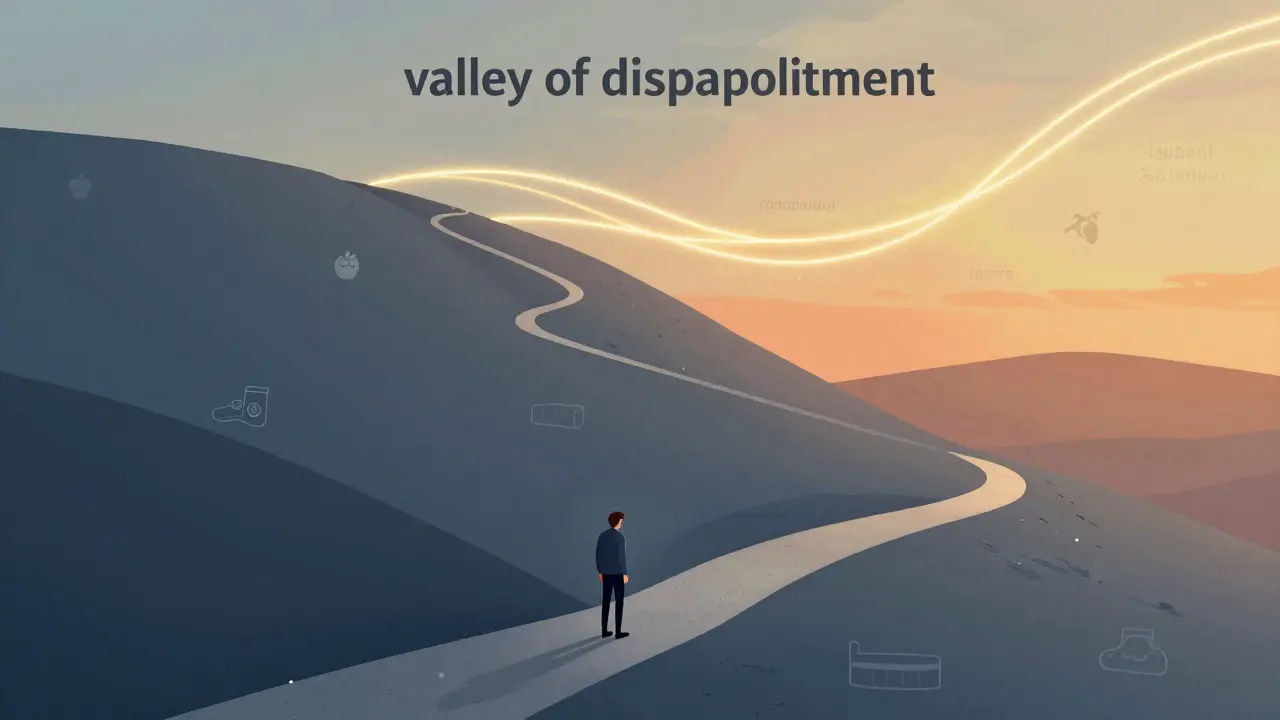
Let’s look at the math of consistency. If you improve your health by just 1% every day, you’ll be 37 times better by the end of the year. Conversely, if you decline by 1% daily, you drop near zero. This is the power of compounding. Most people quit because they expect linear progress. They want to lose one pound today and see it on the scale tomorrow. But biology doesn’t work in straight lines. It works in curves. The results lag behind the effort. This "valley of disappointment" is where most people give up, right before the breakthrough happens.
Think about your diet. Swapping soda for sparkling water seems trivial. But doing it every day saves you roughly 150 calories. Over a month, that’s 4,500 calories. That’s roughly one pound of fat loss without ever stepping foot in a gym. Now imagine swapping processed snacks for whole foods. The cumulative effect on inflammation, gut health, and energy is massive. These micro-decisions shape your future far more than occasional grand gestures.
Building a Sustainable Environment
Willpower is a finite resource. If you rely on it, you will eventually run out. The smartest way to achieve your fitness goals is to design your environment so that good choices are easy and bad choices are hard.
If you want to eat less sugar, don’t keep cookies on the counter. Hide them in a high cupboard, wrapped in foil, buried under other items. Make the friction high. If you want to exercise in the morning, lay out your workout clothes the night before. Put your running shoes by the door. Reduce the steps required to act.
This is known as "choice architecture." Companies use this all the time. Think about how Netflix autoplay starts the next episode. They designed the environment to make binge-watching the path of least resistance. You can hack this for your health. Design your kitchen so fruits are visible and accessible. Keep a water bottle at your desk. Join a community group where everyone values health. Surround yourself with people whose normal behavior is your desired behavior.
Navigating Setbacks Without Quitting
Here is the hard truth: You will mess up. You will miss workouts. You will eat junk food. You will have weeks where stress derails your routine. This is not failure. This is data.
The biggest predictor of long-term success isn’t avoiding mistakes; it’s how quickly you bounce back. Researchers call this "resilience." If you skip three days of working out, don’t spiral into thinking, "Well, I’ve ruined everything, might as well quit." Instead, adopt the "never miss twice" rule. Missed one day? Okay. Miss two? That’s starting a new habit-a bad one. Get back on track immediately.
Treat setbacks as experiments. Ask yourself: What triggered the slip-up? Was I stressed? Tired? Bored? Once you identify the trigger, you can create a plan for next time. Maybe you need a low-effort workout option for busy days. Maybe you need a healthy snack ready for late-night cravings. Adaptability is key. Rigid plans break; flexible systems bend.

The Long-Term Vision: Who Do You Want to Be?
Ultimately, health goals are about identity. Are you a smoker or a non-smoker? Are you a couch potato or an active person? Every action you take is a vote for the type of person you wish to become. One healthy meal doesn’t make you healthy. But it’s a vote. One workout doesn’t make you fit. But it’s a vote.
Visualize your future self. Not just physically, but functionally. Imagine being able to play with your grandchildren without getting winded. Imagine traveling without worrying about dietary restrictions or mobility issues. Imagine having the mental clarity to pursue your passions. This vision should be compelling enough to drive your daily actions.
Your health is the foundation upon which everything else is built. Career, relationships, hobbies-all of it depends on your physical and mental capacity. Investing in your health now is the highest-return investment you can make. It pays dividends in energy, longevity, and quality of life.
| Approach | Focus | Sustainability | Risk of Burnout |
|---|---|---|---|
| Outcome-Based | Weight, Size, Numbers | Low | High |
| Process-Based | Daily Habits, Actions | High | Low |
| Identity-Based | Self-Image, Values | Very High | Very Low |
Practical Steps to Start Today
You don’t need a perfect plan. You need a start. Here is a simple framework to begin shaping your future:
- Audit Your Current State: Be honest about where you are. Track your food, movement, and sleep for three days. No judgment, just data.
- Pick One Keystone Habit: Choose one small change that will positively impact other areas. For many, this is walking or sleeping earlier.
- Set Implementation Intentions: Define exactly when and where you will perform this habit. "I will walk for 15 minutes after lunch on weekdays."
- Design Your Environment: Remove obstacles and add cues. Prep your gear. Clean your space.
- Review and Adjust Weekly: Every Sunday, review your progress. What worked? What didn’t? Adjust your plan accordingly.
Remember, the goal isn’t perfection. The goal is progress. Consistency beats intensity every time. Start small, stay consistent, and let the compound effect work its magic. Your future self will thank you.
How long does it really take to form a new health habit?
Research indicates that it takes an average of 66 days for a new behavior to become automatic, though this can range from 18 to 254 days depending on the complexity of the habit and the individual. Consistency is more important than speed.
What is the difference between outcome goals and process goals?
Outcome goals focus on the result, such as losing ten pounds. Process goals focus on the actions you take, such as walking for thirty minutes daily. Process goals are more effective because they are within your direct control and build sustainable habits.
Why do most people fail at their New Year's resolutions?
Most people fail because they set vague, outcome-based goals and rely on willpower rather than systems. They also underestimate the time required for habit formation and give up during the "valley of disappointment" where results are not yet visible.
How can I make healthy choices easier in my daily life?
Use choice architecture. Make healthy options visible and accessible (like fruit on the counter) and unhealthy options hidden and difficult to access. Lay out workout clothes the night before. Reduce the friction for good behaviors and increase it for bad ones.
What should I do if I miss a workout or eat poorly?
Adopt the "never miss twice" rule. Missing once is an accident; missing twice is the start of a new, bad habit. Analyze what caused the slip-up, adjust your plan if necessary, and get back on track immediately without guilt.