
If breakfast keeps losing to the snooze button and a rushed coffee, you’re not broken-your mornings are. The fix isn’t another complicated plan. It’s a simple blueprint that gives you steady energy, keeps you full until lunch, and actually fits a busy weekday. Here are the healthy breakfast ideas I rely on in Brisbane-fast builds, make‑ahead options, and smart swaps that work whether you’re feeding kids, training early, or just trying to beat the 10 a.m. slump.
TL;DR: The Breakfast Blueprint for Steady Energy
Short on time? Start here.
- Hit the 30-8-10 rule: 25-35 g protein, 8+ g fibre, <10 g added sugar at breakfast. This combo keeps you full and focused. (Heart Foundation; Australian Guide to Healthy Eating)
- Build in five steps: slow‑burn carbs + lean protein + plants + healthy fats + flavor. Five minutes, done.
- Choose low‑GI carbs (oats, dense wholegrain or rye, legumes). The Glycemic Index Foundation shows low‑GI meals help steady energy and mood.
- Prep once, eat all week: overnight oats jars, chia puddings, egg muffins, pre‑portioned smoothie packs.
- Protein target per meal: about 0.3 g/kg body weight (Sports Dietitians Australia). Most adults do well at 25-35 g.
Step-by-Step: Build a Balanced Breakfast in 5 Minutes
Think of breakfast like a mini checklist. You don’t need a recipe-just a formula.
- Pick a slow‑release carb base (1-2 serves): rolled oats (½ cup dry), dense wholegrain or rye toast (1-2 slices), high‑fibre wraps, leftover brown rice or quinoa (¾ cup), or legumes like baked beans (¾-1 cup). Lower‑GI carbs give you stable energy across the morning (University of Sydney GI research).
- Add complete protein (25-35 g): eggs (2 + extra whites), Greek yoghurt/Skyr (200 g), cottage cheese/ricotta (150 g), firm tofu/tempeh (150-200 g), smoked salmon/tuna (70-100 g), or a quality protein powder (20-30 g). Aim for at least a palm‑sized serve.
- Pack in plants (2+ colours): berries, kiwi, banana, mandarins (winter in Australia), spinach, tomatoes, mushrooms, avocado, herbs. Two colours = more fibre and polyphenols.
- Drizzle healthy fats (1-2 tsp): nuts, seeds (chia, hemp, pumpkin), extra‑virgin olive oil, peanut or almond butter. Fats help fullness and vitamin absorption.
- Flavour without sugar: cinnamon, vanilla, lemon zest, dukkah, chilli, miso, cocoa, espresso, fresh herbs. If you sweeten, keep added sugar under 2 tsp (8 g).
Quick checks before you eat: Can you count 25-35 g protein? Is there at least 8 g fibre? Any added sugar under 10 g? If yes, you’ve got a breakfast that’ll carry you to lunch.
Hydration matters too. Have a glass of water with breakfast. Coffee is fine-just try food with or before it if you get jitters or a mid‑morning crash.
All guidance lines up with the Australian Guide to Healthy Eating (NHMRC), Heart Foundation advice on fibre and wholegrains, and GI Foundation research on steady energy.
Examples & Recipes: 12 Healthy Breakfasts for Real Life
Use these as plug‑and‑play options. Times are realistic for weekday mornings. Macros are estimates per serve using common Aussie products.
- Protein Oats with Blueberries (5-7 min, stovetop or microwave): ½ cup rolled oats cooked in 200 ml milk (dairy or soy), stir in 1 scoop whey or plant protein, 1 tbsp chia, ½ cup blueberries, cinnamon. Roughly 470 kcal (1965 kJ), 39 g protein, 11 g fibre.
- Egg Wrap with Cottage Cheese (6-8 min): Fill a wholemeal wrap with 2 eggs + 100 g egg whites (scrambled), ½ cup cottage cheese, spinach, chilli. About 430 kcal (1800 kJ), 40 g protein, 4 g fibre.
- Greek Yoghurt Bowl (2 min): 200 g Greek yoghurt, 1 kiwi + pulp of 1-2 passionfruit, 20 g almonds, 1 tbsp hemp seeds, drizzle vanilla. ~400 kcal (1675 kJ), 27 g protein, 5-6 g fibre.
- Tofu Scramble on Sourdough (8-10 min): 200 g firm tofu, turmeric, mushrooms, baby spinach, 1 tsp olive oil, 1 slice sourdough. ~440 kcal (1840 kJ), 26 g protein, ~4 g fibre.
- Smoked Salmon, Avocado & Rye (3-5 min): 2 rye slices, 70 g smoked salmon, ½ avocado, tomato, lemon, pepper. ~470 kcal (1965 kJ), 22 g protein, ~12 g fibre.
- Green Power Smoothie (2-3 min): 170 g Greek yoghurt, 1 scoop protein, 1 banana, handful spinach, 30 g oats, 1 tbsp peanut butter, 150 ml milk. Big serve: ~640 kcal (2680 kJ), 54 g protein, ~7 g fibre. Split in two if needed.
- Chia Pudding with Raspberries (prep 2 min, set overnight): 3 tbsp chia in 250 ml soy milk, vanilla, top with 100 g raspberries and 1 tsp honey. ~360 kcal (1500 kJ), 14 g protein, 16-17 g fibre.
- Cottage Cheese Tomato Toast (3-4 min): 2 slices seeded wholegrain, 150 g cottage cheese, tomato slices, 1 tsp olive oil, cracked pepper. ~375 kcal (1570 kJ), 26 g protein, ~6 g fibre.
- Baked Bean Cheddar Toastie (6-8 min): 2 slices wholegrain, 1 cup baked beans, 20 g cheddar, rocket. ~485 kcal (2030 kJ), 25 g protein, 18 g fibre.
- Overnight Oats Jar (prep 3 min, fridge 4 days): Oats ½ cup, milk 200 ml, 100 g Greek yoghurt, 1 tbsp chia, 100 g frozen berries. ~430 kcal (1800 kJ), 24 g protein, 15 g fibre.
- Savoury Oats with Egg & Miso (5-6 min): Microwave oats with water, stir in 1 tsp miso, top with 1 egg + 100 g egg whites, sautéed mushrooms, spring onion, 1 tsp sesame oil. ~340 kcal (1420 kJ), 25-27 g protein, ~5 g fibre.
- Freezer Buckwheat Pancakes (reheat 2 min): 2 pancakes, 80 g ricotta, berries, 1 tsp maple. ~420 kcal (1760 kJ), 16-20 g protein (add extra ricotta or yoghurt), ~10 g fibre.
Want the numbers at a glance? Here’s a quick guide.
| Breakfast | Prep time | Protein (g) | Fibre (g) | Energy (kcal) | Energy (kJ) | Best for |
|---|---|---|---|---|---|---|
| Protein Oats + Blueberries | 5-7 min | 39 | 11 | 470 | 1965 | Busy mornings; long meetings |
| Egg Wrap + Cottage Cheese | 6-8 min | 40 | 4 | 430 | 1800 | On‑the‑go; school run |
| Greek Yoghurt Bowl | 2 min | 27 | 6 | 400 | 1675 | No‑cook; light but filling |
| Tofu Scramble on Sourdough | 8-10 min | 26 | 4 | 440 | 1840 | Plant‑based; savoury lovers |
| Salmon, Avocado & Rye | 3-5 min | 22 | 12 | 470 | 1965 | Low‑GI, high fibre |
| Green Power Smoothie | 2-3 min | 54 | 7 | 640 | 2680 | Big training days |
| Chia Pudding + Raspberries | Overnight | 14 | 17 | 360 | 1500 | Grab‑and‑go; dairy‑free |
| Cottage Cheese Tomato Toast | 3-4 min | 26 | 6 | 375 | 1570 | Budget; high protein |
| Baked Bean Cheddar Toastie | 6-8 min | 25 | 18 | 485 | 2030 | Fibre boost; vegetarian |
| Overnight Oats Jar | Overnight | 24 | 15 | 430 | 1800 | Meal prep; kids‑friendly |
Numbers are estimates and will vary with brands and portions. Use them as signposts, not handcuffs.
Checklists, Smart Swaps & Prep That Actually Saves Time
No one has 30 minutes every morning. A little weekend prep buys back a full week of calm breakfasts.
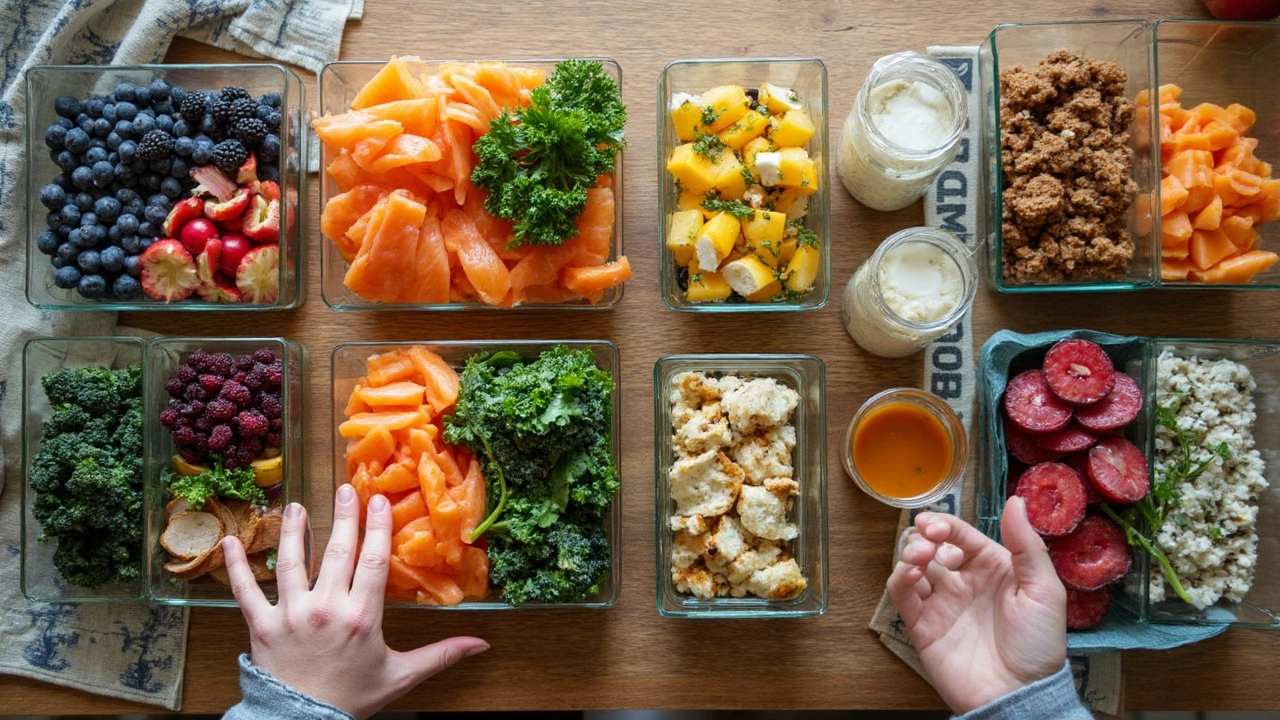
Weekend 30‑minute meal prep (makes 6-10 breakfasts):
- Overnight oats jars (4): oats + milk + chia + frozen berries. Shake and park in the fridge (good for 4 days).
- Egg muffins (10-12): whisk eggs + chopped veg + a little feta; bake 18 minutes at 180°C; cool and refrigerate (3 days) or freeze (1 month).
- Chia pudding cups (3): chia + soy or dairy milk + vanilla; top with frozen fruit.
- Smoothie freezer packs (4): bag up banana slices, spinach, berries, 30 g oats; tip into blender with milk + protein in the morning.
Pantry/fridge staples to always have:
- Carbs: rolled oats, dense wholegrain/rye bread, high‑fibre wraps, canned beans, microwave brown rice.
- Proteins: eggs, Greek yoghurt/Skyr, cottage cheese/ricotta, firm tofu/tempeh, smoked salmon/tuna, protein powder you like.
- Plants: frozen berries, bananas, kiwi, mandarins (winter), spinach, mushrooms, tomatoes, avocado, herbs.
- Fats & flavor: nuts, seeds (chia, hemp, pumpkin), extra‑virgin olive oil, nut butters, spices, dukkah, cocoa, miso, vanilla.
Smart swaps for different diets:
- Gluten‑free: use certified GF oats or quinoa flakes, buckwheat or GF seeded bread, corn tortillas.
- Dairy‑free: soy yoghurt or high‑protein soy milk; tofu scramble; canned fish; dairy‑free protein powder.
- Vegetarian: eggs, dairy, tofu/tempeh, legumes; add nuts and seeds for extra protein.
- Vegan: tofu/tempeh, legumes, soy yoghurt/milk, plant protein powder; add B12 via fortified foods or supplement if advised by your GP.
- Low‑FODMAP start: firm tofu, eggs, lactose‑free dairy, oats (small portions), kiwifruit, strawberries, sourdough, peanut butter. Adjust with a dietitian if needed.
Fast portion heuristics (no scales):
- Protein: your palm (women) to palm + thumb (men) ≈ 25-35 g protein.
- Fats: 1-2 thumb tips of oil/nut butter or a small handful of nuts.
- Carbs: 1-2 cupped hands of oats/grains/fruit depending on activity.
- Plants: aim for two colours on the plate. If there’s no green, add a handful of spinach or herbs.
Common pitfalls to avoid:
- All carbs, no protein (fruit + toast + jam) → hungry by 10 a.m. Add yoghurt, eggs, cheese, tofu, or beans.
- High sugar smoothies → energy crash. Balance fruit with protein and fats; include oats or chia.
- Only coffee till 11 → jitters, cravings. Try a mini 200-300 kcal protein‑rich option earlier.
- Dry toast on repeat → low fibre. Choose seeded/rye bread (look for 6+ g fibre per 100 g).
Seasonal Aussie swaps (Aug-Sep, Brisbane‑friendly):
- Fruit: mandarins, oranges, apples, pears, bananas, kiwi, passionfruit. Add berries from the freezer if fresh is pricey.
- Veg: mushrooms, spinach, kale, tomatoes, avocado, spring onions. Quick sauté in olive oil boosts flavour and iron absorption.
Food safety: Keep overnight oats/chia sealed in the fridge; eat within 3-4 days. Reheat egg muffins to steaming. Follow FSANZ food safety guidance, especially if pregnant or immune‑compromised.

Mini‑FAQ and Troubleshooting for Real Mornings
Do I have to eat breakfast? No rule says you must. If you’re not hungry early, that’s fine. But if you get a mid‑morning energy dip or overeat later, a protein‑rich breakfast can help smooth the day. Try a small option first (e.g., yoghurt + nuts) and see how you feel.
Is coffee before food okay? Sure. If coffee alone makes you shaky or ravenous by 10, pair it with a quick protein bite (egg muffin, yoghurt cup) or sip your coffee with a smoothie.
What’s the best macro split? For most adults: 25-35 g protein, 8-15 g fibre, carbs from low‑GI sources, 1-2 tsp healthy fat. SDA suggests ~0.3 g/kg protein per meal; GI Foundation backs lower‑GI carbs for stable energy. Adjust carbs up on training days.
Low‑carb or low‑fat? Choose the pattern you can sustain. High‑protein plus fibre is the common win. Whole‑food fats (olive oil, nuts, avocado) support heart health (Heart Foundation) and satiety.
I’m managing blood sugars. Go for low‑GI carbs (oats, dense wholegrain/rye, legumes), add protein and fats, and include cinnamon or nuts. Test your response if you monitor. A credentialed dietitian can personalise it.
Fast mornings with kids? Keep a “breakfast box”: seeded bread, yoghurt pouches, boiled eggs, cheese sticks, fruit, mini oats jars. Let kids pick one from each: base + protein + fruit. Autonomy speeds things up.
Vegan and high protein-realistic? Yes. Tofu scramble with seeded toast; soy yoghurt + protein powder + chia; baked beans + mushrooms; tempeh with avocado on rye. Aim for soy or pea protein blends for a more complete amino acid profile.
Intermittent fasting and workouts? If you train fasted and feel good, keep it. If performance or recovery lags, add a small pre‑session snack (e.g., banana + 200 ml milk) and hit 30-40 g protein post‑workout.
Gluten‑free ideas that don’t feel like a compromise? GF oats or quinoa porridge with protein, buckwheat pancakes (freeze and reheat), corn tortillas with eggs/beans, GF seeded toast with cottage cheese and tomato.
How much sugar is okay? Keep added sugars under 10 g at breakfast. Whole fruit is fine-its fibre slows uptake. If your yoghurt is sweetened, balance it with nuts/seeds and watch portions.
Stuck in a rut? Rotate a 3‑day loop: Day 1 oats, Day 2 eggs + toast, Day 3 yoghurt bowl/smoothie. Change the toppings. Variety without decision fatigue.
What do reputable sources say? The Australian Guide to Healthy Eating (NHMRC) promotes wholegrains, fruit/veg, dairy/alternatives, and lean proteins. The Heart Foundation encourages fibre‑rich wholegrains and healthy fats. The GI Foundation backs low‑GI choices for stable glucose. Sports Dietitians Australia supports higher protein at meals for appetite control and performance.
Next steps (pick one now):
- Tonight: mix two overnight oats jars and a chia cup. That’s three days sorted.
- Tomorrow: build breakfast with the five‑step list. Time it-you’ll see it takes under five minutes.
- This weekend: batch egg muffins and make four smoothie freezer packs.
Troubleshooting:
- Still starving by 10 a.m.? Add 5-10 g more protein (extra egg or yoghurt) and a fibre boost (chia or an extra kiwi).
- Bloated after oats? Try smaller portions, swap to quinoa flakes or cooked rice porridge, or pick eggs/tofu + veg.
- Too many decisions? Pre‑write a two‑week rotation on your fridge. Repeat every fortnight.
- No time to chew? Blend it. Smoothie rule: protein + fruit + oats/chia + nut butter + greens.
Pick one idea, run it for a week, and notice your morning energy, focus, and mood. That’s the real win.