
Recovery Time Estimator
Your Workout Details
How It Works
Based on research from the Journal of Athletic Training, sports massage can reduce muscle soreness by up to 30% within 24 hours. Your timing and intensity directly impact recovery effectiveness.
Your Recovery Estimate
Based on your workout type (), intensity level (), and massage timing (), your expected benefits include:
- Up to reduction in muscle soreness within 24 hours
- Up to lower risk of soft tissue injuries with consistent sessions
- Improved range of motion in key muscle groups like
After a hard workout or a long race, your body doesn’t just feel tired-it feels tight, sore, and heavy. That’s not just fatigue. It’s your muscles holding onto tension, your connective tissue sticking together, and your circulation slowing down. This is where sports massage isn’t just nice to have-it’s a necessary part of recovery for anyone who moves their body regularly, whether you’re a pro athlete or someone who runs 5Ks on weekends.
What Makes Sports Massage Different?
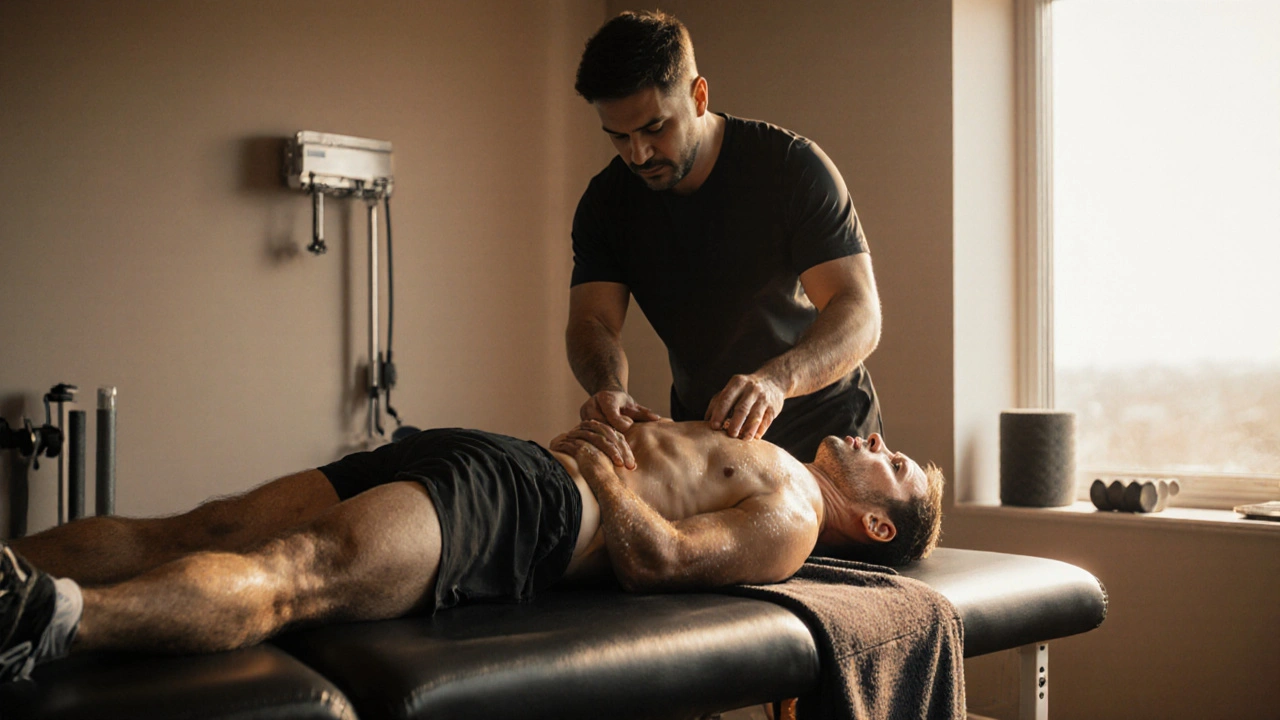
Sports massage isn’t just a deep tissue session with a gym bag beside you. It’s a targeted approach designed for active people. Unlike relaxation massage, which uses slow, flowing strokes to calm the nervous system, sports massage uses specific techniques to address muscle fatigue, adhesions, and restricted range of motion. It’s often timed around training cycles: pre-event to warm up tissue, post-event to flush out metabolic waste, and maintenance to prevent injury.
Therapists use a mix of effleurage (gliding strokes), petrissage (kneading), friction (deep circular pressure), and trigger point therapy. These aren’t random moves-they’re chosen based on the athlete’s sport, muscle groups under stress, and current condition. A cyclist might need focused work on quads and hip flexors. A tennis player needs attention on forearms and shoulders. A runner? Calves, hamstrings, and IT bands get the most attention.
How It Helps With Recovery
After intense exercise, your muscles accumulate lactic acid and other metabolic byproducts. While your body naturally clears these, it takes time. Sports massage speeds things up by increasing blood flow. Studies from the Journal of Athletic Training show that massage after exercise can reduce muscle soreness by up to 30% within 24 hours compared to no intervention.
But it’s not just about soreness. The pressure applied during massage helps break up fibrous scar tissue and adhesions that form between muscle fibers after micro-tears. These adhesions are what make you feel stiff even after resting. Left untreated, they can lead to imbalances and overuse injuries. Regular sports massage keeps tissue pliable, which means better movement patterns and less strain on joints.
One runner I worked with in Birmingham started getting weekly sessions after her third marathon. She’d been battling chronic hamstring tightness for months. After six weeks of consistent massage, her range of motion improved by 22%. She didn’t just run faster-she stopped needing painkillers after long runs.
Injury Prevention Through Muscle Balance
Injuries don’t happen because you overtrained. They happen because your body became unbalanced. One muscle group gets tight, another gets weak, and your movement shifts to compensate. That’s when you pull a groin, strain a tendon, or develop plantar fasciitis.
Sports massage doesn’t just treat tight spots-it helps identify them. A skilled therapist can feel asymmetries: one quad tighter than the other, a shoulder blade that doesn’t glide properly, a hip that doesn’t rotate fully. These aren’t just discomforts-they’re red flags for future injury.
Research from the University of North Carolina found that athletes who received biweekly sports massage over a 12-week period had 43% fewer soft tissue injuries than those who didn’t. Why? Because massage keeps muscles and fascia in alignment, reduces tension buildup, and improves proprioception-the body’s sense of where it is in space.
Breaking the Myth: More Pain Means Better Results
Too many people think sports massage has to hurt to work. That’s a myth. Yes, there’s pressure. Yes, some spots will feel intense. But if you’re wincing the whole time, the therapist isn’t helping-they’re triggering your body’s defense system. When you tense up from pain, muscles tighten even more, which defeats the purpose.
Effective sports massage works with your nervous system, not against it. The goal is to create a sense of release, not punishment. Think of it like tuning a guitar: you don’t snap the string to get the right note. You adjust it gently until it sings.
A good therapist will check in constantly: "Is this pressure okay?" "Does this area feel deeper now?" They’ll adjust based on your feedback. If you’re breathing shallowly or holding your jaw clenched, they’ll slow down. Real progress comes from relaxation, not gritting your teeth.

When to Get It-Timing Matters
Not every massage is the same. Timing changes the outcome.
- Pre-event (24-48 hours before): Light, stimulating strokes to increase blood flow and activate muscles. Avoid deep work-this isn’t the time to break down tissue.
- Post-event (within 2 hours): Focus on flushing out waste products and reducing inflammation. Gentle effleurage and compression help.
- Maintenance (weekly or biweekly): This is where the real magic happens. Regular sessions prevent small issues from becoming big injuries.
- Rehab phase (after injury): Used alongside physiotherapy to restore mobility and break down scar tissue. Must be approved by a medical professional.
One triathlete I know skips massage after races but gets it every Monday. She says it’s the only thing that lets her train hard on Tuesday without feeling like she’s dragging a chain behind her.
Who Benefits the Most?
Sports massage isn’t just for elite athletes. Anyone who trains regularly can benefit:
- Runners dealing with IT band syndrome
- Weightlifters with tight lats or pecs
- Cyclists with stiff hips and lower back
- Team sport players (soccer, basketball) with recurring hamstring pulls
- Even weekend warriors who feel stiff after gardening or hiking
It’s also helpful for people recovering from surgery or prolonged inactivity. After knee replacement, for example, massage helps restore circulation and reduce swelling around the joint. It’s not a cure, but it’s a powerful tool in the recovery toolkit.
What to Expect in Your First Session
Your first session usually lasts 60-90 minutes. You’ll fill out a short form about your activity level, injuries, and goals. The therapist will do a quick movement assessment-maybe ask you to squat or reach overhead-to spot tight areas.
You’ll typically undress to your comfort level (underwear or shorts are fine). A towel will cover you, and only the area being worked on will be exposed. The massage table is usually firm-no fluffy cushions. You might feel some discomfort, but never sharp pain.
Afterward, drink water. Your body is releasing toxins and needs to flush them out. You might feel a little sore the next day, like after a good workout. That’s normal. If you feel worse after 48 hours, talk to your therapist.

What Doesn’t Work
Sports massage isn’t a magic fix. It won’t heal a torn ligament. It won’t replace strength training. It won’t cure chronic pain caused by nerve issues like sciatica.
It also doesn’t work if you only go once a year. Like brushing your teeth, consistency matters. One session might feel great, but real change takes weeks of regular care.
And don’t expect miracles from a gym masseuse who learned a few techniques from a YouTube video. Look for someone certified by a recognized body like the Sports Massage Association (UK) or the National Certification Board for Therapeutic Massage & Bodywork (USA). Experience matters.
How to Make It Part of Your Routine
You don’t need to spend hundreds a month. Many athletes get one session every two weeks. Some do self-massage with foam rollers and lacrosse balls between sessions. That’s fine-but it’s not a replacement. A professional therapist can access deeper layers and identify problems you can’t feel yourself.
Think of it like car maintenance. You don’t wait until the engine seizes to change the oil. You do it regularly because you know it keeps the machine running. Your body’s the same.
Start with one session a month. See how you feel. If you notice less stiffness, faster recovery, or fewer niggles, increase it to every two weeks. Track it. Keep a simple journal: "Felt looser after massage," "No soreness after 10K," "Sleep improved." Small wins add up.
Final Thought: It’s Not Luxury-It’s Maintenance
Sports massage isn’t a luxury for the wealthy or the elite. It’s a practical, science-backed tool for anyone who wants to keep moving without pain. It’s not about getting a treat-it’s about keeping your body in working order.
If you’re serious about staying active, healthy, and injury-free, then this isn’t something you do when you’re already hurting. It’s something you do so you never have to.
Can sports massage help with chronic pain?
Sports massage can help manage chronic pain caused by muscle tension, adhesions, or poor movement patterns. It won’t fix structural issues like arthritis or nerve damage, but it can reduce the secondary pain from tight muscles pulling on joints. Many people with lower back pain find relief by releasing tight hip flexors and glutes through regular massage.
How often should I get a sports massage?
For active individuals, once every two to four weeks is ideal for maintenance. If you’re training hard or recovering from injury, weekly sessions may be needed. Beginners can start with once a month and adjust based on how their body responds. Listen to your muscles-not your calendar.
Is sports massage painful?
It should never be unbearable. Some pressure will feel intense, especially in tight areas, but sharp pain means you’re tensing up. A good therapist will work with your breathing and adjust pressure. If you’re holding your breath or clenching your fists, the massage isn’t working. Relaxation is the goal, not suffering.
Can I get a sports massage if I’m not an athlete?
Absolutely. Anyone who moves regularly-whether you’re walking 10,000 steps a day, gardening, or lifting groceries-can benefit. Tight shoulders from typing, stiff hips from sitting, sore feet from standing all respond well to targeted massage. You don’t need to run marathons to need this kind of care.
What should I avoid after a sports massage?
Avoid intense exercise for at least 24 hours. Your muscles are in a state of repair. Light walking or stretching is fine, but don’t go for a hard run or heavy lifting right after. Drink plenty of water to help flush out released toxins. Also avoid alcohol and heavy meals-they can slow down recovery.