

Skipping breakfast might feel like a time-saver, but it’s a trade-off that costs more than you think. If you’ve ever felt sluggish by mid-morning, crashed after lunch, or reached for sugary snacks just to stay awake-you’re not alone. The truth is, what you eat in the morning sets the tone for your whole day. A healthy breakfast isn’t just about avoiding hunger; it’s about giving your body the right fuel to think clearly, move efficiently, and stay balanced emotionally.
Why Your Body Needs Morning Fuel
Your body hasn’t eaten for 8 to 12 hours while you slept. That’s not a choice-it’s biology. When you wake up, your liver has used up its stored glucose, and your brain is running on empty. Without food, your body starts breaking down muscle for energy instead of burning fat. That’s not sustainable. And it’s not just about energy. Blood sugar levels drop overnight, and if you don’t replenish them, your brain struggles to focus. Studies tracking over 5,000 adults found that those who ate a balanced breakfast had better memory recall and faster reaction times than those who skipped it. This isn’t theory. It’s measurable.
Think of your morning meal like charging a phone. You wouldn’t plug it in for five seconds and expect it to last all day. Yet, many people grab a muffin or skip breakfast entirely. A healthy breakfast means protein, fiber, and healthy fats-not just carbs. That combo slows digestion, keeps blood sugar steady, and prevents the mid-morning crash that leads to caffeine binges and sugar cravings.
What a Healthy Breakfast Actually Looks Like
There’s no single formula, but there are clear patterns in what works. A 2023 analysis of over 200,000 dietary records showed that people who ate breakfast with at least 15 grams of protein and 5 grams of fiber were 30% less likely to snack on junk food before lunch. That’s not coincidence. Protein keeps you full longer. Fiber slows sugar absorption. Together, they create a steady energy stream.
Here’s what that looks like in real life:
- Two eggs with spinach and avocado on whole grain toast
- Plain Greek yogurt with chia seeds, berries, and a sprinkle of almonds
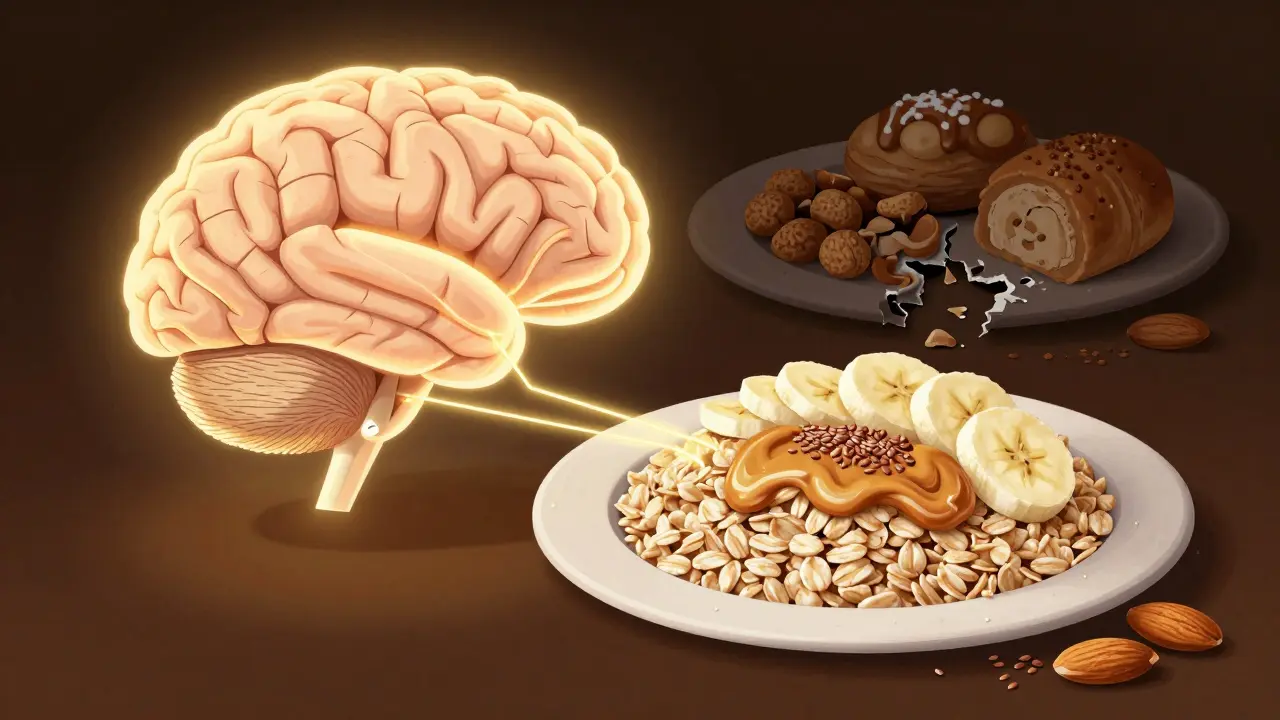
- Oatmeal made with water or milk, topped with peanut butter and sliced banana
- Smoothie with protein powder, kale, flaxseed, and unsweetened almond milk
Notice what’s missing? Sugary cereals, pastries, and flavored yogurts loaded with added sugar. These spike your blood sugar, then crash it within an hour. You’ll feel tired, irritable, and hungry again before noon. That’s not breakfast-it’s a sugar trap.
How Skipping Breakfast Affects Your Mood and Mental Health
It’s not just your energy that suffers. Your brain chemistry changes too. Cortisol, the stress hormone, naturally rises in the morning to help you wake up. But without food, it stays elevated. That means more anxiety, irritability, and brain fog. A study from the University of Sydney in 2024 followed 1,200 adults for six months. Those who ate a protein-rich breakfast reported 40% fewer mood swings and lower levels of perceived stress compared to those who skipped it.
If you’re dealing with anxiety, depression, or just feeling “off” most days, don’t just blame sleep. Look at your morning. Low blood sugar triggers the same stress response as a looming deadline. Your brain thinks it’s in survival mode. That’s why people who eat breakfast regularly say they feel more in control of their emotions.
Breakfast and Weight Management: The Real Story
People often think skipping breakfast helps with weight loss. It doesn’t. In fact, the opposite is true. When you skip the morning meal, your metabolism slows down. Your body goes into conservation mode, holding onto fat because it thinks food is scarce. Later in the day, you’re more likely to overeat, especially high-calorie, high-sugar foods.
Research from the American Journal of Clinical Nutrition tracked 3,000 people over five years. Those who ate breakfast every day lost 2.3 times more weight than those who skipped it-even when both groups consumed the same number of calories. Why? Because breakfast eaters had better appetite control. They didn’t binge later. They didn’t crave sweets. They didn’t feel out of control around food.
It’s not about eating less. It’s about eating smart, early. A solid breakfast reduces hunger hormones like ghrelin and boosts satiety hormones like leptin. That’s science, not opinion.
What About Intermittent Fasting?
You’ve probably heard that skipping breakfast is part of intermittent fasting. And yes, some people do well with it. But here’s the catch: intermittent fasting works best when you’re eating nutrient-dense meals during your eating window. If you’re just skipping breakfast and then eating pizza and chips at noon, you’re not fasting-you’re misfueling.
The real advantage of morning fasting isn’t skipping food-it’s delaying it to align with your circadian rhythm. But if you’re not getting enough protein, fiber, and healthy fats later in the day, you’re setting yourself up for energy crashes and cravings. For most people, especially those with active jobs, kids, or high mental demands, eating within two hours of waking is more sustainable and healthier.

Simple Ways to Start Eating Breakfast (Even If You’re Busy)
If you’re not used to eating in the morning, start small. You don’t need a full meal. Just something real.
- Drink a glass of water as soon as you wake up. Hydration jumpstarts your metabolism.
- Try one hard-boiled egg and a piece of fruit. That’s 7 grams of protein and fiber.
- Keep pre-made smoothie packs in the freezer. Blend with milk or water in 90 seconds.
- Use leftovers. Last night’s grilled chicken? Eat it cold with a handful of nuts.
- Set a 10-minute alarm for breakfast. Treat it like a meeting you can’t miss.
Consistency matters more than perfection. Even eating breakfast three days a week makes a difference. After a month, you’ll notice you’re less tired, less moody, and less tempted by snacks.
Why This Matters for Long-Term Health
It’s not just about feeling better today. Regular breakfast habits are linked to lower risks of type 2 diabetes, heart disease, and obesity. A 15-year study from Harvard School of Public Health found that people who ate breakfast five or more days a week had a 21% lower risk of developing type 2 diabetes than those who rarely ate it. Why? Because stable blood sugar reduces insulin resistance. That’s the root cause of metabolic disease.
And it’s not just physical. Kids who eat breakfast perform better in school. Adults who eat it are more productive at work. The pattern is clear: fuel your morning, and you fuel your life.
Healthy breakfasts don’t require fancy ingredients or hours of prep. They require attention. They require choosing real food over processed junk. And they require making it a non-negotiable part of your day-like brushing your teeth.